
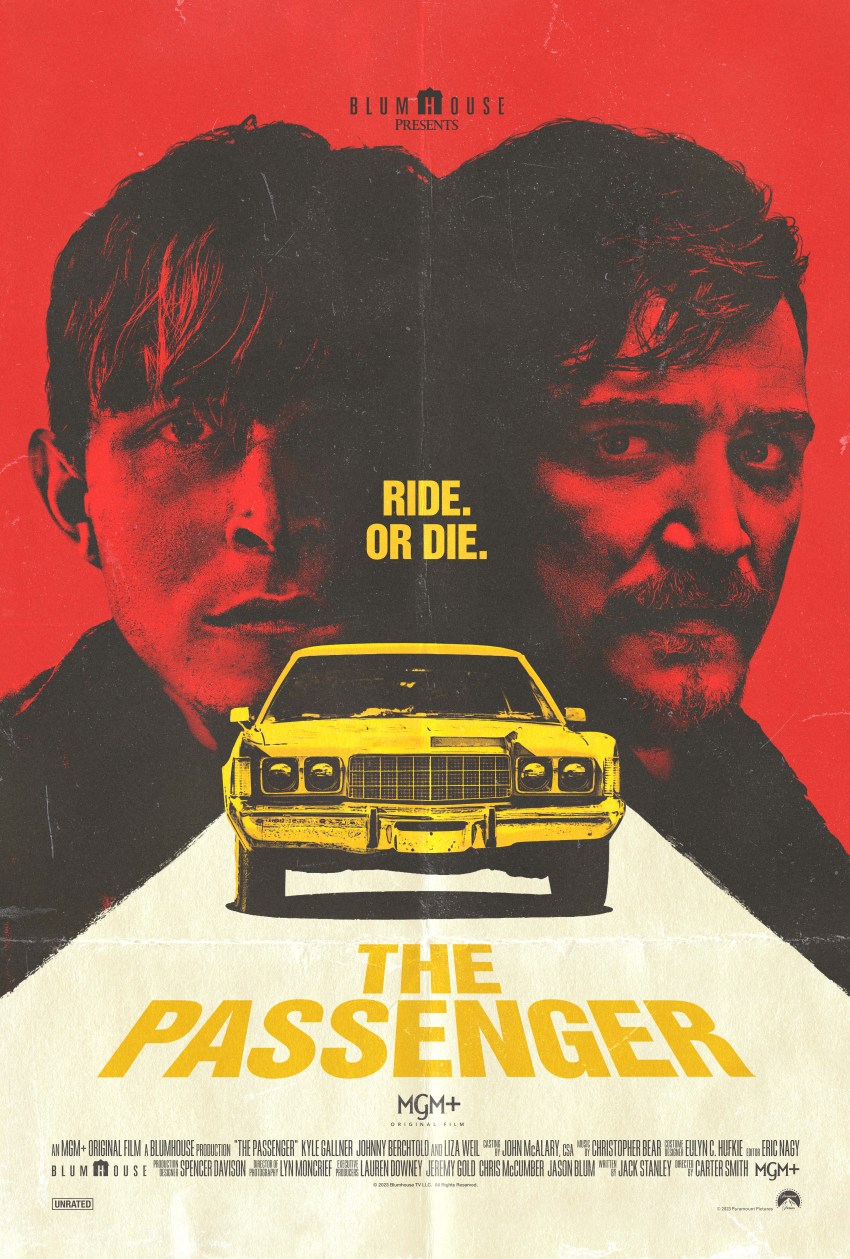
The Passenger (2023)
Directed by Carter Smith
Screenplay by Jack Stanley
Starring Johnny Berchtold, Kyle Gallner, Matthew Laureano, Lupe Leon, Merah Benoit, Jordan Sherley, & Liza Weil.
Horror
★★★1/2 (out of ★★★★★)
DISCLAIMER:
The following essay
contains SPOILERS!
Shield thine eyes,
lest ye be spoiled.
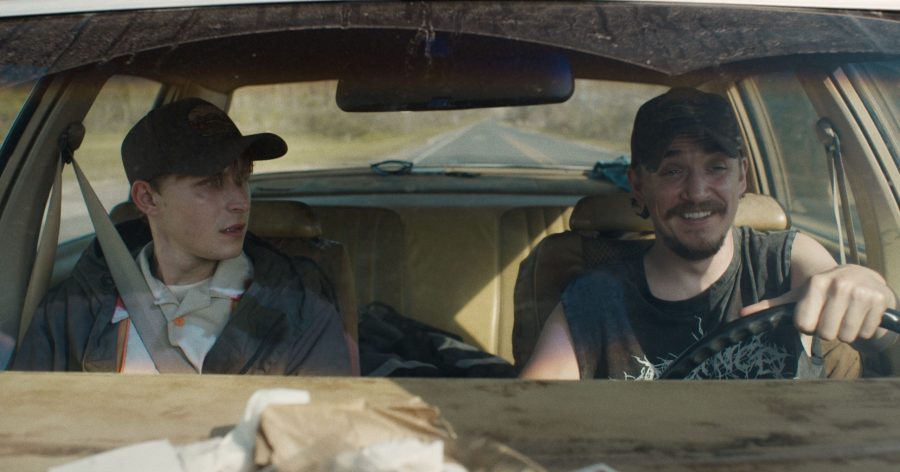
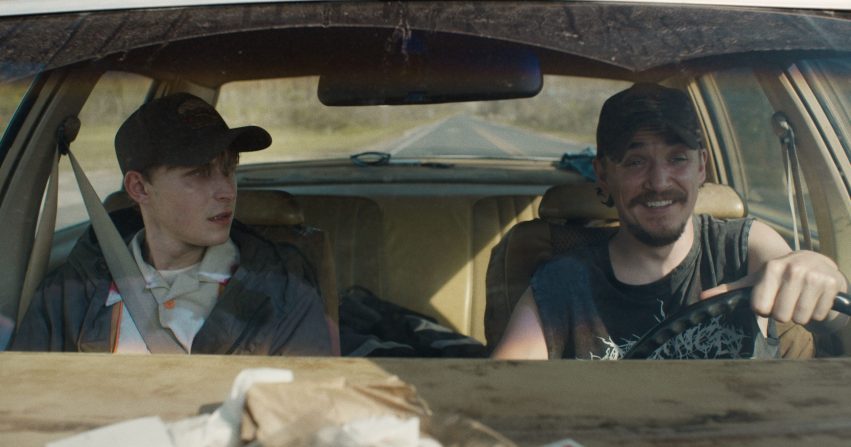 As far as Carter Smith films go, The Passenger is not as delightfully grotesque as some of his other work like Swallowed or its spiritual predecessor, the short film Bugcrush, yet it’s no less interesting because it’s a quickly paced ride into the madness of contemporary life. Randy (Johnny Berchtold) is an unassuming young man working at a local burger shop, where one of his co-workers, Benson (Kyle Gallner), suddenly snaps and kills the staff, except him. From there, Benson takes Randy with him on a road trip that gets more intense and a lot bloodier with each stretch of road that passes beneath them. So, Randy must choose, whether he’ll go along as a submissive passenger, or if he’ll take up action and stop Benson’s trail of carnage.
Smith’s film is a horrific look at how the capitalist workforce trains people to be submissive, to be abused, and also how the family can often act as the breeding ground to prepare kids to grow into submissive adults. Capitalism is about dominance and submission, not for pain and pleasure but for profit; the less workers speak up, the better the capitalist wheels keep turning, crushing people like grapes from which their labour pours forth and creates capital. Randy’s ride alongside Benson becomes a battle of wills, as Benson dares Randy to step beyond the shell that capitalism, as well as his family, has left him, or forever resign himself to a life of abuse and submission.
 One of the immediate ways Jack Stanley’s screenplay touches on capitalism is the way it flattens identity, and we see it when Randy’s name comes up with his boss at the burger shop. The boss is confused over Randy’s first name not being Bradley, since Randy’s last name is actually Bradley. A name tag with Bradley on it was given to Randy and, being so meek, he never said anything about it, nor did he correct anybody who ever called him Bradley. From the start of the film, Randy, especially as a young person unsure about what to do next in life after high school, is a malleable lump of clay for capitalism to shape. The boss also says he likes that Randy doesn’t “talk back” and does nasty jobs nobody else will. Right away there’s a strong sense of how submissive Randy is in general around the workplace.
This is tested in the following scenes after Randy tells one of his co-workers, Chris (Matthew Laureano), to stop being disrespectful to their female co-worker. This prompts Chris to turn on the bully switch, though it becomes a borderline homoerotic moment of dominance rather than simply capitalist dominance in the workplace, as Chris taunts Randy about not getting laid and bites his lip while forcing Randy to eat a day-old burger. Homoerotic or not, this scene reveals just how submissive Randy is willing to be, and it’s also here where Benson goes off the deep end and shoots his boss, along with the other co-workers. And while Benson is ultimately trying to help Randy become a stronger person with an identity bigger than a name tag at work, his own troubles with dominance and submission push him way over the edge.
Though the lesson Benson tries to instil in Randy is a good one—the idea that you have to stand up for yourself in a chaotic world that reflects the free market’s instability—he has himself been subject to the abuses of the world. We’re given slight hints about Benson suffering unspecified abuse at the hands of a former teacher. It shockingly leads to murder, albeit not entirely unexpected with Benson. Yet we also witness Benson treating a Black diner waitress like trash because she’s proud of working hard and taking care of her kids. She ends up being shot in the leg for daring to talk back to him. At a certain point, Benson becomes a caricature of those straight white guys who love to play ‘devil’s advocate’ while debating over the lived experiences of others when he screams at Randy: “It has nothing to do with you. I don‘t give a fuck about your life.”
Benson’s story in The Passenger is itself a lesson: there’s a point beyond which the world can warp us where we try to turn others into the ones who submit to us, rather than simply standing up for ourselves and asserting space in the world. His descent into psychopathic rage and murder goes beyond the will to assert oneself in a dehumanising capitalist hellscape. He is forever lost. But Randy still has hope. Just as Benson says himself, there’s “something fixable” about Randy; for him, it’s far too late.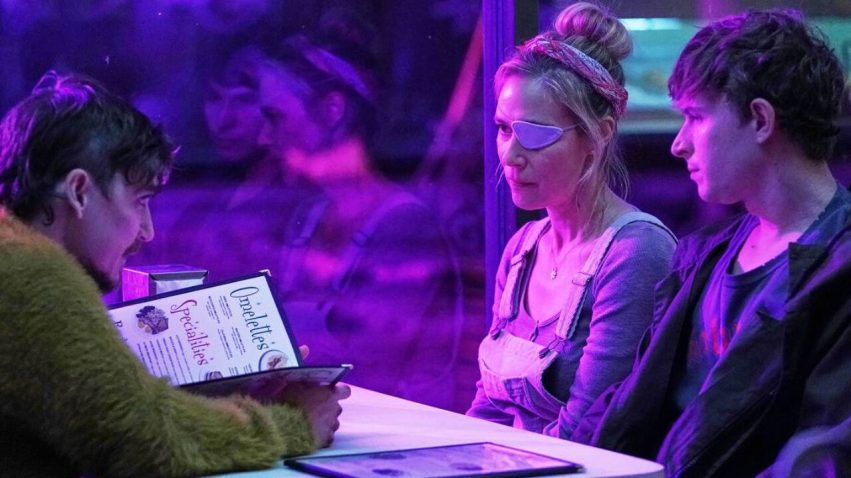 Apart from the childhood trauma Randy experienced, his childhood, and adulthood, was dominated by his mother and her “micromanaging bullshit” (notice the quote, from Benson, uses the language of capitalism). She was the one who helped soften him up for the iron grip of capitalism, as her overbearing, motherly dominance trained him to be a good, submissive worker who’d do whatever he was told. Even when Benson murders the boss and co-workers, Randy complies with helping Benson move the bodies and clean up, like the good little capitalist worker bee his mother taught him to be at home. But the murder is the difference. Benson goes beyond making a change, in the workplace or himself. He spirals throughout the film and, near the end, is incapable of walking back his violence. He lets the world of capitalism win; he is dominated to the point of death. Not Randy.
Rather than be completely ruined by a capitalist hellscape, Randy chooses to move beyond a past, and the people, that dominated him, as we see him setting boundaries with his mom and trying to put the traumatic event in his past behind him. The final shot of a little girl’s play area, along with Randy teaching the girl a game that preceded his past trauma, seems to suggest Randy has moved on, that he’s mastering the past that made him so willing to be a submissive capitalist drone later in life. And there’s something very fitting about Randy, after Benson’s fate is sealed, wearing a Motörhead shirt with “Born to lose, live to win” written on it because we may be born into a world that runs on oppressive systems like capitalism that set us up to lose, but if we live, and especially if we thrive, then we win.
 Father Son Holy Gore