
birth/rebirth (2023)
Directed by Laura Moss
Screenplay by Moss & Brendan J. O’Brien
Starring Marin Ireland, Judy Reyes, Monique Gabriela Curnen, & Breeda Wool.
Horror
★★★★★ (out of ★★★★★)
DISCLAIMER:
The following essay
contains SIGNIFICANT SPOILERS!
You’ve been warned.
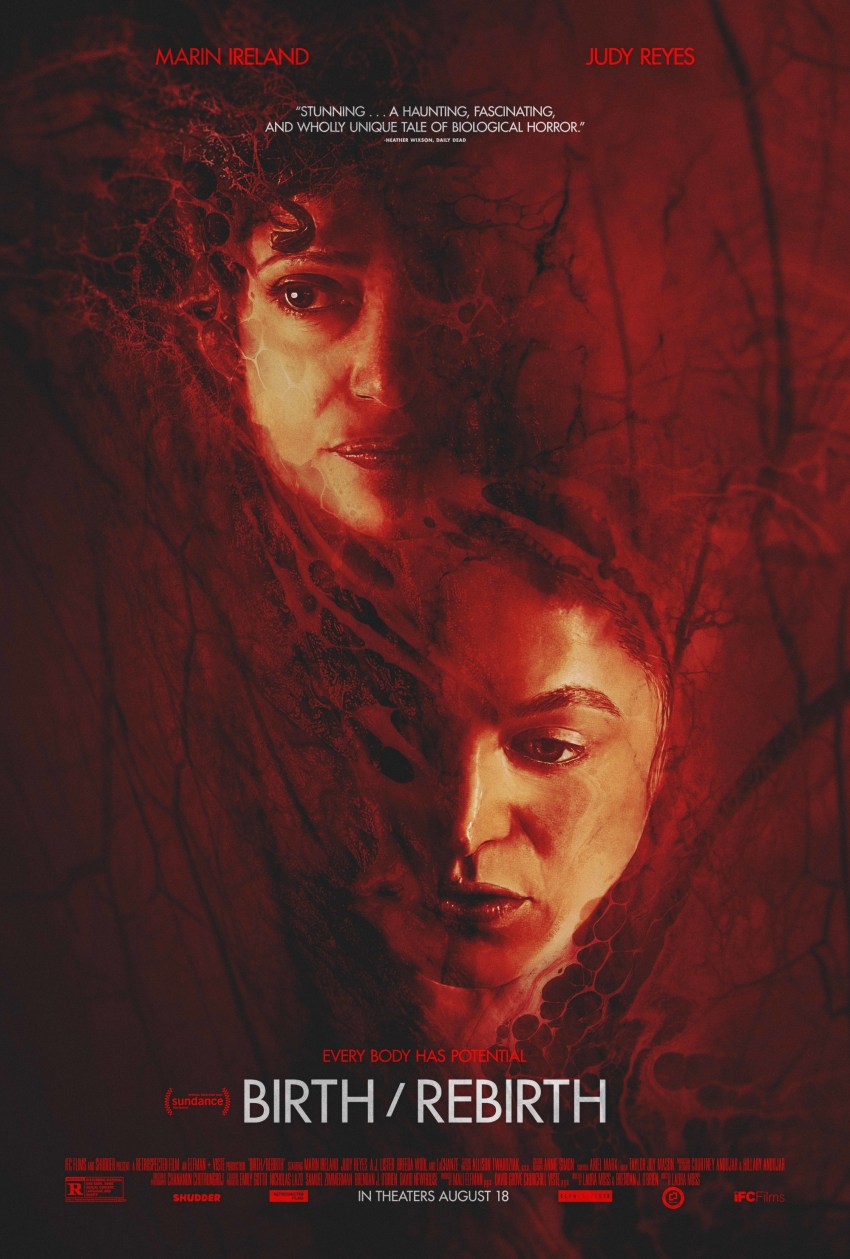 Any tale of reanimated bodies in the horror/sci-fi genre since Mary Shelley’s Frankenstein has been seen as influenced by her groundbreaking novel, and rightfully so, yet a film like birth/rebirth is much more directly, proudly influenced by Shelley; not only influenced by Shelley’s novel but by Shelley’s life and how it played into the novel. birth/rebirth is the story of Dr. Rose Casper (Marin Ireland), a childless, single woman whose strange experimentations collide with the life of Celia Morales (Judy Reyes), a maternity nurse whose daughter Lila (A.J. Lister) dies suddenly. Rose allows for the impossible to happen, but with the impossible comes a hefty price—a price that only gets worse and more dark with time.
There are a lot of themes happening in birth/rebirth, particularly surrounding grief and loss, which reaches back to Shelley, whose own grief over her mother’s death defined her life. But by the end of the film, Moss is spinning a dark fable about the bodily autonomy of women, consent, and the ethics of certain experimental science when it involves hurting people. Like Shelley’s Frankenstein, birth/rebirth is ultimately about the powerful madness of grief following someone’s death, and how some loves extend far beyond the grave.
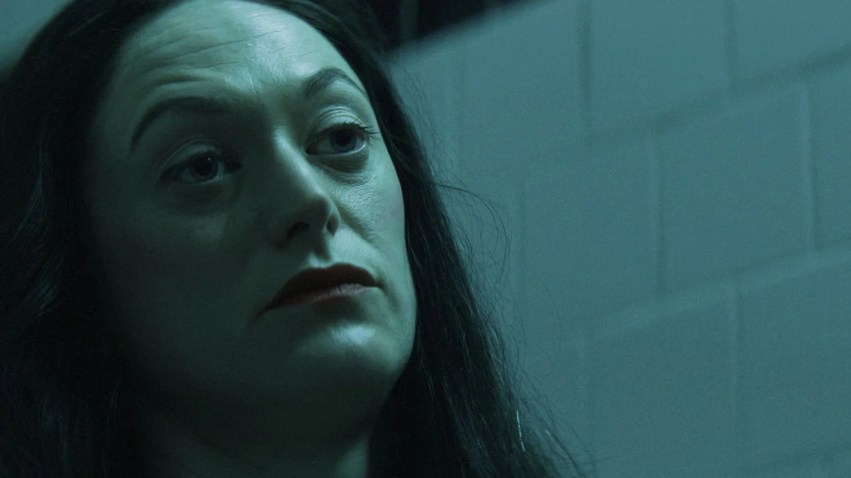 One of the best early moments in the film is when Rose jerks a guy off in a bar’s bathroom stall so she can use what looks like a breast pump to collect his semen, then she quickly pricks his finger to draw some blood. While the scene’s a bit humorous, it’s an early suggestion that there will be issues of consent happening throughout birth/rebirth, as Rose leaves the man she picked up in the bar confused and probably feeling a little violated. It’s still darkly funny if we think about the film’s parallels to Shelley’s Frankenstein: while Victor Frankenstein was out looking for corpses to steal, Rose is out looking for men to jerk off.
The more the film wears on, the more Moss’s story becomes reminiscent of Frankenstein and, in a metatextual way, the inspiration that compelled Shelley to write her novel. Eventually we discover that Rose is not the only doctor in her family; her mother, Muriel, was a doctor, too. It’s Muriel’s death that pushed Rose towards experimenting with life and death, just as Mary Shelley was always haunted by the death of her mother, Mary Wollstonecraft, which played deeply into the writing of Frankenstein, and, of course, it’s the same motivation of Dr. Victor Frankenstein in the novel itself. Apart from direct Shelley inspirations, birth/rebirth features a prominent image that calls back to the iconic image of Boris Karloff as Frankenstein in the 1931 James Whale adaptation: when Lila is brought back to life, she has a port wound in her neck that resembles Frankenstein’s now-iconic neck bolts.
There’s a great juxtaposition in the film of Lila having been born with “IVF assistance” and the idea of reanimating life; both supposedly ‘playing God,’ though they’re really both just science. Rose defines the world of science in opposition to the world of religion when she says “There‘s nothing supernatural or fantastical about it, this is good science and hard work over time” after taking offence to Celia calling her work “a miracle.” Yet when Celia and Rose are at odds they have an argument that further defines medicine v. science: Rose angrily says “This ad–hoc triage I‘ve been doing isn‘t science” to which Celia replies “No, it‘s medicine, but you‘re not that kind of doctor, are you?” Science is often about progress, regardless of who it hurts in the process, whereas medicine is about healing people and giving the sick comfort. There’s a major difference between IVF and Rose’s work: one involves the creation of life with the consent of (typically) two people who want to have a child; the other involves the reanimation of a person without their consent, all to assuage the grief of somebody else. And this divide is where birth/rebirth becomes most terrifying.
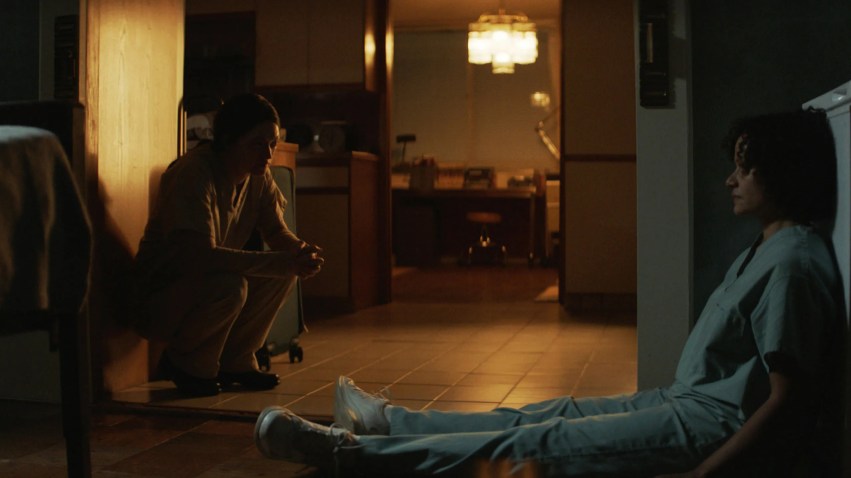 The disparity between IVF and Rose’s experimental work becomes far more unsettling when Rose and Celia use the death of a baby and their mother to fuel their compounded grief when Lila dies another time. From there, Rose and Celia’s experiments with life and death become an even more haunting question of consent. A double whammy of consent hammers us nearing the end of the film. First, Emily (Breeda Wool) gets manipulated by Celia, at the request of Rose, and she winds up dead; two women violate the bodily autonomy of another in the name of a child. Most haunting is the baby-over-mother attitude of Rose/Celia that parallels the way Republican America views women regarding abortion. At one point as Emily’s on the table worried she and her baby might die, someone says that the baby’s “going to be fine” but Emily, in tears, whimpers: “What about me?” The only worry in this scene is the child, as if Emily’s just a vestigial appendage to be amputated from the baby. Second, Lila is woken up when she dies (a couple times), even if she has to be fed a diet of foetal tissue. In both instances, Moss’s film illustrates a general lack of consent when it comes to women, even little girls, and their bodies.
Lila can’t give consent to be brought back to life once she’s dead, like any human being, just as children do not ask to be born into life and all its potentially brutal conditions. The last moment of the film, as Lila is brought back to life, which surely has to be a shock for the person being reanimated, made me think of the epigraph at the start of Mary Shelley’s Frankenstein that comes from John Milton’s Paradise Lost (one of Shelley’s biggest poetic inspirations): “Did I request thee, Maker, from my clay to mould me man? Did I solicit thee from darkness to promote me?” Lila never asked to be born, and she never asked to be revived, certainly not at the cost of other lives, either.
Although birth/rebirth questions the ethics of what Rose and later Celia do, the film is just as much concerned with all the horrors of motherhood, from what it does to a woman’s body, to the terror of losing a child, to the way many women like Rose feel trapped by the prospect of never being a mother, to the lengths a mother will go to save her child. At one point, Celia tells Emily: “Dignity and motherhood don‘t always line up.” We expect mothers to keep reproducing society, in spite of all the hardships and sacrifices necessary, often without all the support they require. As medical science increases, there will be more ways to ease the burden on those who choose to become pregnant, and more ways to help those who want to get pregnant and can’t, but with a lot of progress comes a price. What are we willing to pay for progress, and with what currency? Whose bodies are at stake? Do some have to live for others to die/be born? Moss’s birth/rebirth raises more questions than it answers, just like Shelley’s Frankenstein, as it sits at the intersection of so many conflicting themes: bodily autonomy, death, ethics, grief, and love. The film is a stunning, dark contemporary update of Shelley, and helps show how so many of Frankenstein‘s themes are still what haunt us today, only in new shapes and forms.
 Father Son Holy Gore