
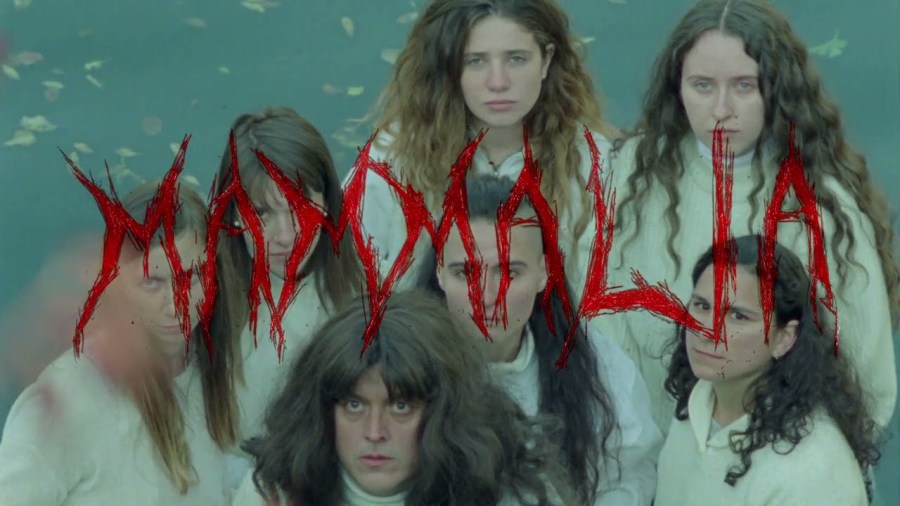
Mammalia (2023)
Directed by Sebastian Mihailescu
Screenplay by Mihailescu & Andrei Epure
Starring István Téglás, Mãlina Manovici, Denisa Nicolae, Steliana Balacianu, & Rolando Matsangos.
Drama / Fantasy
★★★★1/2 (out of ★★★★★)
DISCLAIMER:
The following essay contains
SIGNIFICANT SPOILERS!
Sebastian Mihailescu’s Mammalia focuses on a man called Camil (István Téglás) and his girlfriend, or perhaps wife, Andreea (Mãlina Manovici) after she joins a strange women’s commune in the woods outside their town. Camil appears to feel estranged by Andreea’s new life changes. He starts to follow Andreea into that new life, but then she’s nowhere to be found one day, and everything he’s ever known, about the world and himself, is turned upside down, reversed. He finds himself grappling poorly with a whole new existence he never imagined, having lived his entire life as a traditional, heteronormative man.
Mammalia is a bold, surreal work of art that many have already compared to the work of Lars von Trier; as a von Trier fan, I’d have to disagree, only because his work is far more shocking in general than anything in this film. Mihailescu’s film is its own beast, unique in ways totally different from von Trier’s work. Mammalia might appear on the surface as a lament about the state of masculinity in the 21st century, however, it’s far more a surreal satire about the reactionary terror of masculinity in the face of anxieties about a variety of changing ideas concerning gender. Mihailescu satirises male fears by tossing his protagonist into a world where being born a man doesn’t mean what it used to while Camil must reckon with what this shift in gender means for his own life. Mammalia is at once comic, weird, and unafraid to illustrate Mihailescu and co-writer Andrei Epure’s vision of a new social frontier filled with masculine anxieties.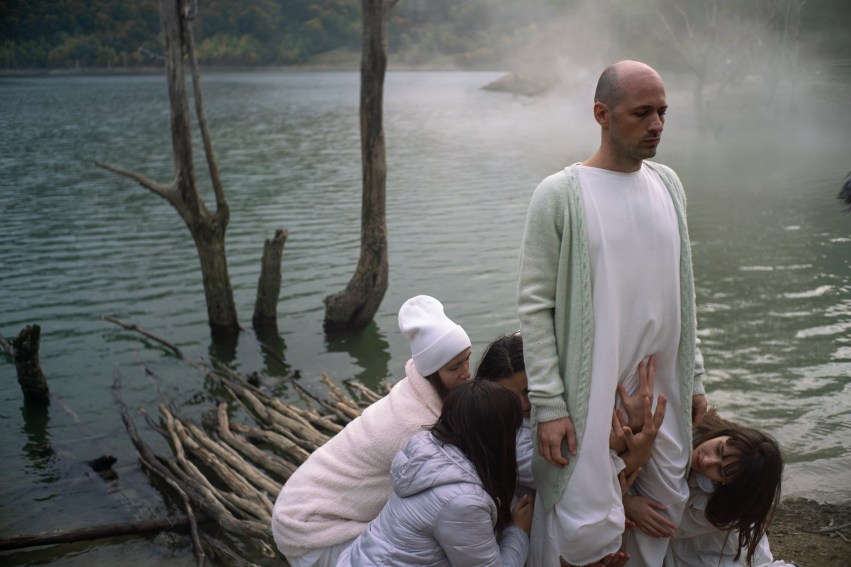 Mammalia dives long (honestly, a bit too long) into the general emasculation Camil perceives throughout his daily life before Andreea disappears initially. He perceives himself a Nosferatu-like figure, alienated by Andreea’s new interest in the women’s commune, which results in what has to be a direct homage to F.W. Murnau’s famous shots of Count Orlok’s vampiric shadow creeping around his castle, as Camil’s shadow slowly makes its way up the bed while he anxiously watches Andreea sleep. Camil generally sees a world of men being dominated—not in a fun, sexual way, either—by women. In one scene, Camil witnesses women laughing and taunting a man, calling him a “very naughty boy.” They then presumably murder him, or at least beat him, and likely far worse.
Most of all, Camil portrays the idea that Andreea is the perceived traditional ‘man’ of the relationship. At one point, he says that Andreaa owns the apartment where they live. As soon as Andreea’s nowhere to be found, it’s said that “officially no one lives there” since Camil didn’t own anything, like a snapshot of a woman’s life before women were allowed to own property. Then a new woman has moved in suddenly, so Camil doesn’t have any kind of claim on the place; from Camil’s perspective, being a man in today’s day and age is like the old days for women. Again this is Camil’s perspective as a character, not Mihailesco’s own thoughts as director since his film is satirical. At work, Camil also perceives himself as emasculated by women, so neither at work nor at home does Camil feel like what he believes to be a traditional man. The further away from work and home Camil gets, the further his sense of masculinity starts drifting off. And when he finally arrives at the women’s commune where Andreea’s been living, his former heteronormative grip on gender slips away entirely.
Everything from the time Camil arrives at the commune to the end of the film is a delightfully twisted satirical exercise in surreal absurdity, as we first get a glimpse of the commune’s uniquely erotic fertility ritual that subverts Camil’s understanding of gender roles in relation to physical sex, then we see Camil’s own personal nightmare when he’s forced into the physical role typically expected by heteronormative society of women in motherhood. Mammalia‘s best, most potent satire of male anxieties in the face of changes to traditional understandings about gender roles starts with the image of a man buried to the neck in dirt getting a stream of milky cum pissed all over his face, coming from a woman standing above him. This is the commune’s fertility ritual, which doesn’t just subvert the traditional heteronormative act of sex by having the woman fertilise the woman, it also subverts the stance of power with the woman towering over the man, who’s buried, confined to the dirt, like he is dirt himself. Meanwhile, Andreea’s tied to a pole full of wooden cocks.
Then Camil’s shown with a pregnant belly, as everyone comes to see him and Andreea with gifts for the coming baby; a few of them even touch Camil’s round belly. On top of that there’s a great exchange when one person asks if the baby will be a boy or a girl and Andreea proudly responds: “We haven‘t decided yet, we don‘t know.” This moment is great because there’s still a remnant of heteronormativity in Andreea’s own statement when she says they “haven‘t decided yet” implying they’re the ones who’ll determine their child’s gender, though it’s likely meant as another terror from Camil’s perspective, the fear that gender isn’t something fixed like he previously believed, that gender’s something that can and does fluctuate subjectively. It’s a visually striking, thematically impactful image seeing Camil with his pregnant belly. The final line comes from pregnant Camil as he falls to his knees on the floor uttering two words: “I‘m scared.”
 There are a number of absurd and surreal moments that haven’t been mentioned here, some of which defy this essay’s reading of Mammalia but are nonetheless still fantastic. Like when Camil finds the new woman living in Andreea’s apartment and she looks like the princess from Sleeping Beauty with barnacles or some kind of seashells caught in her hair. Or when Camil gets fitted for a feminine wig, then has a conversation about gender roles surrounding hair with a strange man by a fire. Or the scene featuring a boarded up building where people inside are singing and making sexual noises. Or the image of Camil sitting still as death at the kitchen table with flies crawling all over him, like he’s a piece of rotten fruit. There are still more striking images and scenes than these. One important scene that’s neither absurd nor surreal suggests Camil might actually learn something, after a woman at the commune tells him the story of her sexual assault and subsequent revenge. Mostly though, everything Camil experiences just terrifies him; or, terrifies his sense of belief in the patriarchal structure of gender.
Mammalia is far more worthy than being deemed a Lars von Trier wannabe film, and it’s certainly not what some viewers might call a pretentious arthouse piece, either. Sebastian Mihailescu’s film is an unflinching satire about masculine worries over where many societies are headed regarding gender expression and gender roles. A lesser artist might not go as far with the concept at the film’s core, but Mihailescu didn’t make a halfway film; he went full absurd surreal and the story’s all the better for it. The plot and story are meant to be at least partly a disorienting experience because it’s portrayed from Camil’s perspective—a man who feels wholly displaced by societal changes concerning gender. Camil is basically dragged through social progress. While much of the film is a satirical, sometimes disturbing comedy, or even a farce, just as much of it is depicted as a horrific experience for Camil, which makes Mihailescu’s film an absurd, existential horror, and an important one, too.
 Father Son Holy Gore