
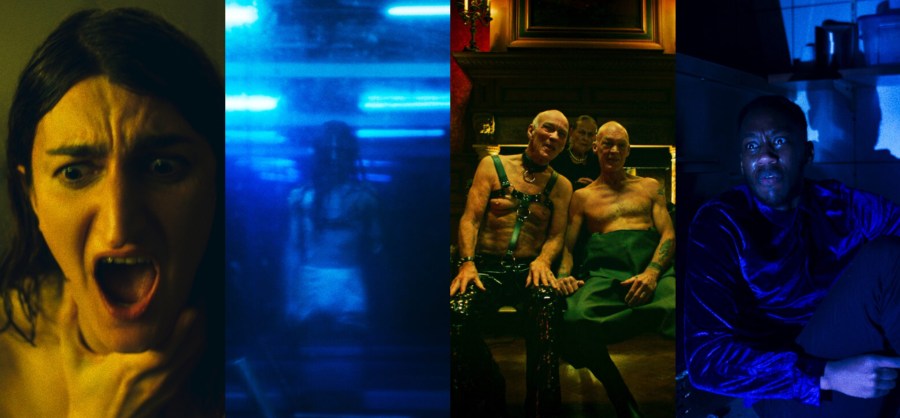
Binary (2024)
Directed by David-Jan Bronsgeest
Screenplay by Martin Koolhoven & Tim Koomen
Starring Inaya Zarakhel & Charlie Chan Dagelet.
Horror
★★★★1/2 (out of ★★★★★)
DISCLAIMER:
The following essay contains
SPOILERS!
Turn back, or be haunted & spoiled forever.
First seen in Koolhoven presenteert, David-Jan Bronsgeest and David Kleijwegt’s Binary hit Fantastic Fest this year, perhaps at no better time for America. The story follows Nisha (Inaya Zarakhel), a trans woman from Pakistan now living in the Netherlands who’s preparing to go under the knife for bottom surgery, and it’s beginning to unearth buried emotions, as well as parts of her personality she believed she left behind. When a violent trauma strikes, Nisha can no longer fully separate herself from her old, dead identity, though her former self’s resurrection comes at the most unexpectedly appropriate time.
Binary is a smart, albeit disturbing, look at how trans identity holds within it, just like queer identity, a Gothic potential for haunting, as Nisha desperately attempts to leave her old identity in the past but it refuses to stay dead. Nisha struggles to understand the Uncanniness of her body and her mind while she deals with emotions her upcoming surgery is bringing to light. The best part is that though there’s violence ultimately committed and linked to the trans protagonist, the film and its representation of a trans character isn’t transphobic. Binary depicts the inner mental violence that can often occur within the trans psyche, turned inward against itself by heteronormative society, while trans people also have to deal with very physical violence, and Nisha proves that trans people have not only been around forever, they will continue to survive without the need for cis saviours.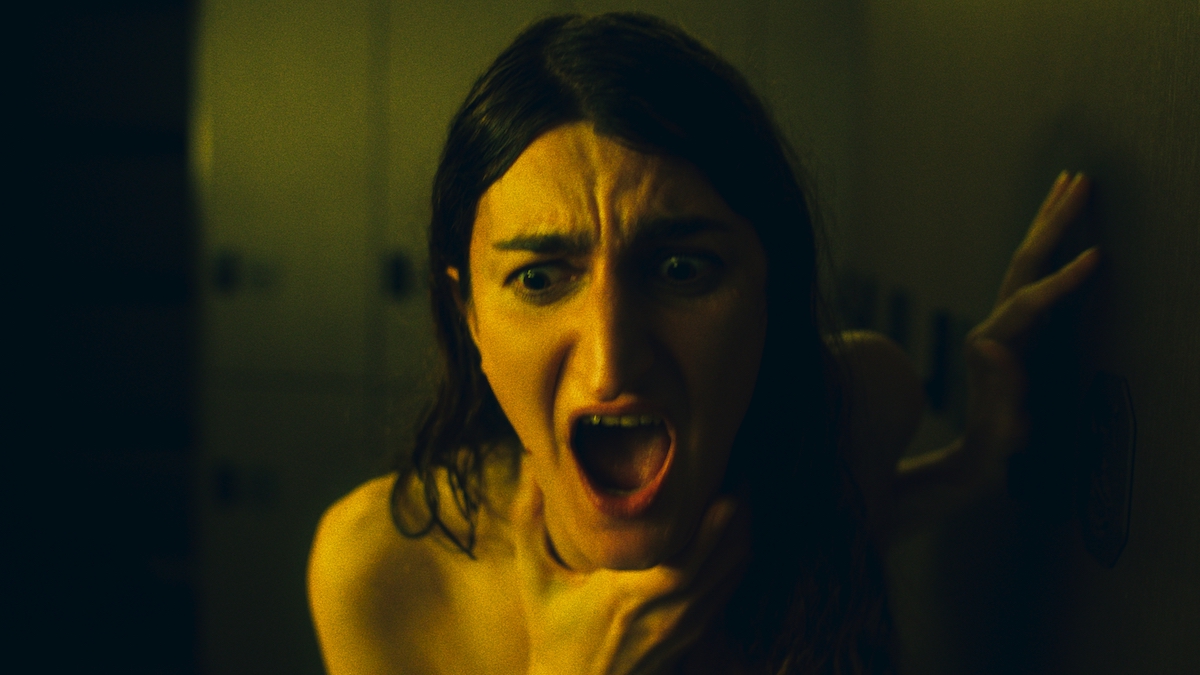 Binary is an elaborate depiction of how trans life finds kinship in the language of the Gothic. The term ‘deadname’ and its use as a verb (‘deadnaming’) illustrates how trans life takes on gothic language. During an important scene, Nisha talks to her brother online and has to hide when her mother suddenly comes on, obviously hiding her transitioned identity. Her mother calls her by her deadname, Bardo. The pain of hearing it is visible in Nisha’s body language. But she’s not simply haunted by her deadname, she’s haunted by the physical form of Bardo, the male body she inhabited physically before she started to transition. She briefly sees Bardo pop up in mirrors and other places throughout the film, until a much more face-to-face confrontation later.
Bardo’s physical manifestation is the most Gothic of everything in Binary, and classically so, if we consider Sigmund Freud’s work on the Uncanny. Part of Freud’s discussions about what is Uncanny dealt with the familiar becoming unfamiliar, or vice versa, producing a sense of disorientation and fear in us. This is exactly what Nisha experiences as Bardo rears his head, disturbing the lines demarcating what is familiar/unfamiliar. She has undergone a rebirth into her Hijra identity, accepting her “holy name” as Nisha, only for her Uncanny identity to resurface and throw everything into turmoil. Even her body itself becomes Uncanny. Her preparation for bottom surgery is fraught with emotions. She asks her doctor: “What if my body doesn‘t regard it as a vagina, but as a wound?” Her body is at once becoming familiar in that Nisha recognises it more as the female form she envisions in her mind, yet the body she’s known for so long is becoming unfamiliar, too. In the end, Nisha’s haunted by Bardo forever because she can’t come to grips with the Uncanniness of her and Bardo’s presence at once in her psyche and her body.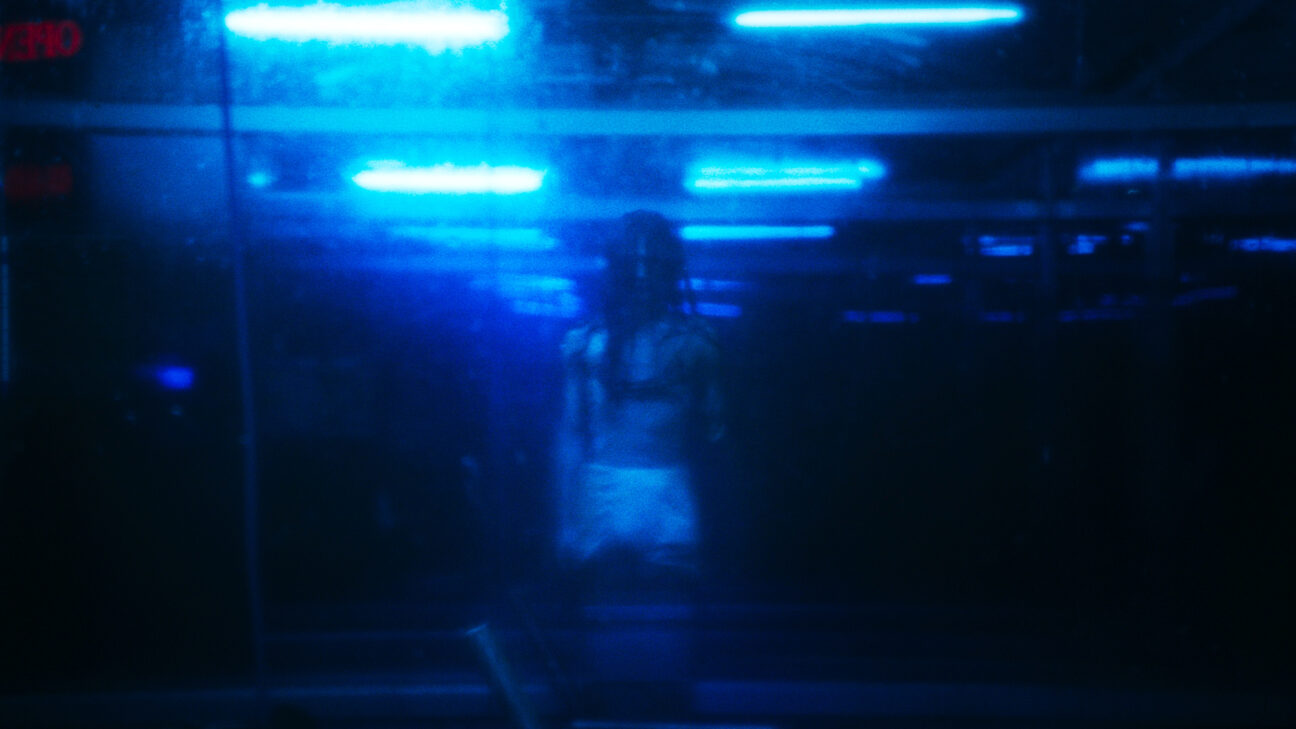 The most important aspect of Binary is its inclusion of Hijras, a South Asian identity similar to what the English-speaking world call transgender. Nisha mentions that she’s a Hijra—in Pakistan, they’re known as khawaja sira—and that Hijras are believed to be “closer to God.” A third sex is mentioned as far back as the ancient Indian Hindu Sanskrit text, the Kama Sutra. Hijra identity is documented as evolving during the Delhi Sultanate (1206-1526) and Mughal Empire (1526-1707), during which time Hijras held many positions from servants to warriors to political advisors.
All this to say, the fact that Nisha is a Hijra and that’s specifically spoken of in the film is incredibly important in an age when the uneducated transphobic masses continue to wrongly claim transgender identity is some new thing or a fad. Trans identity, in many shapes and forms, has been with us since time immemorial. In this way, trans identities do their own haunting, lingering in the shadows of the gender fascists minds, always lurking to disturb their weak heteronormative order.
 Father Son Holy Gore