
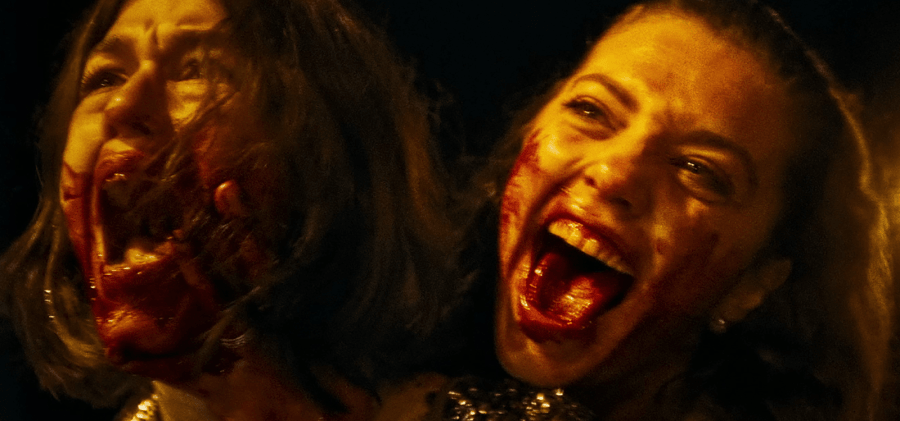
MadS (2024)
Directed & Written by David Moreau
Starring Milton Riche, Sasha Rudakova, Lewkowski Yovel, Laurie Pavy, & Lucille Guillaume.
Horror
★★★★1/2 (out of ★★★★★)
DISCLAIMER:
The following essay contains SPOILERS!
Stare into the abyss,
& the abyss will stare back.
David Moreau returns to the horror genre with his one-take horror sensation MadS, the story of a wild, destructive night that begins by following Romain (Milton Riche) after he takes a strange new drug then, by no choice of his own, picks up an injured, frantic woman (Sasha Rudakova) on the road who’s carrying a tape recorder containing sinister recordings. Things only get stranger and worse from there. When Romain hits the town later, he winds up caught between Anaïs (Laurie Pavy) and Julia (Lucille Guillaume). A love triangle is the least of their worries. The drug Romain took starts to work with terrifying effect. One by one, all three of them suffer dire consequences, but they’re not the only ones.
MadS begins very focused on Romain, then shifts its focus to Anaïs and Julia respectively, and though it keeps strict focus on one character at a time, the film manages to swallow the viewer whole in a mouth of despair, as the world around the characters crumbles as quickly as they do. By the finale, Moreau has submerged us entirely in a nihilistic world filled with desperate people who do not want to succumb to nihilism yet are faced with the fact they can do nothing about it except wait out the worst. The scariest part is that while MadS is a fictional story, its fears eerily mirror what scares so many of us at the moment in reality while we’re forced to watch a world out of our control lurch into a tailspin of violence, spurred on by those in power, that seems to never end.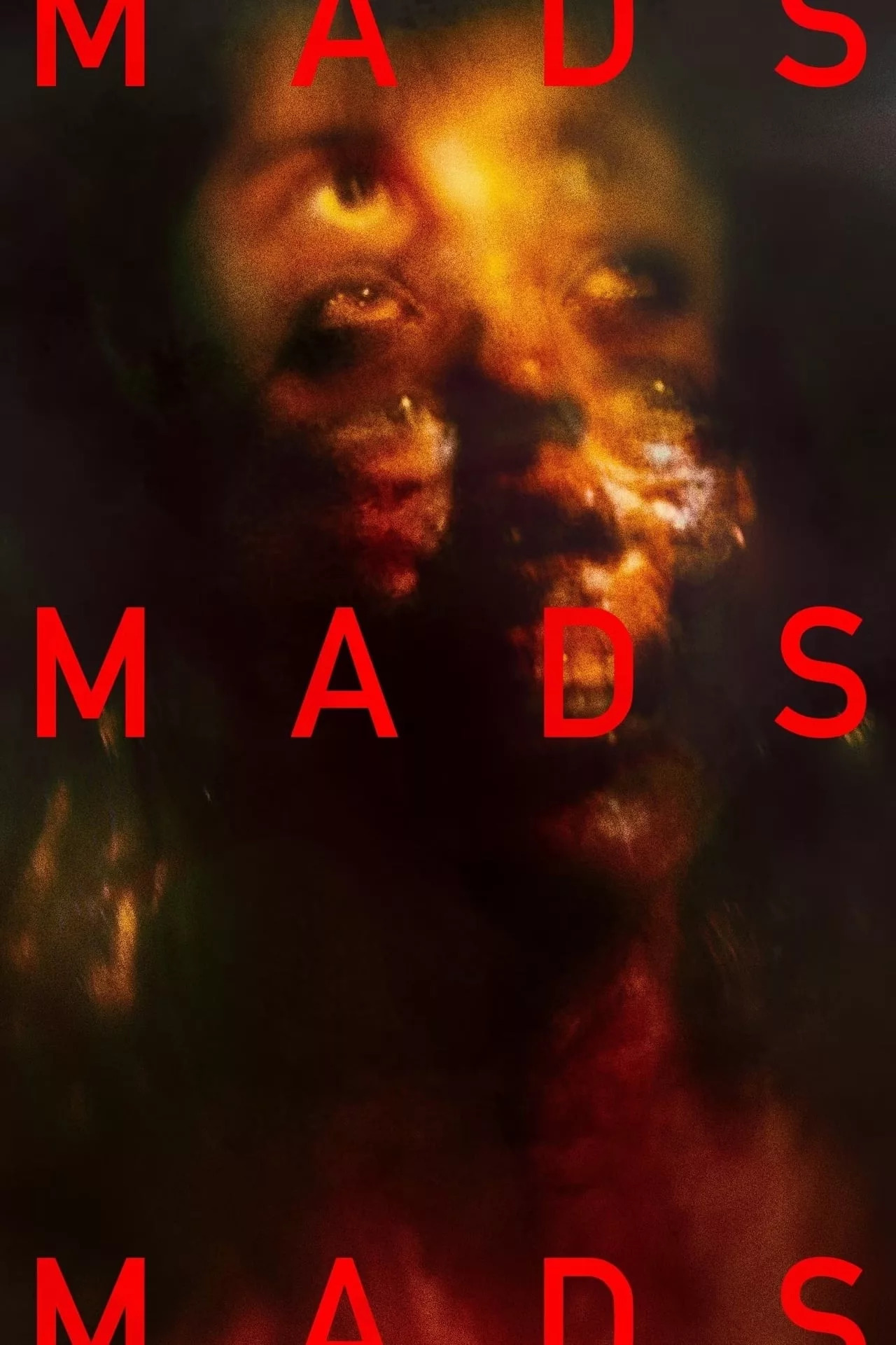 We live in a world in which governments and militaries have been involved with drug trafficking, and a world that saw how people tear each other apart in the midst of unprecedented situations such as a pandemic, so MadS doesn’t come across as a totally unrealistic horror film, especially to those with sceptical and/or nihilistic minds. Throughout the film, military presence escalates in the streets of France, likely the National Gendarmerie, a branch of the French Armed Forces. During the COVID pandemic, countries like China, Jordan, El Salvador, and Italy sent armed soldiers into the streets, blocking places off and keeping people inside against their will, just as the soldiers in MadS do. And even the awful drug at the centre of the film’s horror is not as far fetched as some might want it to seem, not after all the deaths fentanyl has caused after being laced unknowingly into drugs like cocaine, nor after the litany of monstrous deaths caused by Frankenstein concoctions such as bath salts and other newer drugs.
To an extent, Moreau’s captured much of the zeitgeist of this past decade in one nightmarish lump. Life these days, between environmental and political horrors, feels like a nightmare from which global society cannot seem to wake, or, perhaps more aptly, a Hell on Earth. In one scene of Moreau’s film, Anaïs screams to herself: “I‘m dead!” At another point, Julia says of the whole situation: “It‘s a nightmare.” And as part of the credits finish rolling, after we’ve heard “Je suis seule ce soir” by Lucienne Delyle begin to play, Julia’s heard yelling: “Wake up!” She still hopes, after all she’s seen, that she can wake up from the nightmare, which is understandable in general but also amplified by the fact she discovered she’s pregnant; however, the nightmare is now reality, or, as one of the soldiers puts it, “This life no longer exists.”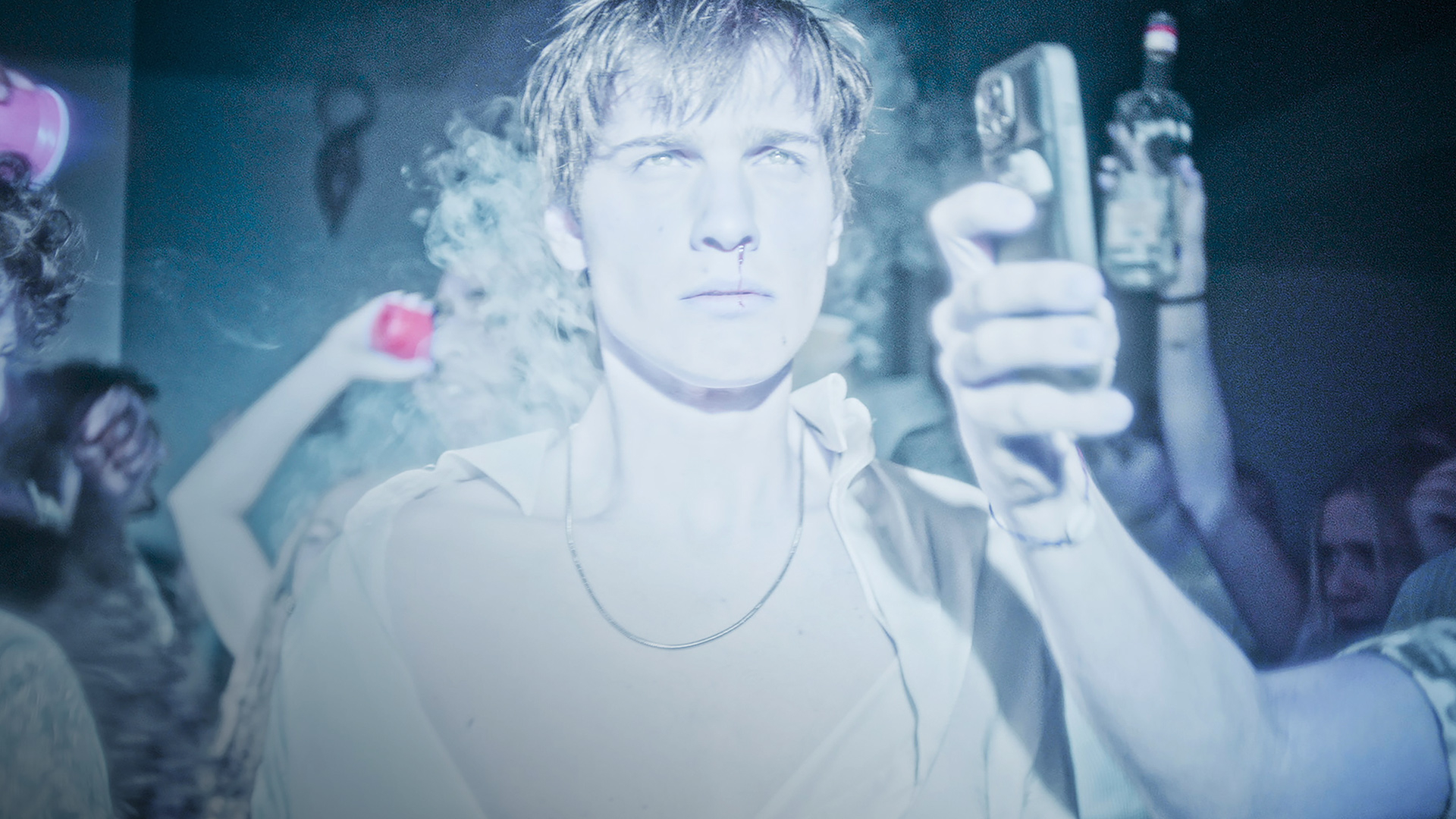 While MadS is great enough on the surface as a high-octane horror with glimpses of heavy drama and action, it’s also a slightly terrifying statement about the state of the world currently, as people continue to bring children into a world that is on fire, filled with violence, and plagued not only by viruses but also by the horrors our own governments can inflict upon us at their will. It’s easy to dismiss this reading since that surface-level enjoyment of Moreau’s film is a satisfying slice of horror that doesn’t need to be dissected to be great. It’s harder to look at a contemporary horror film and grasp just how deeply it represents our present moment in time. This task is even more difficult when said film contains no glimmer of hope, no light at the end of the tunnel, and doesn’t even feign interest for a single second in providing anything of that nature. Moreau came to bludgeon us with MadS, and bludgeon he did, in a delectably devilish way.
 Father Son Holy Gore