
 The Last Sacrifice (2024)
Directed & Written by Rupert Russell
Featuring Geraldine Beskin, Gavin Bone, Janet Farrar, Leila Latif, Ronald Hutton, Adam Godley, Jonathan Rigby, Diane Rodgers, & Tim Stanley.
Documentary
★★★★1/2 (out of ★★★★★)
DISCLAIMER:
The following essay contains SPOILERS!
Avert thine eyes, lest ye be spoiled
by the Olde Gods of Cinema.
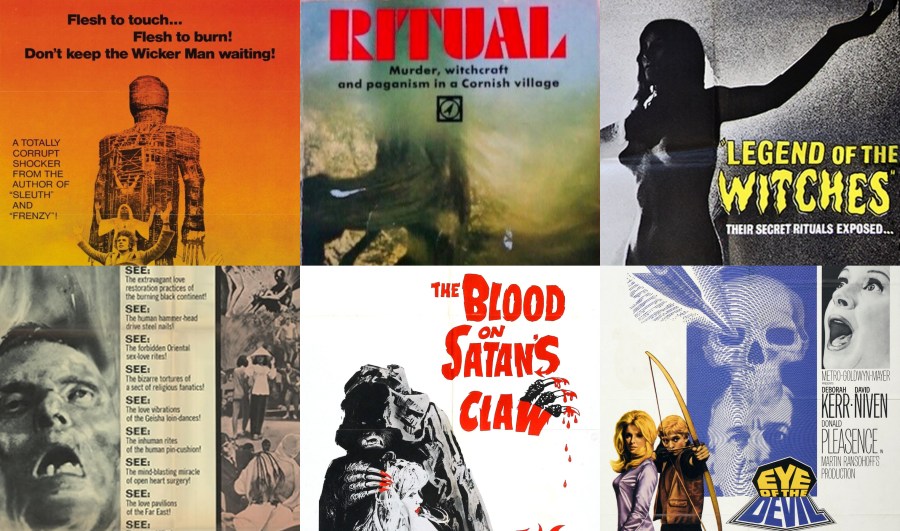
Folk horror has long been a sub-genre of horror, both in written and cinematic form, and in The Last Sacrifice Rupert Russell traces its roots back to the “particularly gruesome” 1945 murder of an old man named Charles Walton in Meon Hill, Lower Quinton in Warwickshire, England. Russell digs into the sub-genre’s true crime roots, though the most exciting quality of the film is how it explores why exactly folk horror has been so linked to British culture and what that says about being British. The documentary is a history lesson related to Walton’s brutal killing, the genre of folk horror from novels to film, and also how the representation of witchcraft in British pop culture was affected, for better or worse, by a number of key figures such as anthropologist/folklorist Margaret Murray, Wiccan Gerald Gardiner, and “King of the Witches” Alex Sanders. So many people rightly give reverence to The Wicker Man for being an eerie and unique horror film, but not enough of them consider just how well it represents British culture and its preoccupations with witchcraft and alternative religions, nor do most of them consider the very Britishness of folk horror and its conventions. In The Last Sacrifice, Russell examines The Wicker Man and more while diving into the heart of Britain through the microcosm of Walton’s seemingly ritual murder.
 The documentary begins by focusing on Walton’s “very English murder in a very English village” and the following investigation into the crime by Scotland Yard’s famous detective Robert Fabian. Just the scene of Walton’s killing is enough to conjure images of the folk horror it later spawned: he was found beaten, slashed, and pinned to the earth by a pitchfork; later reports claimed he also had a cross carved into his chest, but the initial report only showed that his shirt had been opened and his trousers were unbuttoned with the fly open, though, of course, the cross imagery has become truth just through sheer repetition. Even without the carved flesh cross on Walton, his murder is exactly the kind of scene you’d expect to see in folk horror, particularly the folk horror films of the 1970s. What’s even more fascinating than the look at Walton’s murder, as well as the various theories about why it happened, is how the documentary digs into some of the ways in which witchcraft was negatively and positively affected by its presentation in British pop culture.
Margaret Murray particularly had a hand in how witchcraft was viewed across the United Kingdom directly connected to Walton’s killing since she pushed the theory that he was murdered as a “human sacrifice” to “make the crops grow“—again, conventions that we’ve seen over and over throughout the history of folk horror. Murray insisted that the blood rituals of witchcraft were not something out of an immemorial fog, they were supposedly alive and well in the heart of Britain where blood sacrifices to the land were occurring. Something The Last Sacrifice does that’s of great importance is present a positive face to witchcraft rather than playing into perspectives people like Murray represented. Russell includes various pieces in the documentary about people like Gerald Gardiner, known as the Father of Witchcraft, a man who believed in “the very old gods of Britain” and other fantastical things. As Geraldine Beskin states, Gardner “recreated witchcraft as a living, breathing religion in the UK.” People in the media accused Gardiner of “whitewashing” witchcraft, as they made claims about supposed Satanic activity and crimes all over the United Kingdom, not unlike many similar claims in America. And then, somewhere between Murray and Gardiner, was Alex Sanders, who was inspired by Gardiner’s witch religion and didn’t quite do much to dispel many of the rumours about witchcraft. While Sanders wasn’t claiming to be sacrificing anybody, his flashy style and his indulgence in the ceremony of witchcraft—some of which is featured in the 1971 documentary Secret Rites—didn’t exactly speak to the same qualities as someone like Gardiner. Meanwhile, as Murray in her own time as well as Gardiner and Sanders in their own were representing witchcraft in their respective ways, so was British film and television feeding into a narrative about witchcraft; sadly, most of that fiction was following in Murray’s footsteps. The Last Sacrifice doesn’t approach British nationalism, but the arguments it makes about British culture via folk horror along with the rural isolation, distrust of outsiders, and ritualistic violence of the sub-genre are related to the problems and aims of nationalism. Films like Ben Wheatley’s Kill List, mentioned briefly in Russell’s documentary, have continued the folk horror tradition while also subtly recognising its inherent link with a dark British nationalism bubbling just below the surface of the country.
Just like witchcraft was oscillating between being represented as something good, something bad, something weird in British pop culture, so was Britain experiencing “an identity crisis” between the 1940s and the 1970s, as class, sex, gender, and more were becoming part of pop culture and the mainstream, causing British identity to both evolve and be thrown into chaos. As one person in the documentary mentions: “There was an awareness that Britain was going nuts. It was almost as if the country was entering into a nervous breakdown, a kind of collective nervous breakdown.” This is the reaction to Walton’s murder in a nutshell since rumblings of witchcraft and supposed ritual murder burst into the lives of everyday British people, first through the newspaper page and then through the various mediums of media, all of which caused a crisis of identity as many British people began to worry that their culture and their values were eroding or, worse, being attacked. The Last Sacrifice expertly intertwines a history of folk horror in British pop culture, the true crime tale of Charles Walton’s murder, and witchcraft’s religious evolution across the United Kingdom in the mid-twentieth century while simultaneously bringing up important discussions about how all this reflects a part of British identity that might not always be easy for British people to look directly in the eye.
 Father Son Holy Gore