

Never say that film is dead because it will never die. Each year, we’re bestowed with all kinds of cinematic treats. Sure, the cinema industry might be hurting, if you’re a capitalist, but for the rest of us it’s very alive because the films themselves continue to be wonderful, whether it’s a big-budget Hollywood film or something much smaller. Enjoy what’s out there, look beyond just the mainstream hits and whatever well-paid critics are telling you is the best, and you’ll be rewarded with many jewels from the Gods of Cinema.
This is an overall Best-Of list for film in 2024, so the horror films on this list appear on FSHG’s Favourite Horror of 2024 list, too. And, like the other list, this features films with North American release dates in 2024.
The Shade
 Tyler Chipman’s The Shade revolves around Ryan (Chris Galust), a young man whose family is still reeling from a tragedy when his older brother Jason (Dylan McTee) inexplicably comes home from college and starts acting very strangely. Another tragedy rocks the family, which leaves Ryan, his little brother James (Sam Duncan), and their mother Renee (Laura Benanti) devastated. Then Ryan starts to see a horrific vision that’s never far, no matter where he goes. He’s the only one who sees it. This leads him to uncover a deeper darkness in the family.
The Shade works on the level of an allegorical horror that tackles a family curse as the legacy of depression and suicide. Chipman’s film expertly allegorises the struggles of mental illness and the silence around it through Ryan’s family being terrorised by an almost mythical woman-creature (who shares qualities with the harpies featured in a section of Dante Alighieri’s Inferno). You can easily watch this at face value to just enjoy a dark, engaging horror story with interesting characters. This story’s too well told to not read the film as a commentary about how horribly depression can hollow out a family when people are silent, isolated, and refuse to confront the uncomfortable realities of mental illness.
Full essay here.
Property
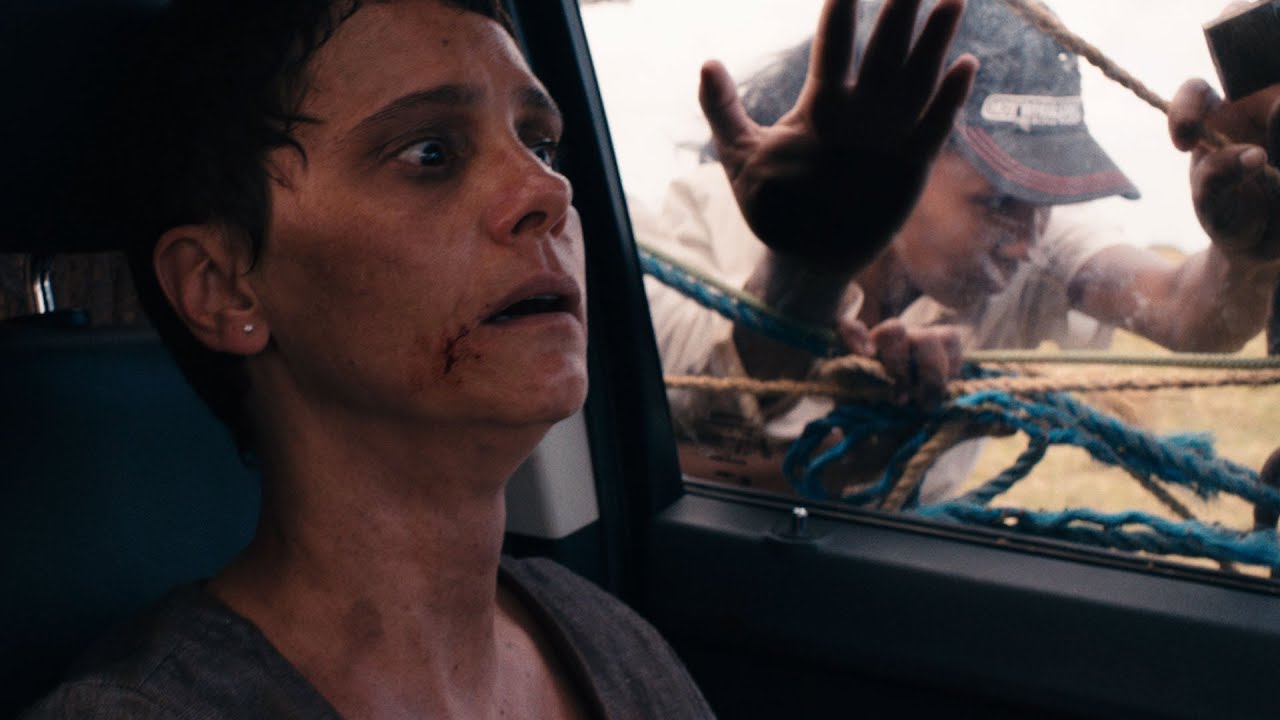 Daniel Bandeira’s Property takes on the shape of a home invasion thriller while developing significant themes with decades of history behind them concerning the social and political landscape surrounding private property in Brazil. The story starts by introducing Tereza (Malu Galli), a former designer who’s become nearly agoraphobic in the wake of a violent attack and hostage situation. She’s getting back out into the world, though. When she and her husband head to their farm to get away from the city a bit, she winds up in the midst of a violent revolt carried out by the farm workers who’ve just been informed they’re being let go and kicked off the land due to a new capitalist investment by the land owner, Tereza’s husband. Tereza’s little getaway in the country turns into a fight for survival, and the only place she has to hide is in her husband’s armoured vehicle, as the workers outside its locked doors figure out how to get to her.
Bandeira smartly starts Property off by building empathy/sympathy for Tereza, portraying her as someone seemingly innocent who’s already survived one violent event and gets tossed right back into another even worse than the first. The film’s emotions don’t quite lie with Tereza and her life of privilege; its heart sits more closely with the exploited and violated landless workers being shuffled off private property so it can be made even more exclusive. The Marxism begins right from the moment the film’s title hits the screen, as tall, looming private property gates close, setting an ominous tone for all that’s about to occur; this image figuratively bleeds exclusion and class division before the blood literally flows later. Property doesn’t pull many punches. It hits far, far harder, and probes much deeper, than any Marxist-leaning story you’ve caught onscreen in recent memory.
Full essay here.
Strange Darling
 For the first little while watching Strange Darling it felt like it was going to be a non-traditional telling of a serial killer story, but, eventually, it became something else entirely, subverting just about any and every initial expectation. A beautiful, disturbing, and impressively told narrative. It’s hard to say too much about the plot without spoiling things. But this one involves a boy meeting a girl, girl falling for boy, boy falling for girl, then, before you know it, everything’s all upside down. Strange Darling is full of style, it’s told well in non-linear fashion, and it is unrelenting in its brutality. Say no more.
You Are Not Me
 Being queer can be hell during the holidays and that’s exactly the case in Marisa Crespo & Moisés Romera’s You Are Not Me, the story of Aitana (Roser Tapias) heading back to Spain for Christmas after running off from her family a few years ago. She’s coming back home with her new wife Gabi (Yapoena Silva) and their adopted infant João. Aitana’s quickly shocked after discovering that her parents, Dori (Pilar Almería) and Justo (Alfred Picó), have taken a woman called Nadia (Anna Kurikka). Her parents initially claim Nadia’s like a housekeeper that, among other things, takes care of her disabled brother Saúl (Jorge Motos). But she starts to realise that they’ve essentially replaced her with Nadia, whom her mother even calls “my daughter” when they’re alone. Yet there’s something far more sinister happening in Aitana’s old family home.
You Are Not Me is a disturbing look at the horrors done to those who don’t fit perfectly into a bourgeois heteronormative world, even those who are meant to be considered family. Aitana’s not wholly rejected by her family for being a lesbian, yet she’s kept at a distance, so much so that her mother and father have replaced her at home, at least temporarily. It’s all so much uglier when we discover exactly why Dori and Justo have taken Nadia in and treated her like their own daughter. Both Nadia and Aitana, to different degrees, are rejected brutally by a hetero, class-based system that doesn’t care about family, nor morality—nothing except a surviving legacy, no matter the flesh-and-blood cost.
Full essay here.
Rebel Ridge
 Most television shows and films about cops are just copaganda, even some of the best ones, so it’s refreshing when one comes along to take on the institution of policing like Rebel Ridge, the story of Terry Richmond (Aaron Pierre), a Marine vet with expertise in close-quarters combat, who winds up going head-to-head with Chief Sandy Burnne (Don Johnson) after his attempts to bail out his cousin go terribly wrong, then also discovers widespread police corruption in the town of Shelby Springs and beyond.
What’s so good about Jeremy Saulnier’s Rebel Ridge is that it deals with very current issues in the world of cops, but it doesn’t take the route of a courtroom-based thriller, nor does it go the gritty street crime route. The plot and story of the film, though not reinventing the wheel, do a good job of taking the audience through a familiar story along a different route than expected. Pierre delivers a cracking performance, plus the action scenes are top notch stuff. Rebel Ridge has a lot going on, as a heavy dig into corrupt cops and the systems they create, and also just a damn fine action thriller filled with enough tension to make you sweat.
Furiosa
 Mad Max: Fury Road was spectacular, though I didn’t love it as much as others, and now with Furiosa: A Mad Max Saga, not only do I love this prequel film itself, it’s made me love Fury Road even more; arguably what a prequel film should do anyway. Furiosa, as its title suggests, takes us back to the earlier years of Charlize Theron’s character, now played by Anya Taylor-Joy. We see more of the Green Place of Many Mothers and the Citadel, as well as Immortan Joe. We see the Biker Horde, led by Dementus (Chris Hemsworth), as they take over Gastown. The apocalyptic world of Max and Furiosa gets wider here, in glorious, chaotic fashion.
Furiosa is not just a bunch of set pieces, which is what Fury Road felt like, even though it was a great film, so the reason why it’s such a fantastic film is because the characters feel fuller and fiery while accompanied by the expected action set pieces. Taylor-Joy and Hemsworth both give stellar performances, each bringing much-needed soul to George Miller’s Mad Max world. There are also just a lot of fun things to fill everything out, such as the History Man, who narrates the film and has expertise on pre-apocalypse history, among other things. Everything comes together even better in Furiosa than in Fury Road while we get the backstory the film promises. An endorsement in two words: fuck yeah.
Femme
 Sam H. Freeman and Ng Choon Ping’s Femme tells the story of Jules (Nathan Stewart-Jarrett), a gay man and drag queen targeted by Preston (George MacKay) and a group of men following an encounter in a shop, resulting in a violent homophobic attack that left Jules traumatised. Months after the attack, Jules attempts to get back out into the world, but soon runs into Preston and realises his attacker is ensconced in the closet. Jules decides to flirt with danger and makes contact with Preston, though Preston doesn’t remember it was Jules he attacked months prior. This begins a kind of cat-and-mouse game that only Jules knows is happening. But Jules is playing with a raging fire in Preston that can and likely will burn him, sooner than later.
Femme is a searing neo-noir thriller that walks the line between eroticism and danger better than any film in the past couple decades. The story forces us to look at how internalised homophobia can warp men into violent creatures, but it also makes us confront how trauma can also send people into dark places that only bring more potential trauma into their lives. Even within the queer and trans communities, not everybody understands what it’s like to be a fem-presenting man confronted with hypermasculine violence—how it can warp a city street into the set of a horror film, how it can isolate a person from their own identity, how it can determine every step and every breath you take. Freeman and Ping capture such a raw look at the violence of internalised homophobia, an aspect of queer life that, despite social advances over the past 60-odd years, never seems to go away.
Full essay here.
Cuckoo
 The weird, wild, and wholly disturbing Cuckoo from Tilman Singer takes us to the Bavarian Alps in Germany where Gretchen (Hunter Schafer) has moved with her father Luis (Marton Csokas) and his new family, wife Beth (Jessica Henwick) and their daughter Alma (Mila Lieu). They’ve gone to live at a strange resort overseen by Herr König (Dan Stevens), who’s one-part Freud, one-part Dr. Moreau. Naturally it’s not long until strange occurrences begin. König warns Gretchen not to travel alone on the road at night. But she doesn’t listen and has a run-in with a strange, violent woman, which opens her eyes to horrifying truths about the resort, König, and even her own family.
Cuckoo is a frightening exploration of a world in which women’s bodily autonomy has been further denied and heteronormativity has warped into perhaps its most perverse, albeit fantastical form. There’s also an inescapable fascism Singer locates in men like König who seek to control the act of reproduction; a fascist desire to do anything necessary to be the ultimate patriarch. Yet, in the end, Cuckoo offers hope and queer possibilities beyond an existence gripped by heteronormative terror.
Full essay here.
Kinds of Kindness
 Yorgos Lanthimos delivers another at-times cryptic film with Kinds of Kindness, a cinematic triptych about methods of control at work throughout most societies today. The first story tracks a man struggling with the strange routine of his life, but then he discovers, after the routine is disturbed, that he desperately loves that routine and may just do anything at all to get it back. The second story involves a man’s missing wife returning only for him to question everything about her. The final story sees a woman searching for another woman who may have supernatural gifts, but the search becomes difficult for her and soon bad things begin piling up around her.
Kinds of Kindness is a stunning and weird piece of work befitting of Lanthimos’s reputation. The characters in this film do awful things, they demand inexplicable things from those around them, and they act in ways that are incomprehensible to the average person, and still they represent so many of us—those of us locked into cycles of control that we can’t escape, for one reason or another, those of us who fall in love with the control itself.
Mammalia
 Sebastian Mihailescu’s Mammalia focuses on a man called Camil (István Téglás) and his girlfriend, or perhaps wife, Andreea (Mãlina Manovici) after she joins a strange women’s commune in the woods outside their town. Camil appears to feel estranged by Andreea’s new life changes. He starts to follow Andreea into that new life, but then she’s nowhere to be found one day, and everything he’s ever known, about the world and himself, is turned upside down, reversed. He finds himself grappling poorly with a whole new existence he never imagined, having lived his entire life as a traditional, heteronormative man.
Mammalia is a bold, surreal work of art that many have already compared to the work of Lars von Trier; as a von Trier fan, I’d have to disagree, only because his work is far more shocking in general than anything in this film. Mihailescu’s film is its own beast, unique in ways totally different from von Trier’s work. Mammalia might appear on the surface as a lament about the state of masculinity in the 21st century, however, it’s far more a surreal satire about the reactionary terror of masculinity in the face of anxieties about a variety of changing ideas concerning gender. Mihailescu satirises male fears by tossing his protagonist into a world where being born a man doesn’t mean what it used to while Camil must reckon with what this shift in gender means for his own life. Mammalia is at once comic, weird, and unafraid to illustrate Mihailescu and co-writer Andrei Epure’s vision of a new social frontier filled with masculine anxieties.
Full essay here.
Kneecap
 The reason why Kneecap is so glorious is due to the fact it celebrates the Irish language, it’s unafraid to wear the truth on its sleeve, and it doesn’t shy away from the political side of Ireland while being high energy, fuelled with equal parts drugs and pride, as the story of Irish hip hop group Kneecap unfolds before the viewer. Even just the group’s name Kneecap is in reference to both drugs and the paramilitaries of Irish Republicanism, so it’d be hard pressed for anyone making a film about these lads to keep the politics out of it anyway. This is a film you simply have to experience for yourself, no matter how you feel about hip hop. It’s fun, it’s funny, and it’s a beautiful piece of work instilled deeply with the Irish spirit.
A Different Man
 A Different Man centres on Edward Lemuel (Sebastian Stan), a struggling actor with neurofibromatosis which has left him with a significant facial difference. He takes part in an experimental drug trial and procedure that eventually rids him of his facial difference. But after this, Edward decides not to remain himself, he chooses to pretend that Edward’s died and he’s now a man called Guy Moratz. And thus begins the depressing downfall of Edward/Guy, as one thing after another teaches him that he made the wrong decision by discarding his old identity.
While A Different Man may just be the most depressing film of 2024, it’s likewise one of the most daring and beautiful, too. The role of Oswald, played by Adam Pearson, is a wonderful inclusion that makes everything happening within the film’s plot feel all the more real and pressing. Stan’s performance is one of 2024’s best because he draws the audience so perfectly into his character’s uncanny struggle with identity. A Different Man is a profound examination of identity and difference and what makes a person unique; equal parts bitter and sweet, wrapped in dark comedy.
The Devil’s Bath
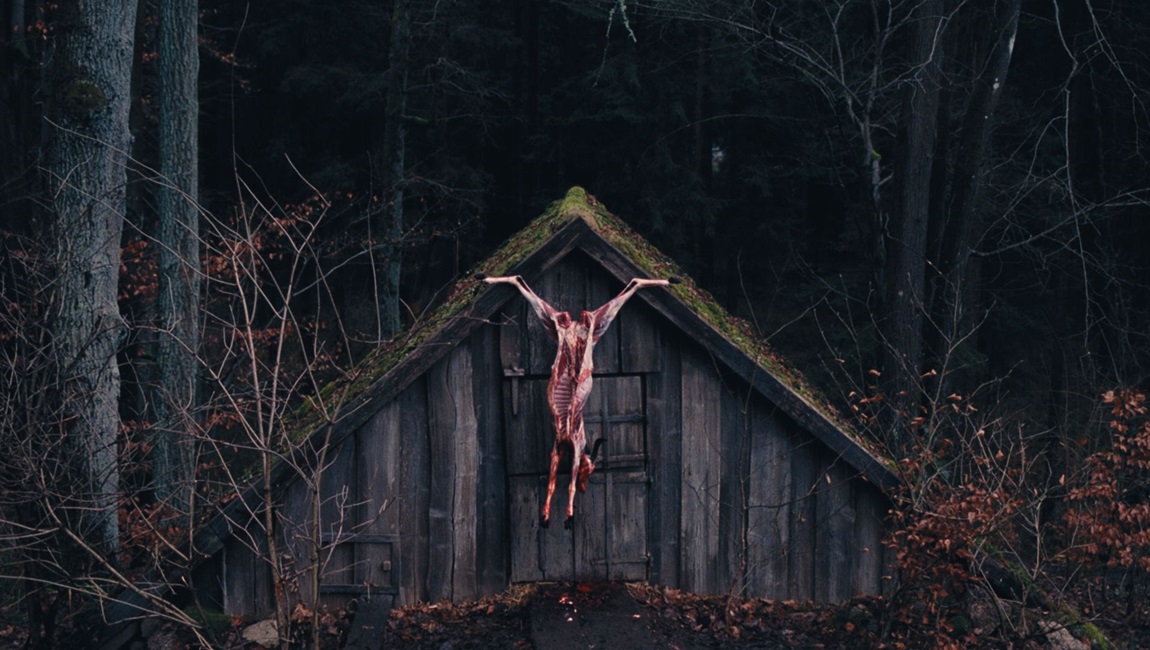 Severin Fiala & Veronika Franz’s latest film The Devil’s Bath is a bleak period piece based on historical records and the work of scholar Kathy Stuart, specifically concerning a woman called Ewa Lizlfellner (and others like her), a 26-year-old Upper Austrian peasant woman who was eventually beheaded in 1762 for the crime of killing a child; in reality, Ewa was committing what’s known as “suicide by proxy,” which was a moral loophole for (mostly) women who wanted to die but did not want to face supposed eternal damnation. Fiala & Franz’s film centres on Agnes (Anja Plaschg), a devout Christian, after she marries Wolf (David Scheid) and they start their new life together. Agnes quickly finds that she’s unhappy with her life, from Wolf’s refusal to be physical with her, to her brutal mother-in-law, to the general repression of women in 18th-century Austria. After a while, she’s desperate to escape, but realises running away won’t fix anything. She wants to die. She also doesn’t want to go to Hell. So, she thinks of a new, albeit terrifying plan.
The Devil’s Bath is a painstaking and painful look into the reality of women like Agnes, particularly in rural areas during the 1700s when patriarchal values and strict heteronormativity ruled from upon the back of religion with a vicious iron fist. The focus is near entirely on Agnes’s tribulations as an 18th-century woman throughout the film, yet Fiala & Franz are sure to occasionally shift focus to Wolf, whose 18th-century existence is likewise in peril due to his inability to fit into the rigid structures of what a man was supposed to be back then; all this is intertwined, as Wolf’s problems play their own part in Agnes’s desperate depression. Altogether, The Devil’s Bath is a story about the ways people in 1700s Upper Austria tried to survive a world that didn’t accept them, and what often happened to those who simply couldn’t survive such a cruel existence.
Full essay here.
Sasquatch Sunset
 The wonderful Sasquatch Sunset follows a group of sasquatches as they traverse through a forest on a kind of pilgrimage. Things start to go wrong when the dominant male of the group gets himself killed, albeit all because he wasn’t too worried about asking for consent when he got horny. From there, the remainder of the sasquatches navigate a brave, new world that they don’t quite understand.
Sasquatch Sunset is a funny, poignant, and brilliant existential film that uses the perspective of the sasquatch clan to interrogate the effects human beings have had on the natural world around us. Sometimes the sasquatches’ reactions to the contemporary world, even just something as simple as a road through a forest or a boombox, comes off as funny, yet underneath their reactions, whether they’re shitting and pissing in anger or staring off into the sunset bewildered, is a deep sadness because we know that their world is becoming much more narrow, all because us humans can’t take care of our most important things.
Rumours
 Anybody who knows Guy Maddin’s work knows that Maddin is not for everybody, and this is no different in the case of Rumours, the latest Maddin film about a surreal and riotous G7 Summit that more so resembles a high school reunion or a bunch of near 20 year olds running a summer camp. There’s an old bog body being dug up, briefly used as a photoshoot for the G7 leaders, there’s a foggy forest, and there’s even a massive brain in the woods. Another film that needs less said before people go into it. The reason Rumours is so stellar is due to the way Maddin, along with co-writers Evan and Galen Johnson, distill the national personalities of each country into the various leaders and also joins them together through the aching human condition, too. A weird and biting satire befitting of Maddin, so, as usual, it certainly won’t be for everybody. For Maddinheads and those who like something a little, or a lot, weird, then you’re probably in for a treat.
The Seed of the Sacred Fig
 The Seed of the Sacred Fig tracks what happens after Iman (Missagh Zareh) is promoted to the position of investigating judge in the Revolutionary Courts in Tehran, Iran, and it inadvertently triggers the collapse of his family. At home, Iman’s wife Najmeh (Soheila Golestani) tries to protect their daughters Rezvan (Mahsa Rostami) and Sana (Setareh Maleki) from the realities of his new position, yet she’s unable to shield them from reality in general due to social media giving the girls a glimpse of protests in the streets beyond the media’s official portrayals. And the family soon implodes following the disappearance of the gun Iman was given for protection.
The Seed of the Sacred Fig is entirely political but it moves the focus from solely being a national issue to one that is very personal at the level of family. Plus, the film’s very existence is political, as director-writer Mohammad Rasoulof, along with stars Zareh and Golestani, have all had issues with the Iranian regime themselves. This is a neo-noir film about the current state of Iran and, above all else, how social media has allowed people to understand the terrible realities happening under Iran’s theocracy, which, like in the film, has the potential to rip not just the nation apart but also individual families. A hopeful yet quietly disturbing film that’s full of power.
Armand
 Renate Reinsve’s 2024 was a great one, as she appears in two films on this list, and her performance in Armand, the stunning directorial debut of Halfdan Ullmann Tøndel, is perhaps the greatest performance of 2024. In the film, Reinsve plays Elisabeth, a single mother who’s reeling from the death of her husband and now has to deal with being called to her six-year-old boy’s school where there’s about to be a meeting about a serious incident between him and another child. Throughout the course of Armand‘s events, Elisabeth goes through a gamut of emotions, but can she hold up under the pressure? And what will happen after her boy’s accused of a heinous act?
Armand does well with an extremely sensitive subject, treading carefully around serious abuse amongst children while never being afraid to confront the borders between truth and lies. The lines between so many things are blurred throughout Tøndel’s film, which offers a lot of ground to play with and explore thematically, and it gives the actors, especially Reinsve, so much room to perform. Armand is about narratives and the purpose they play, particularly the ones that aren’t true; something we’re used to in 2024, in our daily lives and in the news.
 Father Son Holy Gore
Pingback: From Our Members’ Desks (Jan. 6, 2025) – Online Film Critics Society