

People—see: fools—keep talking about how modern horror is not as good. First of all, I take issue with the use of ‘modern’ for a number of reasons, but that’s not what this is about; and second, that is absolute nonsense, as evidenced by a 2024 full of fantastic horror films, from the big-screen moneymakers to the buried-away indies. As all lists on art of any kind are, this list is a subjective one. These are not claimed to be the best of 2024’s horror films (and television shows), rather these are my favourites, for various reasons. So before you rage online about a list not falling in line with your favourites of the year, why not read a little about why these are mine? Or, better yet, write your own list! Either way, tuck into Father Son Holy Gore’s Favourite Horror of 2024 list.
Just a small note before you dig in, hungry reader: The horror films listed here are all going by North American (mostly Canadian) release dates in theatre/digital; I’ve tried only to include titles that are actually available in the 2024 calendar year since previous lists have often included titles that haven’t yet found distribution and are still playing festivals.
Lowlifes
 In Lowlifes, an unlucky family on a road trip find themselves in a difficult situation after they’re forced to take refuge for the night at a rural home. To say anything else about the plot itself would be to ruin this one. Lowlifes was completely unexpected and it hit hard. There’s great subversion of certain horror tropes in this film, as well as a bit of queerness with one of the family characters. Atop it all is the question of family and loyalty: how long do you hang onto a family that does nothing but make life harder, more horrifying, and hold you back? Buckle up tight for this one.
Little Bites
 Spider One’s latest horror film Little Bites is a haunting, nasty tale about a woman who’s been through the ringer with the father of her child and she’s had to keep her daughter at arm’s length for a while since there’s a monster living in their home who’s chomping on her flesh for dinner. Eventually things come to a head when the woman decides she needs to bring her daughter home, but she worries the monster might want a taste of her, too. Little Bites is an unsettling look at trauma and its aftermath; what that does to a person, their confidence, their loved ones, and what they’re willing to do to get themselves out of a deep, dark hole that threatens to destroy them, along with everyone else near them.
Hell Hole
 Oh, the Adams-Poser clan are at it again!
Hell Hole takes place on a hopeful fracking site in Serbia, as a crew are preparing to break ground for new work when they uncover a still-living relic of history buried in the earth: a soldier who served under Napoleon in 1814. Gnarly horror ensues following a further discovery that the timeworn soldier is eating for two. Not in a cute expecting mother way, more like a genuine monstrous birth. Once the thing incubating inside the soldier comes out to play, the fracking crew, led by their boss Emily (Toby Poser), have to deal with an ancient creature desperate to survive in today’s world. Hell Hole is a clever, nasty, and, at times, riotous take on the monster movie that doesn’t skimp on an ecofeminist message about how human beings have gravely mistreated, and used, both the Earth’s body and the bodies of women.
Full essay here.
Evil – Season 4
 From the beginning, Evil has been complex, interesting, funny, horny, and horrific, though Season 4, apparently its final one, stepped it up in a lot of ways, accentuating its best elements for an unforgettable set of episodes. For those who’ve never seen it, Evil brings together scepticism, faith, and psychology to spin a fascinating web of demonic horror that plays with familiar tropes while diving into its own fresh territory. Season 4 has more visions, more demons, a bit more horniness, and its usual devilish sense of humour.
Daddy’s Head
 Daddy’s Head concerns itself with a widow and her stepson after her relatively new husband winds up dying, as they struggle to figure out how to move forward through all their grief. When the boy starts to see and experience strange things, so does the stepmom, and she begins to believe they’re being haunted by something awful, whereas the boy believes it’s just daddy returning to them. A complicated family drama spins into surreal horror quickly after, threatening to tear the remaining family apart.
The scariest part of Daddy’s Head, apart from a few of the chilling visuals, is how well it depicts the dark places grief can take us, something not unfamiliar to the horror genre. But the way the film portrays the son particularly being manipulated by an eerie folklore-like entity is something to behold. Also, this is one horror that ends on a wonderfully happy note while taking nothing away from the scares that precede it. A dark and beautiful story.
Azrael
 E.L. Katz’s Azrael, penned by Simon Barrett, is one of the more intriguing post-apocalyptic horrors in recent memory, if not ever, depicting a world in which nobody speaks and a religious cult community in the woods is preparing to sacrifice a young woman who recently attempted to escape. There’s some ancient evil entity in the woods that the group needs to appease. Things change quite a bit when the woman, Azrael, decides it’s time to fight back instead of trying to run any farther.
The silence of Azrael is an interesting quality because then everything relies on movement and body language, allowing the actors to perform in a far different way than in a film with a screenplay full of dialogue. This film doesn’t spoon feed anything to the audience, and for certain people that can be frustrating, so it’s understandable why others might not love Azrael as much. For those film lovers who like their stories cryptic, Azrael keeps things mysterious until late in the film and forces you, especially without much dialogue at all, to piece things together for quite some time. A unique, violent film full of delightful subversion of the Bible.
Heretic
 Heretic picks up with two young missionaries from the LDS Church, Sisters Barnes (Sophie Thatcher) and Paxton (Chloe East), who are on their way to visit a Mr. Reed (Hugh Grant) after he requested more information about their church. They’re invited into his home out of the rain though insist another woman must be present, so he assures them his wife, currently baking blueberry pie, will be with them momentarily. The time stretches on, and there’s still no sight of Mrs. Reed, and Mr. Reed begins to engage the LDS Sisters in a faith-based lecture that reveals something far more sinister after a while.
Grant eats up the scenery in Heretic, yet East and Thatcher do a good job juxtaposed with his devious character. Best of all, the discussion of faith in the film is delightfully laid out alongside capitalism in a unique way. Some may find it all heavy handed, and there’s no doubt that it isn’t subtly played, yet it’s all so well done because of the way the horror’s weaved into the plot once Mr. Reed introduces his basement into the equation. A disturbing and smart horror about religion, illusion, and control.
The Shade
 Tyler Chipman’s The Shade revolves around Ryan (Chris Galust), a young man whose family is still reeling from a tragedy when his older brother Jason (Dylan McTee) inexplicably comes home from college and starts acting very strangely. Another tragedy rocks the family, which leaves Ryan, his little brother James (Sam Duncan), and their mother Renee (Laura Benanti) devastated. Then Ryan starts to see a horrific vision that’s never far, no matter where he goes. He’s the only one who sees it. This leads him to uncover a deeper darkness in the family.
The Shade works on the level of an allegorical horror that tackles a family curse as the legacy of depression and suicide. Chipman’s film expertly allegorises the struggles of mental illness and the silence around it through Ryan’s family being terrorised by an almost mythical woman-creature (who shares qualities with the harpies featured in a section of Dante Alighieri’s Inferno). You can easily watch this at face value to just enjoy a dark, engaging horror story with interesting characters. This story’s too well told to not read the film as a commentary about how horribly depression can hollow out a family when people are silent, isolated, and refuse to confront the uncomfortable realities of mental illness.
Full essay here.
You Are Not Me
 Being queer can be hell during the holidays and that’s exactly the case in Marisa Crespo & Moisés Romera’s You Are Not Me, the story of Aitana (Roser Tapias) heading back to Spain for Christmas after running off from her family a few years ago. She’s coming back home with her new wife Gabi (Yapoena Silva) and their adopted infant João. Aitana’s quickly shocked after discovering that her parents, Dori (Pilar Almería) and Justo (Alfred Picó), have taken a woman called Nadia (Anna Kurikka). Her parents initially claim Nadia’s like a housekeeper that, among other things, takes care of her disabled brother Saúl (Jorge Motos). But she starts to realise that they’ve essentially replaced her with Nadia, whom her mother even calls “my daughter” when they’re alone. Yet there’s something far more sinister happening in Aitana’s old family home.
You Are Not Me is a disturbing look at the horrors done to those who don’t fit perfectly into a bourgeois heteronormative world, even those who are meant to be considered family. Aitana’s not wholly rejected by her family for being a lesbian, yet she’s kept at a distance, so much so that her mother and father have replaced her at home, at least temporarily. It’s all so much uglier when we discover exactly why Dori and Justo have taken Nadia in and treated her like their own daughter. Both Nadia and Aitana, to different degrees, are rejected brutally by a hetero, class-based system that doesn’t care about family, nor morality—nothing except a surviving legacy, no matter the flesh-and-blood cost.
Full essay here.
Stopmotion
 Robert Morgan’s Stopmotion follows a woman named Ella (Aisling Franciosi), whose legendary filmmaker mother is deteriorating due to arthritis and needs her daughter to help complete her latest stop-motion film. After Ella’s mother winds up in serious condition at the hospital, she’s determined to be the good daughter and wants to finish the film herself. But soon, Ella’s making her own film—something far more personal, and far darker. She starts to get lost in her own mind as she isolates herself from everyone around her. Eventually, all that’s left in Ella’s world is Ella, her imagination, and her past.
Stopmotion is a mix of body and psychological horror that digs into the very human habit of codependency, though it specifically focuses on the codependent relationship that can and does develop between a child and a parent who takes them for granted. Most of all, Morgan’s film looks long into the abyss of trauma through the prism of a wounded person grasping in the dark for any sense of individual identity. Ella’s story is ultimately about how those of us with troubled minds can often distract ourselves from our own pain by dependence on another person. The film’s horrors focus on how this dependence can be dangerous to ourselves and others if we’re not only using it to avoid our pain but also living a life dictated by someone who’s really just controlling us, like a puppet—because when that person dies, or leaves us behind, the only thing remaining is the stain of their power over us, the pain, and a lack of control over our loosened strings.
Full essay here.
Out of Darkness
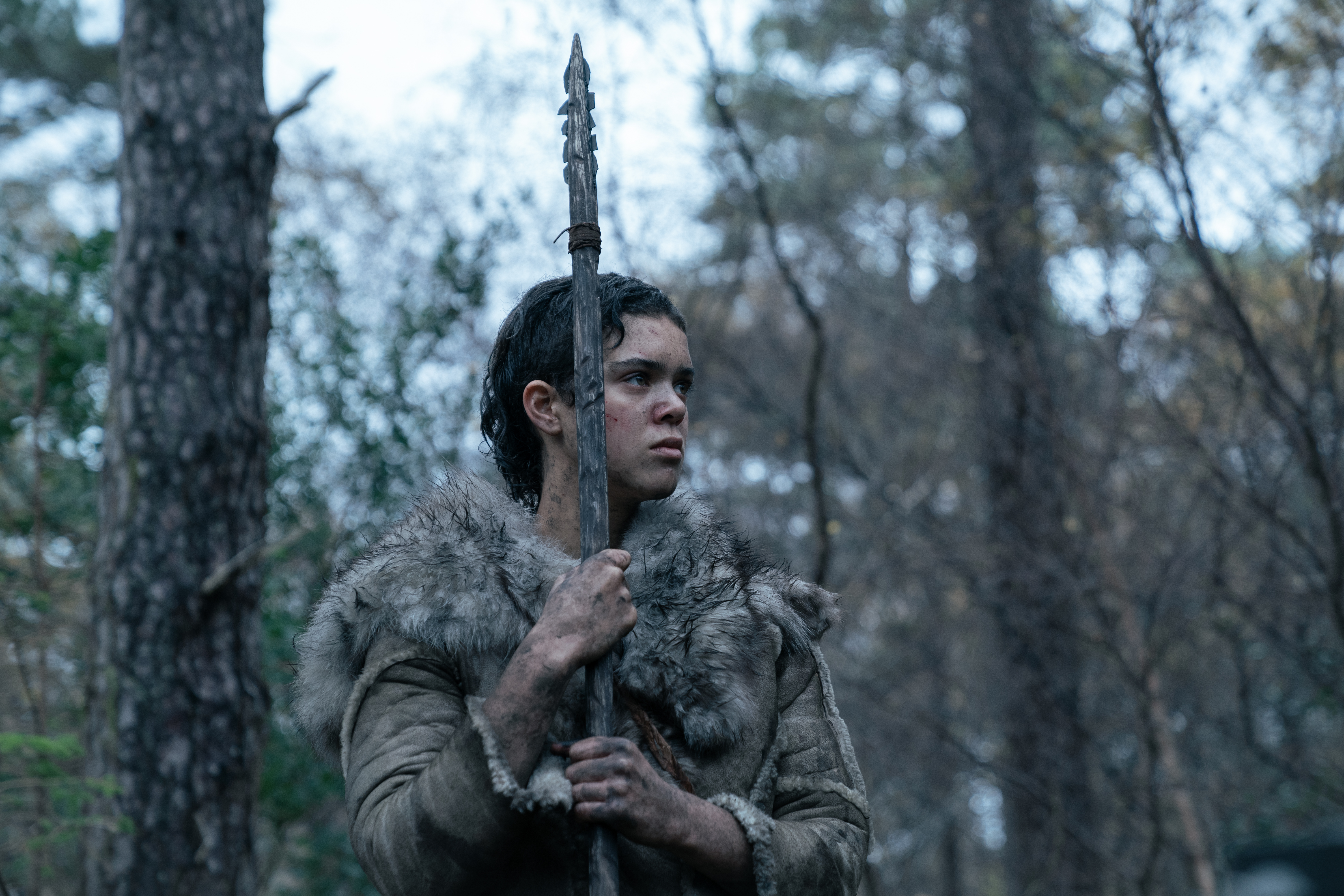 Compared to films set in other time periods, there’s not an abundance of prehistoric stories in cinema, and there are very few good ones among those, but there’s a new title to add to the worthy list with Out of Darkness, which depicts a group of people in the Palaeolithic Age attempting to survive and make it to new territory when they’re seemingly hunted by what they think is an evil, monstrous entity.
Out of Darkness is a fascinating horror-thriller set in the Old Stone Age; an adventure film crossed with elements of a slasher. The most compelling pieces of Ruth Greenberg’s screenplay examine the fact that while human beings and our behaviour have evolved, there are many ways in which things haven’t changed since the early days of human history. Andrew Cumming’s film is about the enduring poison of patriarchy, as well as the human tendency to fear—and destroy—what we don’t know or understand. Unfortunately even today, humans, like the terrified humans from Out of Darkness, still often kill first, ask questions later, if they ever even ask questions at all.
Full essay here.
In a Violent Nature
 Chris Nash’s In a Violent Nature is a slow-burning slasher that tells the folktale-cum-true-crime-story of Johnny (Ry Barrett), who met an untimely death as a boy due to the actions of loggers and is now resurrected to go on a vicious killing spree throughout the wilds of Ontario. Nobody’s safe from Johnny and his violence. But there may be a way for someone to put an end to him carving his way through the forest, if only they can figure out what exactly is driving him to commit unspeakably gruesome horrors against one victim, after another, after another, after another.
Nash’s film has repeatedly been described by various critics as a slasher film by way of Terrence Malick, which is not entirely a bad description; however, most will take this at face value, believing it means the film contains a lot of pretty, carefully-constructed nature cinematography, and while they’re also not wrong, the comparison is far deeper than surface level. In a Violent Nature mixes the brutality and gore of the slasher sub-genre with the existential philosophising via nature typical of Malick’s work. In my reading of Nash’s film, the silent killer Johnny and his rampage are an allegory about the horrors we’ve wrought through our disrespect of the natural world; we reap what we sow eventually when it comes to Mother Nature.
Full essay here.
True Detective: Night Country
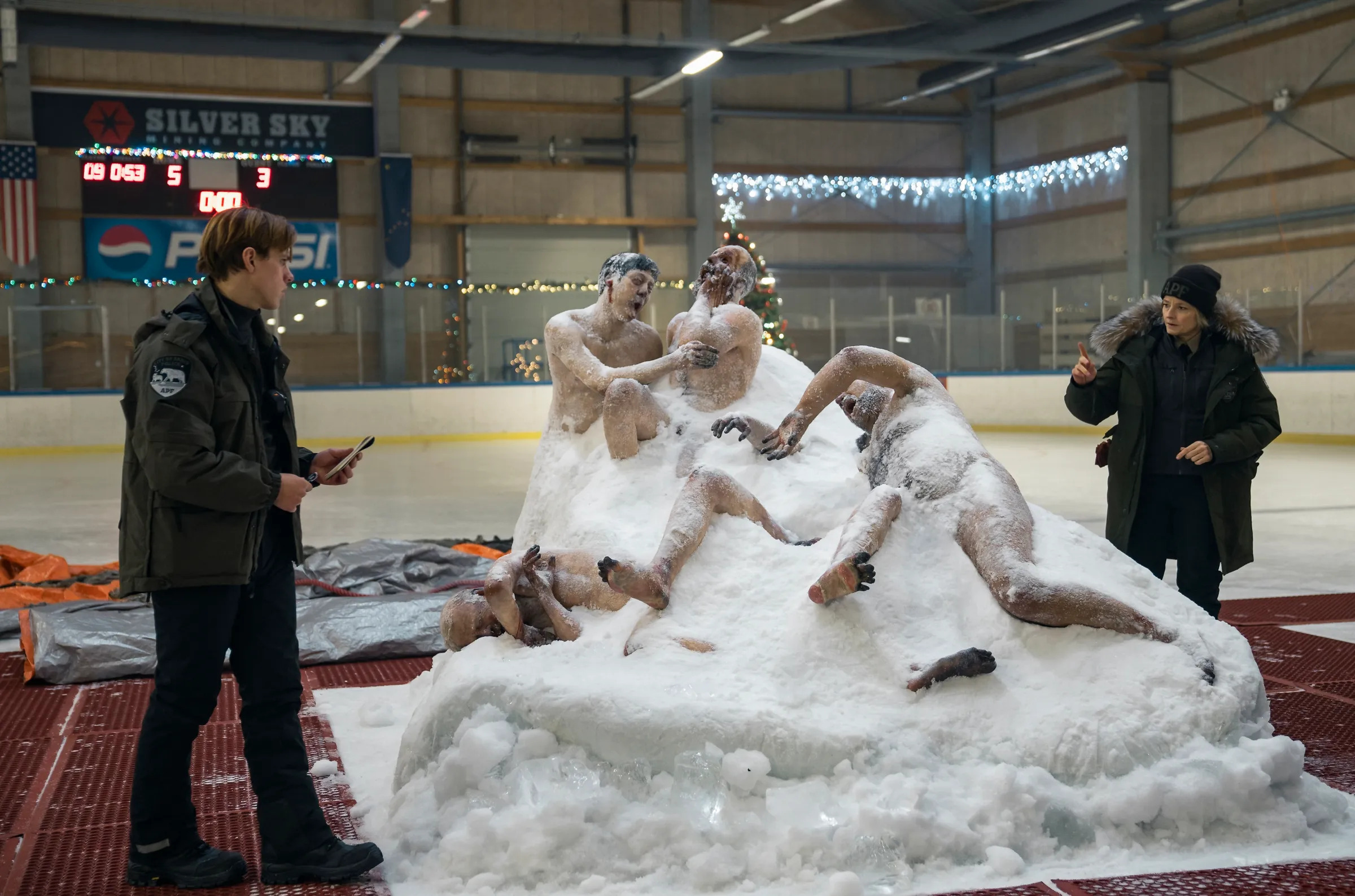 We all loved the first season of True Detective, even if Nic Pizzolatto cribbed a bit too much from Thomas Ligotti and Emil Cioran, though I’m one of the few lovers of the second season, and the third season was a cracking piece of mystery, but True Detective: Night Country hit on a different level because of its use of small elements relating to season one and going in a whole new direction that draws from real-life incidents involving politics and MMIW. The performances in Night Country are up to the par expected after Season One’s tour-de-force, as well as the quality of Season Three: Jodie Foster and Kali Reis each do a fantastic job of making their characters into human beings with all sorts of complications in their lives while they’re trying to solve a twisty, twisted case. This instalment of True Detective learns further than Season One into the cosmos, and all the better for it, no matter how Pizzolatto feels.
The Soul Eater
 Alexandre Bustillo & Julien Maury’s latest film The Soul Eater begins with news of a married couple being brutally murdered and missing kids in the surrounding area of a tiny little French town called Roquenoir. This brings an investigator from the national police, Commander Elisabeth Guardiano (Virginie Ledoyen), and a man from France’s National Gendarmerie, Captain Franck de Rolan (Paul Hamy), together as they each work on the two cases that turn out to be part of one larger mystery. Their dual investigation leads to dark places that neither Elizabeth nor Franck expected. They begin to see what’s happening in that town is linked to a local folklore figure known as The Soul Eater, a monstrous legend that preys on people by taking on the face of those they love.
What Bustillo and Maury do so perfectly in The Soul Eater is combine crime-thriller elements with the horror genre and folklore in service of revealing how a little town has been corrupted and, in turn, corrupted the lives of so many children and their families. The film explores how folklore and legends can be methods of control over the lives of a culture, especially over the young, and how the stories we tell, to others or ourselves, can hold great, even terrible power beyond just words.
Full essay here.
Smile 2
 The first Smile was a great, if not heavy-handed approach to the metaphor of horror film as mental illness, and it’s been surpassed by Smile 2, as pop star Skye Riley (Naomi Scott) embarks on a comeback tour following substance abuse struggles and a car crash that ended with the death of her actor boyfriend. She has a relapse and needs pills, which takes her to the house of the last person who’s been infected by the Smile Entity, and, of course, this means nothing good for her.
Skye’s struggle in Smile 2 takes the first film’s story about mental illness creating a horrific world for those swallowed whole by it into the emptiness of a life based in capitalism with Skye having the world at her fingertips but being incapable of escaping her personal demons and the terrors of depression. The visuals are even battier this time around, especially in the final sequence where Skye goes onstage but finds herself still at the mercy of the terrible entity that won’t let her go. An excellent horror film that has depth and disturbing imagery.
The Devil’s Bath
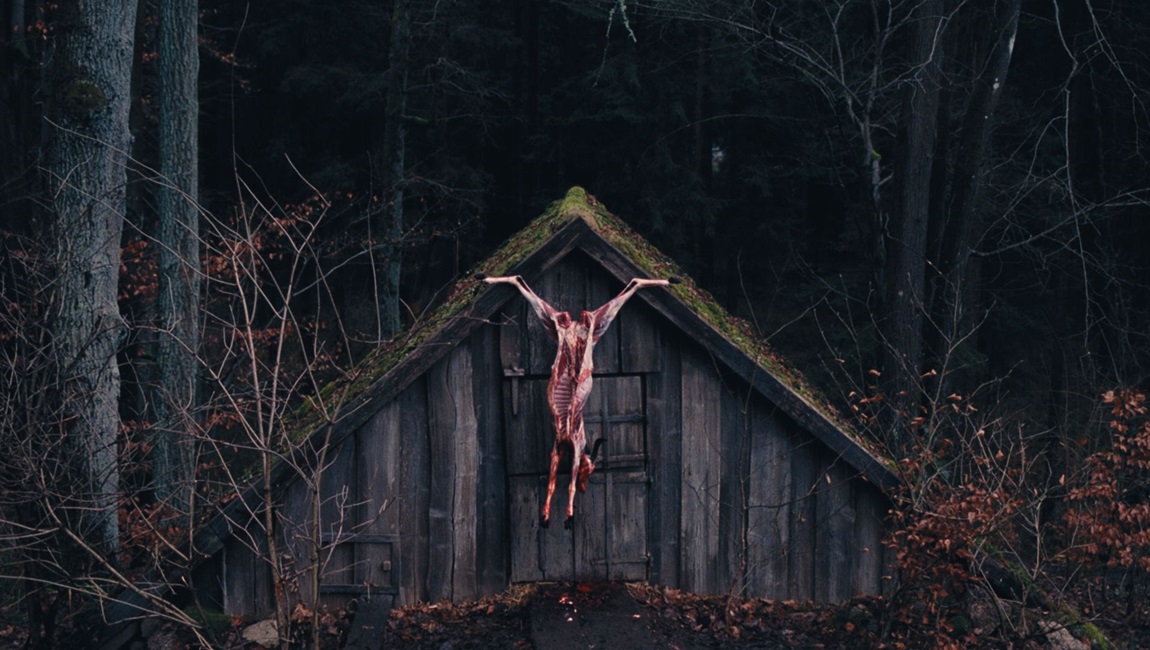 Severin Fiala & Veronika Franz’s latest film The Devil’s Bath is a bleak period piece based on historical records and the work of scholar Kathy Stuart, specifically concerning a woman called Ewa Lizlfellner (and others like her), a 26-year-old Upper Austrian peasant woman who was eventually beheaded in 1762 for the crime of killing a child; in reality, Ewa was committing what’s known as “suicide by proxy,” which was a moral loophole for (mostly) women who wanted to die but did not want to face supposed eternal damnation. Fiala & Franz’s film centres on Agnes (Anja Plaschg), a devout Christian, after she marries Wolf (David Scheid) and they start their new life together. Agnes quickly finds that she’s unhappy with her life, from Wolf’s refusal to be physical with her, to her brutal mother-in-law, to the general repression of women in 18th-century Austria. After a while, she’s desperate to escape, but realises running away won’t fix anything. She wants to die. She also doesn’t want to go to Hell. So, she thinks of a new, albeit terrifying plan.
The Devil’s Bath is a painstaking and painful look into the reality of women like Agnes, particularly in rural areas during the 1700s when patriarchal values and strict heteronormativity ruled from upon the back of religion with a vicious iron fist. The focus is near entirely on Agnes’s tribulations as an 18th-century woman throughout the film, yet Fiala & Franz are sure to occasionally shift focus to Wolf, whose 18th-century existence is likewise in peril due to his inability to fit into the rigid structures of what a man was supposed to be back then; all this is intertwined, as Wolf’s problems play their own part in Agnes’s desperate depression. Altogether, The Devil’s Bath is a story about the ways people in 1700s Upper Austria tried to survive a world that didn’t accept them, and what often happened to those who simply couldn’t survive such a cruel existence.
Full essay here.
The Vourdalak
 Adrien Beau’s The Vourdalak is a unique and deeply Gothic film, in the most literary Gothic sense, based on the 1839 novella La famille du Vourdalak by Aleksey K. Tolstoy: in the 18th century, the Marquis d’Urfé (Kacey Mottet Klein) is lost somewhere in Eastern Europe when he finds his way to the family of a man called Gorcha, but his travels through the dark, desolate woods were nothing compared to his stay at Gorcha’s home, where he falls into the family’s troubles after Gorcha returns as a vourdalak, otherwise known in the Western world as a vampire.
The Vourdalak is more than a gimmick—the eponymous creature is a life-sized puppet voiced by director and co-writer Adrien Beau—it’s a dark, and at times darkly funny, exploration of how love can be a real horror, akin to an infection such as vampirism. Gothic literature has, since its earliest iterations, been connected with dark romanticism, and Beau’s adaptation of Tolstoy’s novella captures the genre’s Gothic romance perfectly with its story situated on the love between a family and the Marquis’s appearance in the family’s midst further brings up moments of romance; some hetero-expected, some queered. The Vourdalak begins in a traditional way for a Gothic tale originally written in the 1800s. By the film’s conclusion, the story winds up in a much different place, and, still, feels straight out of an early Gothic work, many of which were far more queer than a lot of contemporary critics are still willing to admit.
Full essay here.
The Creep Tapes
 Creep was really unsettling, then Creep 2 was even more disturbing, and now The Creep Tapes gives us more of the creep (Mark Duplass), Peachfuzz, and his litany of victims, as well as shows us more about his inner life, including an episode where we get to meet his dear ole mom (Krisha Fairchild). The brilliance of this TV series addition to the Creep franchise is that we get to see a whole variety of episodes from the serial killer’s life that not only continue the eeriness of the films, they further show us more of his psyche and why he does what he does, instead of just more of the same thing. Duplass is effortlessly upsetting and darkly comic as the eponymous creep while his guest stars prove to play their parts perfectly as a bunch of unlucky victims, and Fairchild’s appearance as his mother is just too good, not to mention disturbing as all hell. If you loved the first two Creep movies, you’ll be bound to enjoy The Creep Tapes just as much, if not more.
MadS
 David Moreau returns to the horror genre with his one-take horror sensation MadS, the story of a wild, destructive night that begins by following Romain (Milton Riche) after he takes a strange new drug then, by no choice of his own, picks up an injured, frantic woman (Sasha Rudakova) on the road who’s carrying a tape recorder containing sinister recordings. Things only get stranger and worse from there. When Romain hits the town later, he winds up caught between Anaïs (Laurie Pavy) and Julia (Lucille Guillaume). A love triangle is the least of their worries. The drug Romain took starts to work with terrifying effect. One by one, all three of them suffer dire consequences, but they’re not the only ones.
MadS begins very focused on Romain, then shifts its focus to Anaïs and Julia respectively, and though it keeps strict focus on one character at a time, the film manages to swallow the viewer whole in a mouth of despair, as the world around the characters crumbles as quickly as they do. By the finale, Moreau has submerged us entirely in a nihilistic world filled with desperate people who do not want to succumb to nihilism yet are faced with the fact they can do nothing about it except wait out the worst. The scariest part is that while MadS is a fictional story, its fears eerily mirror what scares so many of us at the moment in reality while we’re forced to watch a world out of our control lurch into a tailspin of violence, spurred on by those in power, that seems to never end.
Full essay here.
Cuckoo
 The weird, wild, and wholly disturbing Cuckoo from Tilman Singer takes us to the Bavarian Alps in Germany where Gretchen (Hunter Schafer) has moved with her father Luis (Marton Csokas) and his new family, wife Beth (Jessica Henwick) and their daughter Alma (Mila Lieu). They’ve gone to live at a strange resort overseen by Herr König (Dan Stevens), who’s one-part Freud, one-part Dr. Moreau. Naturally it’s not long until strange occurrences begin. König warns Gretchen not to travel alone on the road at night. But she doesn’t listen and has a run-in with a strange, violent woman, which opens her eyes to horrifying truths about the resort, König, and even her own family.
Cuckoo is a frightening exploration of a world in which women’s bodily autonomy has been further denied and heteronormativity has warped into perhaps its most perverse, albeit fantastical form. There’s also an inescapable fascism Singer locates in men like König who seek to control the act of reproduction; a fascist desire to do anything necessary to be the ultimate patriarch. Yet, in the end, Cuckoo offers hope and queer possibilities beyond an existence gripped by heteronormative terror.
Full essay here.
Them (Season 2): The Scare
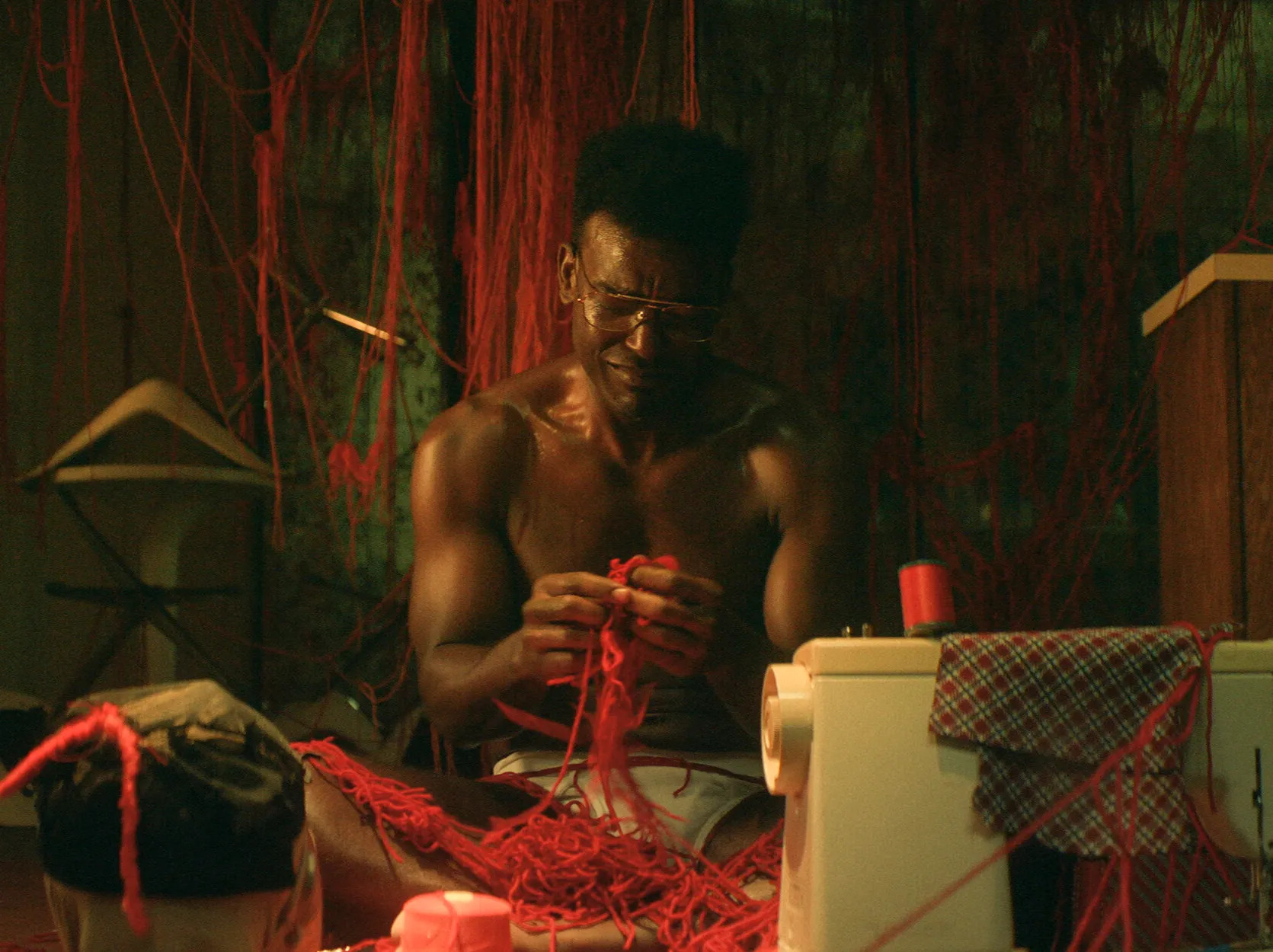 The first season of Them, in my opinion, was fantastic, though it was surely much more disturbing for Black viewers than myself, so the excellent Season Two, subtitled The Scare, may be something easier to watch while still confronting issues that Black communities in America face every single day. The Scare follows two characters closely: Detective Dawn Reeve (Deborah Ayorinde), a member of the LAPD who gets caught up in a disturbing murder case during 1991 in Los Angeles, and Edmund Gaines (Luke James), a struggling actor who starts to go off the deep end a little when he can’t seem to land a good role. There’s a whole lot of compelling thematic stuff in this season about generational trauma and the effects of racism, from the references to the racism embedded in Raggedy Ann/Andy, to post-Rodney King L.A. racial politics amongst the LAPD. The imagery is just as disturbing as in Season One and the mystery of the plot/story is a bit much mysterious this time around, as Dawn particularly is pulled deeper and deeper into abject terror by an unseen presence haunting Black, Latino, and Asian residents of L.A.
Immaculate / The First Omen
 Michael Mohan’s Immaculate brings young noviciate Sister Cecilia (Sydney Sweeney) to a relatively remote Roman Catholic convent in Italy where the nuns take care of older, dying nuns in the last stages of their lives. Sister Cecilia takes her final vows to become a nun at the convent and feels like she’s lucky to have been graciously accepted into the fold. But things begin to take a turn for the worse, as she has strange visions of hooded figures attacking her in the night, then discovers she’s pregnant even though she’s never had sex. Everyone starts to believe that Sister Cecilia is the next Virgin Mary. The truth? Far darker.
In the Roman Catholic Church, women are good enough to be a vessel for immaculate conception (see: rape by way of God), yet they’re still to this day in 2024 not perceived as good enough to be priests. Oh, sure, they can be nuns, so long as they’re fine being married to Christ. Women in Catholicism have no true power within the institution. Immaculate is a horrific, deadpan satire of how the Catholic Church treats women, a very literal depiction of nuns as Brides of Christ followed through to an unnerving biological end. Sweeney’s Sister Cecilia becomes a vessel for a hopeful Second Coming, and for the worst impulses festering within Catholicism since its inception, namely the patriarchal control and misogyny on which it and Christianity as a whole hinge near entirely.
Full essay here.
Similar to Immaculate, The First Omen dives into creepy Catholicism, the birth of the Antichrist, and other such occult madness. What’s so good about this prequel, taking place before the events of 1976’s The Omen, is that it pays service to the original film and also carves its own path while never straying too far from what’s expected of an Omen film. Nell Tiger Free, the shining grace of Servant, plays American nun Margaret, who’s sent to Rome before she’ll take the veil. At an orphanage, Margaret slowly begins to uncover a dark conspiracy in which she’s implicated. There’s a lot of common ground between The First Omen and Immaculate, but they each tread their own paths somewhat, enough that they’re enjoyable individually, though a double feature of these two would be remarkable, as they each peer into the dark Catholic soul (coming from a once-upon-a-time good Catholic boy).
Strange Darling
 For the first little while watching Strange Darling it felt like it was going to be a non-traditional telling of a serial killer story, but, eventually, it became something else entirely, subverting just about any and every initial expectation. A beautiful, disturbing, and impressively told narrative. It’s hard to say too much about the plot without spoiling things. But this one involves a boy meeting a girl, girl falling for boy, boy falling for girl, then, before you know it, everything’s all upside down. Strange Darling is full of style, it’s told well in non-linear fashion, and it is unrelenting in its brutality. Say no more.
Megalomaniac
 Speaking of brutality, Megalomaniac is another stylish piece of horror that is grim, disturbing, and soaked with blood; a tale of a brother and sister whose father was the Butcher of Mons, a horrific serial killer of women, as they attempt to live their own lives while their father’s shadow looms large over them constantly. When the sister, Martha (Eline Schumacher) is abused and assaulted at work repeatedly, she eventually has a mental breakdown that leads her into the dark, disturbing world of her brother Félix (Benjamin Ramon), who’s been carrying on their father’s previous murderous work.
Megalomaniac depicts the generational scars left by a father and how those affect his children, particularly the patriarchal terror that comes to weigh down Martha’s life. There are wild, surreal moments throughout the film, as well as some disturbing moments that are difficult to watch. The end result is a terrifying and, for some, extreme horror about the inescapable tentacles of patriarchy that work their way into peoples’ lives, especially the families of awful patriarchs. This isn’t a horror about smashing the patriarchy, it’s one about how patriarchy can poison everything it touches.
 Father Son Holy Gore
Awesome summaries, thank you for this. I now have lots of movies to look forward to.
LikeLiked by 1 person