
Prison in the Andes (2023)
Directed & Written by Felipe Carmona
Starring Andrew Bargsted, Hugo Medina, Bastián Bodenhöfer, Alejandro Trejo, Mauricio Pesutic, Óscar Hernández, Daniel Alcaíno, & Juan Carlos Maldonado.
★★★★ (out of ★★★★★)
Felipe Carmona’s Prison in the Andes is not quite a full-on horror yet its examination of five men who were Augusto Pinochet’s most brutal generals, colonels, and otherwise high-ranking officials—Pedro Espinoza, Manuel Contreras, Miguel Krassnoff, Odlanier Mena, and Marcelo Moren Brito—is genuinely horrific, on national, psychological, and social levels. The film takes place in a mountain prison a while after Pinochet’s reign of terror ended, where Espinoza, Contreras, Krassnoff, Mena, and Brito are all being held, though in conditions far from what most would consider prison. The men are still able to enjoy many commodities that the average citizen can enjoy, and they do, indeed, have their indulgences. After political pressure mounts against them, Pinochet’s former men begin to worry that all they have and enjoy will soon be taken away. And that’s downright unacceptable to a bunch of gluttonous old neoliberal pigs. Prison in the Andes is at times incredibly satirical and, at every corner, darkly serious, too. It’s the story of power hungry men unwilling to let go of not just their lavish, greedy lifestyles, but also of their grip on the nation. It’s likewise a tale that reminds us how just because the snake’s head of nationalism gets beheaded doesn’t mean its writhing body doesn’t continue to slither through a country.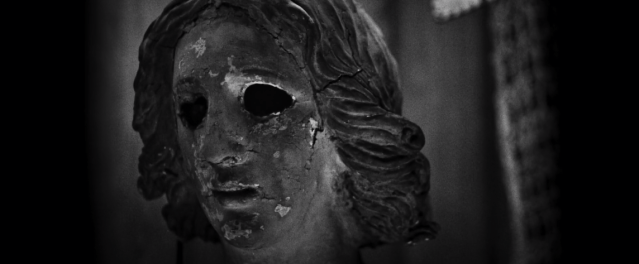 There’s a decadence at work during Prison in the Andes, as we see Pinochet’s most loyal, murderous men in his neoliberal regime engage in nothing but indulgence throughout the film, from their ability to get whatever they want to having the freedom to go for a dip in the pool, all despite being prisoners up on charges such as assassination, forced disappearance, kidnapping, and torture. A tiered system is at work: poor and working-class criminals go to regular prison, bourgeois/military criminals go to faux prison. The most horrific aspect of the film is that we see not a shred of remorse from either of the five prisoners. They mostly double down on their hatred and violence. They call Marxist-Leninists terrorists and blame them for all that happened in Chile. They view themselves as punished unfairly. Krassnoff openly admits to murder on a wide scale: “What did we kill all those communists for?” Brito proudly rattles on about “the country‘s borders.” He says that though he has nightmares and deserves them, he wouldn’t change anything he did during Pinochet’s rule under the guise that it was “for the good of this country.” These men remain monsters in the name of “the motherland.” They’re ultimately unchanged by their actions, and most, if not all, of them would, given the chance, repeat their actions.
All of the monstrosity on display by the five prisoners in Carmona’s film is juxtaposed against their cultural interests and enjoyment, not unlike the Nazis with their love of music, art, philosophy, and so on. Early on, Krassnoff is heard recounting the names of Fabergé eggs, specifically a number of the imperial Easter eggs: the Imperial Pelican egg, the Spinach Jade egg, the Cockerel egg, the Gatchina Palace egg, the Empire Nephrite egg, the Danish Jubilee egg, the Love Trophies egg, the Peacock egg, as well as the Alexander III Commemorative egg and the Alexander III Equestrian egg. Krassnoff later goes on about his love of Mussorgsky’s Pictures at an Exhibition. Mena names one of his pet birds Leonidas, “King of Sparta,” and says the bird’s “stronger than Zeus.” On Independence Day, the prisoners eat a lavish meal while they’re serenaded by a personal pianist.
Prison in the Andes features occasional shots of a statue with hollowed-out eyes, and this is a symbol of the hollowness in the ugly, violent man who admire fine art and music and food but value human life very little, at least human life they deem beneath them. Sickest of all is a reference to “Volver a los diecisiete” by Violeta Parra. The song was used to humiliate a tortured detainee at Cuartel Borgoño, a location run by the National Information Center, the political police and intelligence body responsible for kidnappings, torture, murders, and disappearances during Pinochet’s dictatorship. In this one reference to Parra’s song, Carmona’s film captures all the decadence and horror of these men who indulge in the many fruits of culture yet have no souls with which to truly taste them; they are the statues with hollowed-out eyes, incapable of truly seeing, only consuming blindly. A curious inclusion in scenes featuring Manuel Contreras is The Urantia Book, a spiritual, philosophical text that originated around the mid-20th century in Chicago. The reason this inclusion is so curious is due to the strange ways the book obsesses over race. While The Urantia Book talks at times about race in ways that don’t seem troubling, it always falls back to the idea of inferiority being weeded out, not in a purely evolutionary way but in a way that’s uncomfortably close to eugenics. For instance, in Paper 51 ‘The Planetary Adams’ it states that before the “six evolutionary races” could be blended “the inferior and unfit are largely eliminated.” The book goes on to state that a “Planetary Prince” and “Material Son, with other suitable planetary authorities, pass upon the fitness of the reproducing strains.” Doesn’t that sound like a eugenics council? It feels similar to when Brito goes on about his concerns for Chile’s borders, worrying that once the “military men” aren’t around to defend them, the country “will get filled up with blacks, with drug dealers, with fags, with terrorists.” While Pinochet’s regime is often associated with neoliberal economic policies, it was a fascist and borderline ethnic nationalist regime, too.
The Urantia Book, beneath its cosmic ideas, carries with it a strain of fascism. No wonder Contreras enjoys it, at least in Carmona’s film. At one point, Contreras is explaining part of the The Urantia Book to one of the guards: “Our commission comes from Orvonton, one of the seven super–universes from space, which surround creation. They have no boundaries. The central universe is Havona. This central universe holds the paradise island, which is the geographical centre of the infinity, and the home to the eternal God.” It’s unclear how Contreras sees it in his own head, but he definitely seems to view himself and the four other men who once served under Pinochet as part of the spiritual mythology described in The Urantia Book. Perhaps Contreras views himself along with his four fellow prisoners and Pinochet as the six evolutionary races described in the book. Or maybe he believes that Pinochet was the Planetary Prince, so he and the other four prisoners are planetary authorities, all of whom were divinely selected to pass upon the fitness of those allowed to live and prosper in Chile. Either way, The Urantia Book touches on an unsettling piece of the fascism at work in the souls of Pinochet’s worst supporters.
I opened by claiming Prison in the Andes is not a full-on horror film, but this was a lie. Carmona’s film is horrifying, even if it’s not always in a bloody way, or any way that’s traditionally associated with horror films by most metrics. This is a social horror film that looks at the enduring evils unleashed by Pinochet’s neoliberal, fascist regime—evils barely concealed by the duplicitous faces of supposedly cultured men who pretend to be for the working people but see those around them as nothing more than “Grooms of the Stool” meant to clean up the bourgeois class’s mess. The guards in the prison around Pinochet’s former men are more imprisoned than the supposed prisoners themselves. While the guards remain in the mountain prison at the end of the film, the remaining prisoners (Mena killed himself, just as he did in real life) are brought to Chile’s presidential palace. The men gluttonously suck down oysters, gobble on chicken, and slurp up alcohol with insatiable lust. It’s hideous to watch. A couple of them nearly choke while trying to shovel everything they can into their filthy, greedy mouths. Back at the prison, the guards continue on like always, mowing the grass and taking care of the grounds, picking up after all the prisoners left behind in their wake. Nothing changes in the end, nobody is held responsible. Through this bleak perspective, Prison in the Andes is a pure dose of realism about the neoliberal age, an era of maximum terror and minimum responsibility, a time of deregulated chaos and violence.
 Father Son Holy Gore