

Cobweb (2023)
Directed by Samuel Bodin
Screenplay by Chris Thomas Devlin
Starring Lizzy Caplan, Antony Starr, Woody Norman, Cleopatra Coleman, & Aleksandra Dragova.
Horror / Thriller
★★★★ (out of ★★★★★)
DISCLAIMER:
The following essay
contains SPOILERS!
You’ve been warned.
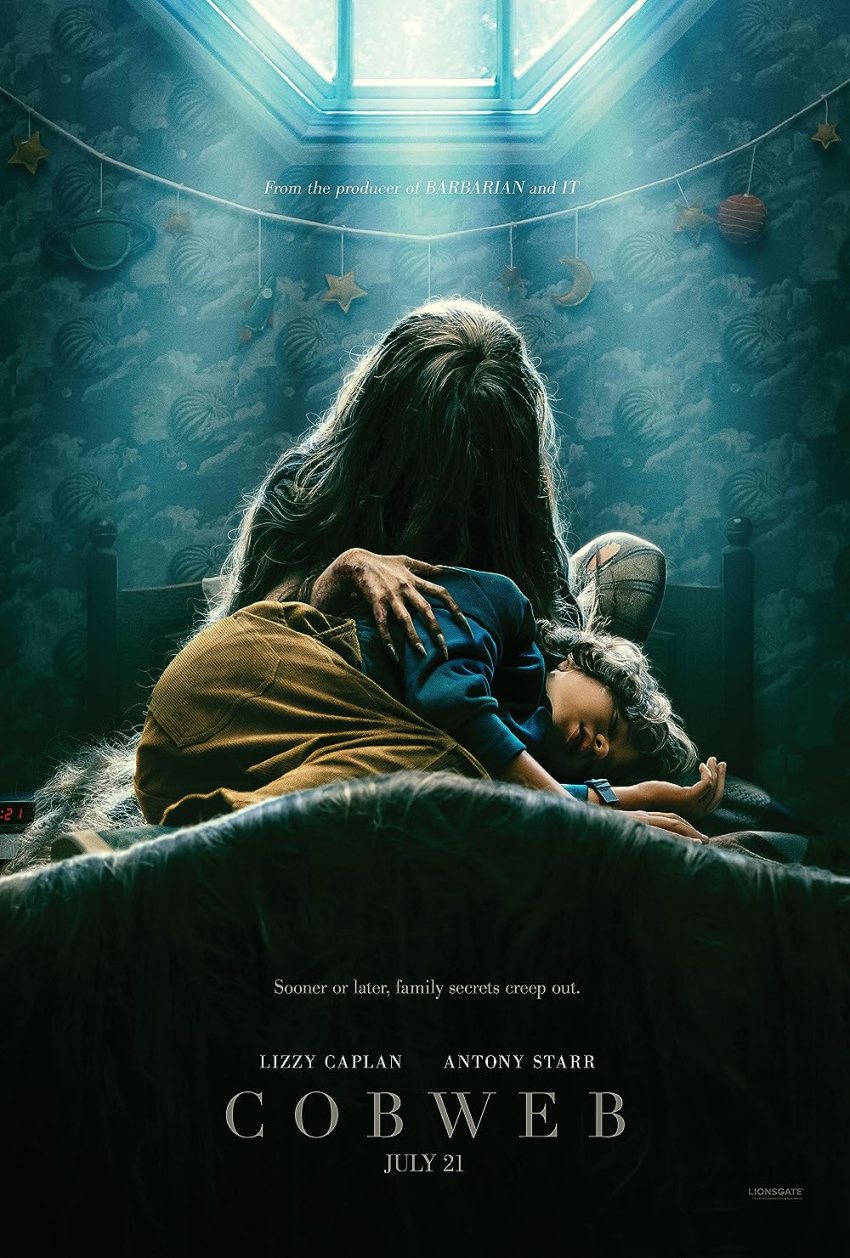
Samuel Bodin’s unnerving Gothic film Cobweb follows the plight of an eight-year-old boy named Peter (Woody Norman) after he begins to hear strange noises in the walls of his home. His parents, Carol (Lizzy Caplan) and Mark (Antony Starr), act like the noises are just the standard noises of an older house. Yet Peter knows differently. His parents are generally harsh on him. Soon the story reveals that things in Peter’s house and his life are far worse than they first appeared, and there is, most definitely, something terrifying creeping around inside those walls.
Cobweb is a contemporary Gothic tale of the ways in which human behaviour creates haunted houses and haunted bodies. The cruelty children are shown can, sometimes, become the horrors of vengeance they seek when they’re grown; how we nurture can be so much more powerful, in negative and positive ways, than nature. As Peter discovers, his parents’ sins are so dark, so deep that they’ve festered into something downright horrific that threatens to destroy the entire family. By the end of the film, he has to decide whether to let the darkness swallow him whole, or if he can reconcile such darkness in his family’s past with the rest of life ahead of him.
 While Cobweb includes a lot of generally (well-used) Gothic tropes, particularly the hidden passages to the basement behind the fridge and to the spider-like lair behind the clock in Peter’s parents’ bedroom, Cobweb also features a classic Gothic use of the repressed. Sigmund Freud described repression in 1915: “The essence of repression lies simply in turning something away, and keeping it at a distance, from the conscious.” One possible reading of the film is that the monstrous sibling repressed into the shadows of the family basement, and sub-basement, is an allegory of the mental illness and trauma families often bury and refuse to talk about, which eventually, in subtle or explicit ways, resurfaces later. This Gothic temporality is perfectly captured in the scene when Peter discovers his repressed sibling’s lair. The clock, behind which is the entrance to the lair, winds up smashed when Peter tries to move it. When it smashes there’s a break in temporality, as the past, in the form of the hidden sibling, literally crawls into the present; the monstrous daughter, once repressed, has now returned to fully terrorise Peter, as the sins of the parents come to bear on their son.
A more obvious reading of Cobweb is how it depicts abuse’s power to turn the traumatised into monsters. Those of us who’ve experienced trauma in our childhoods know that not everybody who’s been abused turns into a monstrous adult themselves. But it does happen, and in Cobweb, Mark and Carol’s treatment of their first child results in that child growing up to be a literal monster. It’s even worse because they then hide what happened, or try to, anyway, all but actually burying her beneath the earth. They originally shun their new daughter because of her perceived monstrosity, as she recounts to Peter: “I was just born this way. And no one loves a monster” (Yasss, Gaga!). Through the repressed daughter, the film further depicts how siblings can affect each other when there’s been mistreatment and abuse in the family. The monstrous sibling trapped in the Gothic labyrinth that is the family home tries to infect Peter with the anger of her own trauma. In one scene, she tries to convince Peter to get back at his bully appropriately: “Make him afraid of you.” After this, Peter viciously retaliates by pushing his bully down the stairs, only for the kid to snap his leg gruesomely. It’s really here where Cobweb reaches its most important point about the lingering traumas of family.
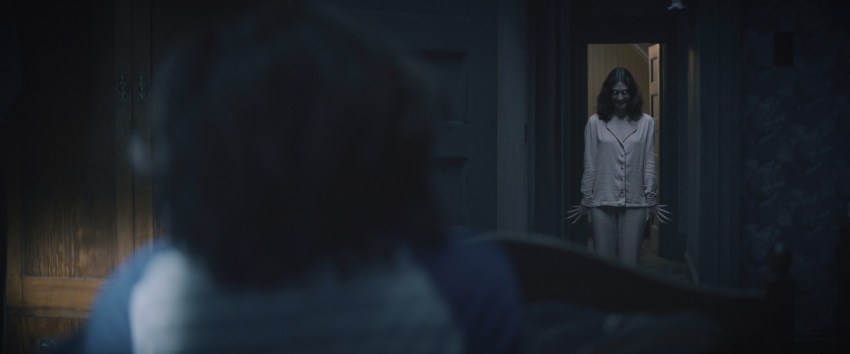 Peter has to decide if he’ll let his own abuse at the hands of his parents, along with the repressed knowledge of their abuse of his sister previously—which, by the way, also resulted in the outright murder of another young girl, outside the family, so that Mark and Carol could keep their Gothic secret, compounding it into more secrets—determine the rest of his life. In the end, he’s left with only his monstrous sibling, albeit he has to lock her away all over again. She tells him: “I‘m family, Peter. I will always be with you.” The trauma born in families stays with a family until there’s nobody left in it. As Freud also writes about repression: “Unexpressed emotions will never die. They are buried alive and will come forth later in uglier ways.” No matter how hard or long trauma is repressed, it will always return, just like Peter’s terrifying sister and all her monstrosity represents. Still, there’s a ray of hope within the darkness of Peter’s Gothic family home. It shines on him. Peter is the last remaining hope for his family. Like so many real kids, he has to fight, every day, as the shadow of his family, in the literal form of his monstrous sibling, hangs over him. At the end of the film, he’s not beaten down. He may not be happy and smiling, yet Peter remains. Sometimes, remaining, surviving, living in spite of our families’ traumas is enough.
 Father Son Holy Gore