
Piaffe (2023)
Directed by Ann Oren
Screenplay by Oren & Thais Guisasola
Starring Simone Bucio, Sebastian Rudolph, & Simon[e] Jaikiriuma Paetau.
Drama / Fantasy
★★★★1/2 (out of ★★★★★)
DISCLAIMER:
The following essay
contains SIGNIFICANT SPOILERS!
You’ve been warned.
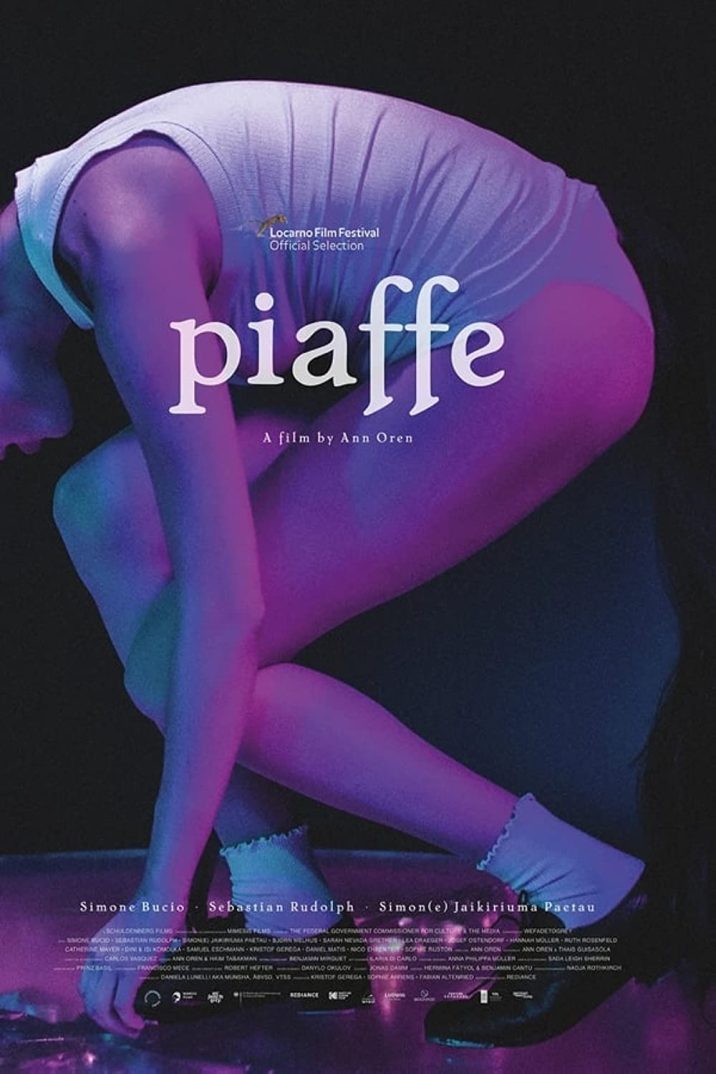 Ann Oren’s Piaffe is a strange, sexy, and profound piece of cinema that’s not at all a horror film, it’s a fantasy film, but one that engages with the body in ways that, typically, only horror films do. The story’s about Eva (Simone Bucio), whose sibling Zara (Simon[e] Jaikiriuma) has a nervous breakdown and is admitted to the hospital, which leaves her with the responsibility of doing Zara’s work as a foley artist. It’s as if Eva completely loses herself trying to find her own identity. She starts growing a horse’s tail while working on a commercial involving a horse, and she begins mimicking a horse in everyday life. She later meets Novak (Sebastian Rudolph), a botanist with whom she has a BDSM relationship. Somewhere within all the changes in Eva’s life she tries to locate the truth—her truth.
Oren’s film feels inspired by the films of Peter Strickland and David Cronenberg, yet her work is wholly unique, as Piaffe has a perspective on gender that most male directors can’t quite access, as well as offers a refreshing take on BDSM as a catalyst for growth. A central aspect of Piaffe is identity and how, sometimes, we let ourselves be other people on the way to discovering who we really are; a confusing path that so many people take before finding themselves. Eva’s struggle with identity is one of control while she tries to set boundaries for herself and for others, so she may finally delineate the borders of her body and her soul.
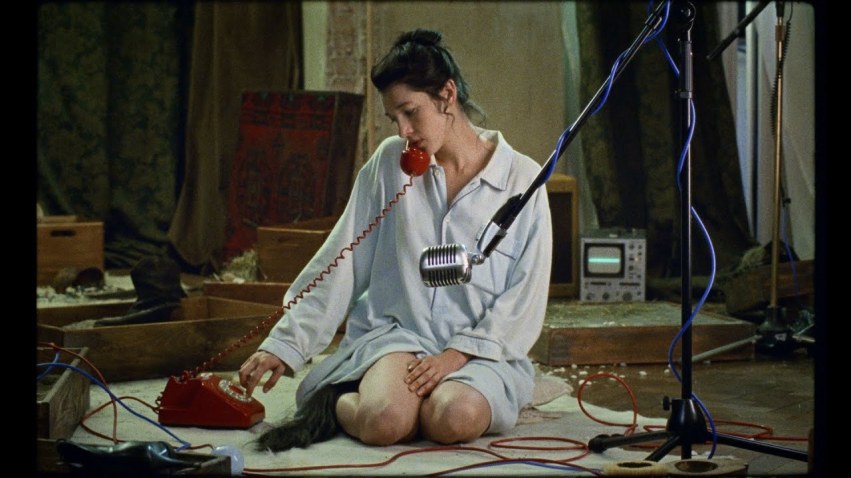 Eva’s perception of herself and of life changes when she delivers her first cut of foley work on the commercial with the horse. A producer says: “A machine made this. I need a human.” Eva not only goes out after this and spends time around a real horse, she walks around on the floor more and more on all fours like a horse with the chain around her neck as a bit in a horse’s mouth to try getting an even fuller sound. This is the start of Eva understanding the power of performance when it comes to her own identity. The longer Eva’s working on recording the horse sounds, the more she becomes like a horse, and it culminates with her growing a tail. At first the tail’s a bit strange to Eva, but after a while, especially once she meets Novak, she starts to enjoy it. More specifically, she starts to enjoy the tail as part of her body in a sexual way; she embraces the tail, the change in her body.
Eva also starts to move like a horse in everyday life. We see her dancing at the club in a horse-like way, or nickering (a sound a horse commonly makes while showing off). The way Eva performs a horse identity through dance is why the film’s title is Piaffe. The word ‘piaffe‘ refers to horse riding movement where the horse does a trot mostly in place; not any trot, rather a specific and cadenced trot. So, a ‘piaffe’ is all about the horse’s performance, and Eva’s learning more about the performance of identity as she tries to figure herself out. While Eva’s bodily struggle is with a horse’s tail and exhibiting various horse behaviours, her issues are reminiscent of how Judith Butler famously conceived of gender as performance: “The effect of gender is produced through the stylization of the body and . . . must be understood as the mundane way in which bodily gestures, movements, and styles of various kinds constitute the illusion of an abiding gendered self.” Oren and Thais Guisasola’s screenplay feels like it evokes Butler without ever having to make any kind of direct connection. Or, rather, their screenplay falls into the same school of thought as much of Butler’s work on gender and performativity.
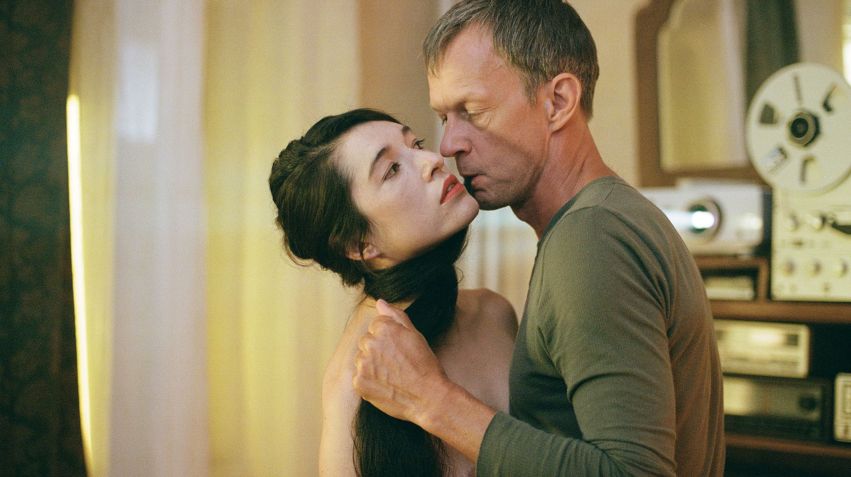
The botanist, Novak, with whom Eva engages in a BDSM relationship provides a breakthrough in a couple different ways. First, Novak’s work with ferns becomes symbolic of how he helps Eva grow through their BDSM. We see how Novak ties his plants as they grow and it’s an effort to help them grow properly. In a similar way, he ties Eva with her hair, and they engage in other BDSM practices, that help her start figuring out her identity. Second, Novak tells Eva about ferns “have a complex sexuality” and that the ways we conceive “of male and female are insufficient to understand ferns, which are both at the same time.” This seems to relate to Eva and Zara. There’s a kind of doubling happening where Eva replaces Zara at work, which is what starts Eva’s questions of identity. Zara’s beauty is made up of traditionally masculine and feminine features, plus there’s the fact the doctor consistently refers to Zara as “they” in conversation. The lines of gender are blurred when it comes to Zara and it reflects onto Eva, whose identity as a whole is blurred between herself/Zara. The horse imagery even connects the siblings, as Eva becomes more horse-like and Zara walks around the horseshoe-shaped hospital.
Finally, Novak’s last scene with Eva is when Oren’s film addresses the roles of the dominant and the submissive, and where the real power lies in BDSM: the sub’s consent. The botanist tries to kiss Eva and she refuses. He keeps insisting on intimacy as she refuses, vocally and physically, then says “I love you” while he grabs hold of her tail, like a human might do to an animal in a punishing way. Thankfully Eva hits Novak in the head and gets away. This scene exemplifies the way in which consent is the hinge on which the play of dominance versus submission rests. This also ties back to the horse imagery once more since riding a horse is like ‘riding’ a sub: the rider/the dominant is only able to ride because the horse/the sub allows it. In a true dom-sub relationship, it is the sub who ultimately holds the power because they allow their partner to exert dominance upon them. Eva enacts her consent by getting away from Novak and returning to Zara, the only person who understands her completely.
 Identity and performance in Piaffe is summed up so well, and beautifully, in the film’s final scene. Zara and Eva wake in the same place again after being separated for most of the story. Zara moves with the beeping of Eva’s foley recording, then the beeping fades away. Suddenly we see Zara appear behind Eva in the bathroom and they grab their sister’s tail as Eva prepares to shave it. The siblings do it together. Eva’s tail still wags. Her feet still clomp like hooves when she walks. By the end of Piaffe, Eva starts to see that the surface may change, what’s on the exterior may look different or not as expected or non-traditional, but underneath lies the truth of the body and the soul.
Eva’s not someone different at the end of the film than the person she was in the beginning, she’s merely discovered herself on a deeper level, beyond who she is superficially as a feminine-presenting person. She transformed in the sense that she grew a tail, yet the tail is, and always was, a part of her; it grew from within. Oren’s film is all about letting our real selves grow, giving ourselves space for the growing pains of identity, and recognising that the power lies within us, as individuals, to determine our own identity.
 Father Son Holy Gore
Wow, this blog post beautifully captures the depth and uniqueness of the film “Piaffe.” I love how the director explores themes of identity and performance, and how the protagonist’s journey towards self-discovery is portrayed through the metaphor of a horse. My question for the author is: How did the use of BDSM in the film contribute to the exploration of the protagonist’s growth and understanding of her own identity? This blog post provides a thoughtful analysis of the film “Piaffe,” exploring its themes of identity, performance, and the power dynamics within BDSM. The question I have for the author is: How did the use of BDSM in the film contribute to the exploration of the protagonist’s growth and understanding of her own identity?
LikeLike
Thanks for the comment! As I touch on in the essay, I believe that the BDSM helps Eva grow and understand her own identity primarily through how she comes to understand consent. Before the BDSM relationship, Eva let others dominate her, though without consent; she simply accepted her submissive position in life/society. After the BDSM relationship, Eva’s come to understand her power, even as a submissive person, in that she is the one who must give her consent to be submissive.
LikeLike