
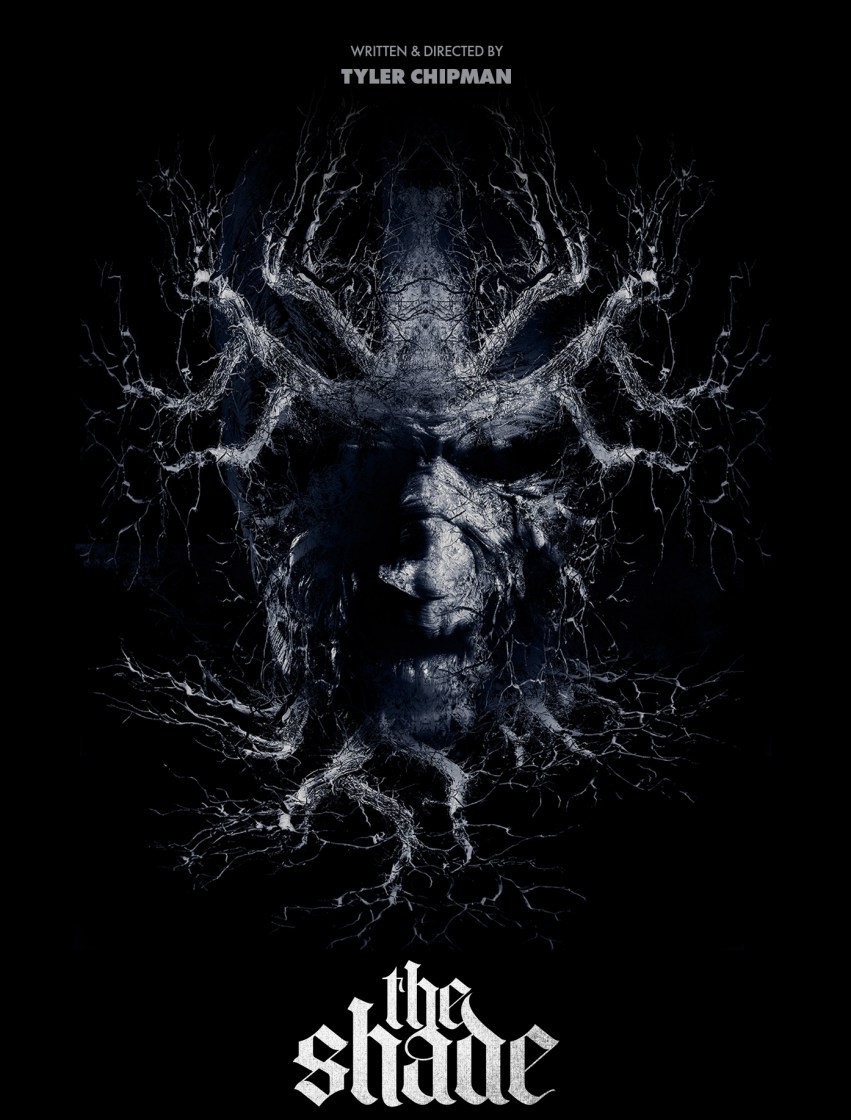
The Shade (2023)
Directed & Written by Tyler Chipman
Starring Chris Galust, Dylan McTee, Sam Duncan, Laura Benanti, Brendan Sexton III, Michael Boatman, & Mariel Molino.
Drama / Horror
★★★★1/2 (out of ★★★★★)
DISCLAIMER:
The following essay contains
SPOILERS!
Turn away thine eyes,
lest ye be spoiled, forever.
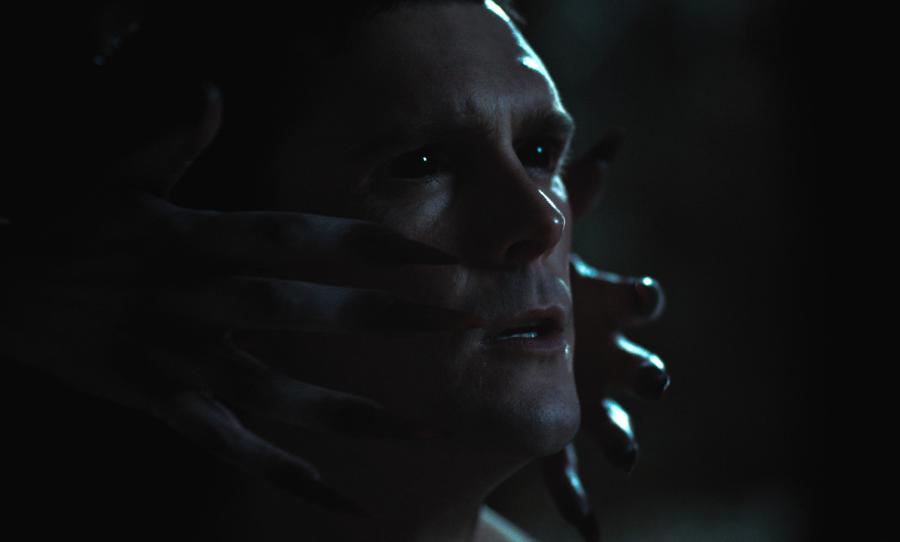
Tyler Chipman’s The Shade revolves around Ryan (Chris Galust), a young man whose family is still reeling from a tragedy when his older brother Jason (Dylan McTee) inexplicably comes home from college and starts acting very strangely. Another tragedy rocks the family, which leaves Ryan, his little brother James (Sam Duncan), and their mother Renee (Laura Benanti) devastated. Then Ryan starts to see a horrific vision that’s never far, no matter where he goes. He’s the only one who sees it. This leads him to uncover a deeper darkness in the family.
The Shade works on the level of an allegorical horror that tackles a family curse as the legacy of depression and suicide. Chipman’s film expertly allegorises the struggles of mental illness and the silence around it through Ryan’s family being terrorised by an almost mythical woman-creature (who shares qualities with the harpies featured in a section of Dante Alighieri’s Inferno). You can easily watch this at face value to just enjoy a dark, engaging horror story with interesting characters. This story’s too well told to not read the film as a commentary about how horribly depression can hollow out a family when people are silent, isolated, and refuse to confront the uncomfortable realities of mental illness.
 Like some other great horror films—John Carpenter’s Halloween started the trend with its classroom scene about fate—Chipman’s film features a great classroom scene during which one of the story’s themes is made clear, and there’s a great use of Yuval Noah Harari’s work here. A teacher refers to Harari’s ideas about how “shared mythology, our penchant for collective storytelling, is a big part of why our species was able to organise on a scale necessary to achieve dominion over much of nature.” She goes on to say that people “possess the ability to create complex fictions” and talks about how we often live our lives by those fictions. Or, as a kid in Ryan’s class succinctly puts it: “We all believe our own bullshit.” In The Shade, a whole family’s fictions come into play. Ryan complains to his therapist about how people “sugar–coat” the death of his father rather than confront the truth, that his father committed suicide. Ryan’s family are plagued by suicide, and the recurring figure of a terrifying woman symbolises the hereditary plague of mental illness that looms not only over Ryan but also his little brother.
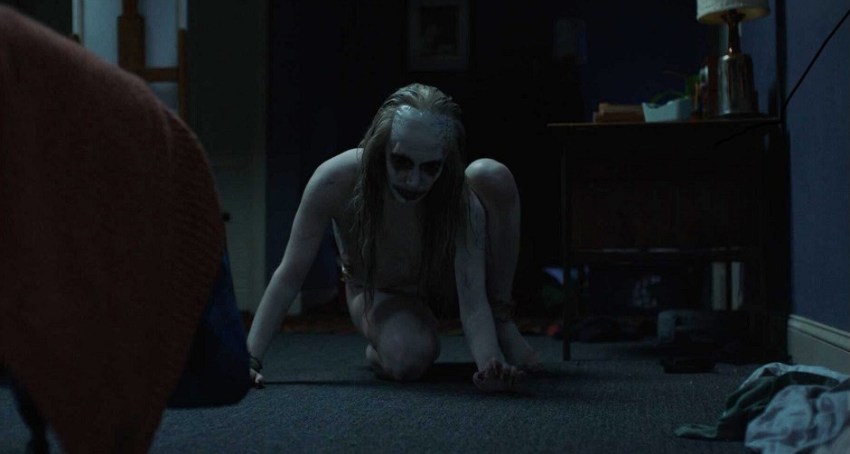
The Shade‘s creepy lady is genuinely terrifying, only more so because of how she represents the violent, pointed-inward darkness of mental illness that’s all but picking off the men in Ryan’s family one by one. There’s a Dante’s Inferno-quality to the woman, who, in the final scene, appears harpy-like with big, awful wings. In Canto XIII of Inferno, Dante and Virgil come upon the second ring of the Seventh Circle of Hell, where they find the Wood of the Suicides in which people who’ve taken their own lives are turned into gnarled trees and fed upon by harpies. Similarly, there’s a scene in The Shade which features Ryan having a vision of being in the woods, where he walks up to a tree and sees his brother, now pale like the ‘harpy’ lady and stuck inside the trunk of a tree.
I’m saying it: Chipman’s The Shade and Dante’s Inferno are spiritual cousins.
The harpy-like woman is an embodiment of suicidal thinking—the physical threat posed by mental illness such as depression. Someone tells Ryan that “if it‘s only happening in your mind, it can‘t hurt you,” which is one of those things that many people with mental health issues hear from well-meaning people who simply can’t comprehend how mental illness operates. The dark woman’s constant presence in Ryan’s life after he walks in to see Jason hanging by the neck is the looming threat of what Ryan’s mental illness, and now trauma, might potentially cause him to do, too. Ryan suddenly starts seeing the woman after Jason dies, as the curse of mental illness passes directly onto him through an act of trauma. But it’s all about whether Ryan gives into the darkness, too, or if he can find a way to break the cycle.
 The Shade is proof you can make a haunting film that doesn’t lose its power by ending on a note that’s defiantly positive. A middle finger from Ryan in the face of that hellish demon haunting his family is a tongue-in-cheek moment that perfectly conveys a message of resilience. In the end, Ryan and his brother stand stronger together because they recognise the threat rather than staying silent about it. What Ryan complained about earlier, the sugar-coating of his father’s death, is now gone; he and his family face the darkness as one, instead of being divided, quiet, and privately in pain.
Amongst all the haunting and the trauma, The Shade is a film that speaks to the terrors of isolated mental illness that can, and often do, occur within families when people refuse to face harsh truths. Chipman’s film is harrowing. It’ll stick to your bones long after it’s over. Yet the film’s last few moments contain radiant positivity that refuse to let darkness win.
 Father Son Holy Gore
Pingback: THE SHADE (2023) Reviews of supernatural horror plus trailer – LiveMag