

Raging Grace (2023)
Directed by Paris Zarcilla
Screenplay by Paris (& Pancake) Zarcilla
Starring Max Eigenmann, Jaeden Paige Boadilla, Leanne Best, & David Hayman.
Drama / Horror / Mystery / Thriller
★★★★1/2 (out of ★★★★★)
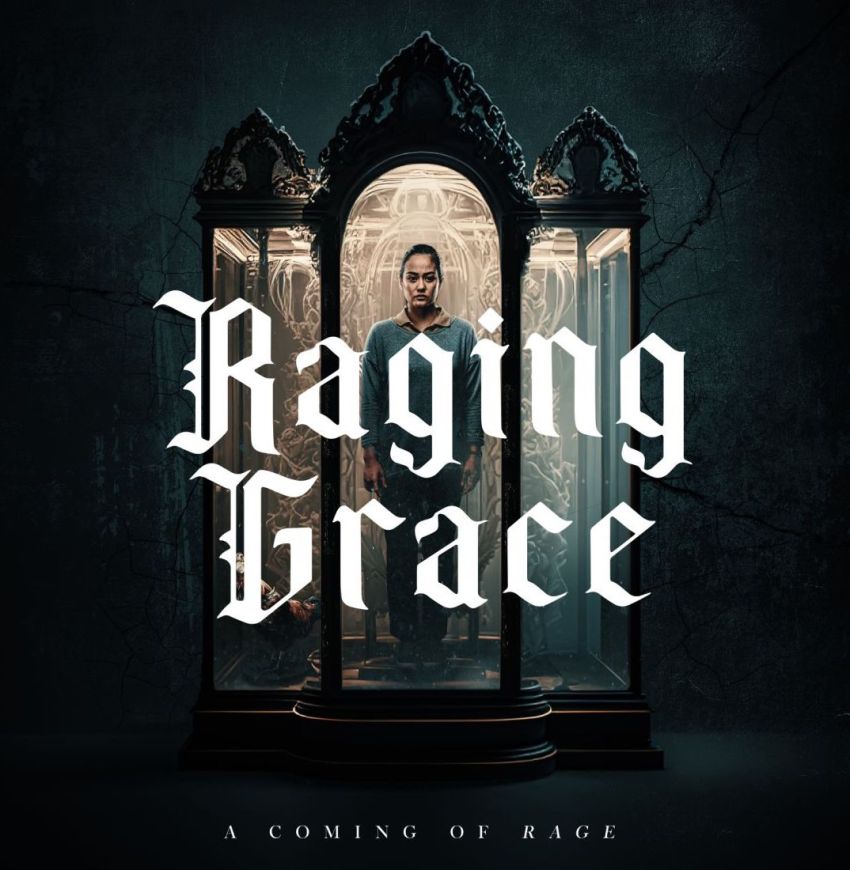 Raging Grace follows an undocumented Filipina immigrant called Joy (Max Eigenmann) and her young daughter Grace (Jaeden Paige Boadilla) after she finds new employment looking after an old mansion along with its owner, an old, terminally-ill man called Mr. Garrett (David Hayman). Sometimes Mr. Garrett’s niece Katherine (Leanne Best) drops by, but often it’s just the old man, Joy, and Grace; even then, Grace must hide because nobody’s supposed to know she’s living there with her mother. Eventually, Joy starts to understand that things aren’t what they seem inside the mansion, and maybe the old man isn’t as sick as he’s been made out to be—and there are even deeper, darker secrets lurking within that place’s walls.
Paris Zarcilla’s Raging Grace is a powerful, occasionally funny, and dark exploration of how whiteness impacts the lives of immigrants, particularly Filipino immigrants living in the United Kingdom. Rudyard Kipling’s “The White Man’s Burden” helps frame the film, as Zarcilla digs into the Orientalism and daily microaggressions that Filipinos face from white people. Zarcilla further looks at how some pretend to ‘love’ another culture when they’re really appropriating and consuming said culture without giving anything back to it, often treating people from the actual culture like objects, fetishes, or even animals. Raging Grace is a Gothic film that depicts the horrible power whiteness holds over people from non-white cultures. Yet the film’s hopeful ending speaks to the power of firmly holding onto one’s roots no matter where one ends up geographically, and recognising that what whiteness fears is a world without the selfless labour of so many non-white cultures that allows them to live a life of comfort.
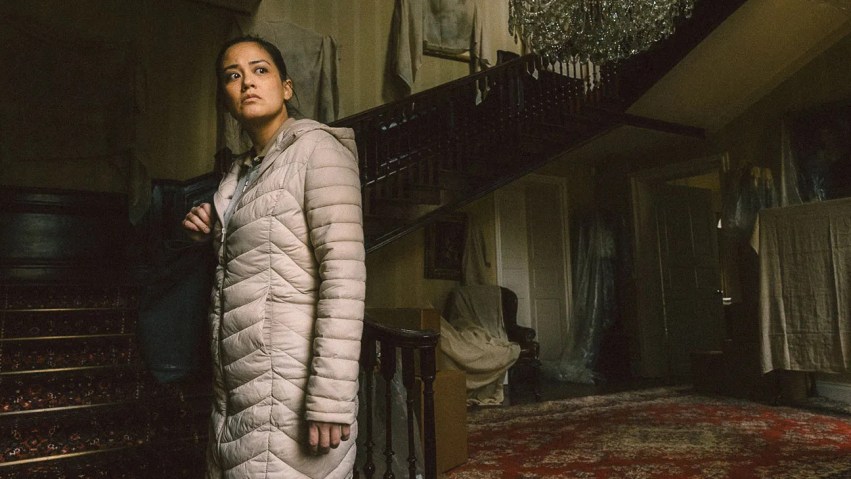 One of the greatest elements in Raging Grace is Rudyard Kipling’s 1899 poem “The White Man’s Burden” being used as a framing device; not just how Zarcilla uses various lines from the poem as section titles throughout the film, most of all how he uses the poem to evoke an overarching theme concerning the racism and colonisation still at work in contemporary immigrant life. For those unaware, Kipling’s “The White Man’s Burden” is a poem the author wrote about the Philippine-American War (18922-1902) that was very much in favour of colonising the Philippines and the Filipino people; a true literary beacon of white British nationalism and imperialism, which was kind of Kipling’s shtick. In Raging Grace, Orientalism is alive and well. Zarcilla captures the microaggressions that take place daily in immigrants’ lives, such as when Katherine talks to Joy about making food and says: “Nothing exotic” (exotic is a great catch-all for racists, either intentional or inadvertent). Katherine’s filled with all sorts of racism. She immediately assumes Joy is from the Philippines, and when Joy asks how Katherine the latter replies: “It‘s in the face.” Racists like Katherine somehow paradoxically hate and love science; she’d love phrenology.
Appropriation, or rather consumption of culture, in Raging Grace is portrayed as consumption of the people themselves, which comes across most when we see the old man slurping up chicken adobo—the (unofficial) national dish of the Philippines, predating Spanish colonialism. Mr. Garrett tells Joy: “I feel connected to you people.” Later on, we understand his cultural gluttony extends far beyond food and other aspects of Filipino culture to Filipinos and their bodies, as it’s later revealed he keeps his former nanny/housekeeper Gloria encased inside a glass box in the basement like a toy doll. This is the ultimate symbol of ownership, and likewise a symbol of turning another culture into a harmful fetish. The old man doesn’t feel connected to the Filipino people, he feels entitled to them, as if he owns them; the dizzying, terrifying heights of whiteness and white privilege. At one point, he sweetly tells Grace to call him grandpa in Tagalog (“Lolo“), but casually tells Joy: “I prefer Master.” Eventually Joy has to spell it out for Grace by telling her daughter: “Mr. Garrett doesn‘t love us. He wants to own us.”
A deeply poignant moment of recollection happens when Mr. Garrett recounts spending much of his childhood in the Philippines, sitting in stark contrast to young Grace, who’s never been despite the fact she’s Filipino; his family’s wealth and privilege allowed him something that should’ve been naturally allowed for her. A sinister moment comes when Mr. Garrett recalls his involvement with cockfighting and tries to dispel the idea of cockfighting being barbaric: “They were very lucky outside the ring.” The old man sees everything he owns, whether a rooster bought to fight or a Filipino he employs, in the same way. He thinks that the birds being treated well when not viciously fighting in the ring somehow lessens the damage and violence done to them when they were actually fighting. He views the Filipino people he employs to work for him via the same lens: as long as they’re paid well, given lodging, and so on, it’s fine whatever happens to them in the course of the work itself. When Mr. Garrett starts to resent Grace for wanting her mother back, he speaks to her like he’d probably speak to an animal. “You‘re well–fed and watered,” says the old man, as if that’s meant to make up for everything Grace and her mother have experienced.
 In the end, Joy could’ve let everything burn to the ground, including Katherine, yet she chooses to save Katherine from the fire consuming the mansion. A little while prior to this, Joy tells Katherine: “We don‘t need your help. You need ours.” This single line of dialogue encompasses so much when it comes to the way so many white people view European cultures as holding up all other cultures across the world, most specifically when it comes to the idea of ‘progress’ in their eyes. As most of us realise, European cultures routinely used the (forced) labour of other non-white cultures to accomplish said progress. Someone like Katherine believes that the wages rich white folks like her pay, which typically aren’t enough anyway, to immigrants is a great blessing of generosity, but they forget that without those immigrants working for them, they’d have to do all the things they don’t want to do themselves. Raging Grace makes a fantastic point with this one line from Joy since it works on the level of an individual and on the level of a society itself: at all levels, the labour of non-white cultures is consistently devalued.
The finale involves a figurative burning down of the colonial structures that hold a country like England up, as Joy watches the mansion burn away, and right before the end we witness Joy taking Grace to finally meet her father, encouraging her daughter never to lose sight of where she comes from, either in terms of family or culture. Raging Grace is one of the most powerful films about whiteness and colonialism in the past decade or more. It uses the Gothic in the most classic sense, looking at both the past and the present together, examining how the past still informs the present in the most wretched of ways. The best part of Zarcilla’s film is that even after all the racial terror the mother-daughter duo experience in that Gothic museum of colonialism that Mr. Garrett called a home, there remains hope for Joy and Grace to live a life undetermined by the terrors of whiteness.
 Father Son Holy Gore