

DISCLAIMER:
The following reviews
contain SPOILERS!
 A Fermenting Woman (2024)
Directed by Priscilla Galvez
Screenplay by Maisie Jacobson; based on a story by Galvez
Starring Sook-Yin Lee.
Drama / Horror
★★★★★ (out of ★★★★★)
We need more menstrual horror. Menstruating bodies prepare people for a world of horror, in real life and in fiction, so why shouldn’t we see that represented more in horror cinema? A Fermenting Woman is, at times, absolutely revolting, though in the most perfect way. It’s a story about a chef, Marielle (Sook-Yin Lee), who’s facing mounting pressure at her job because the restaurant where she works has been bought by new owners, people who may not want an older chef but rather “new blood.” While doing some regular fermenting for different dishes at the restaurant, Marielle decides to use her menstrual blood, which she already uses in the soil of her garden, in a new fermentation experiment. The result is a strange new dish that proves irresistible. But that doesn’t mean Marielle’s creation is without its difficulties.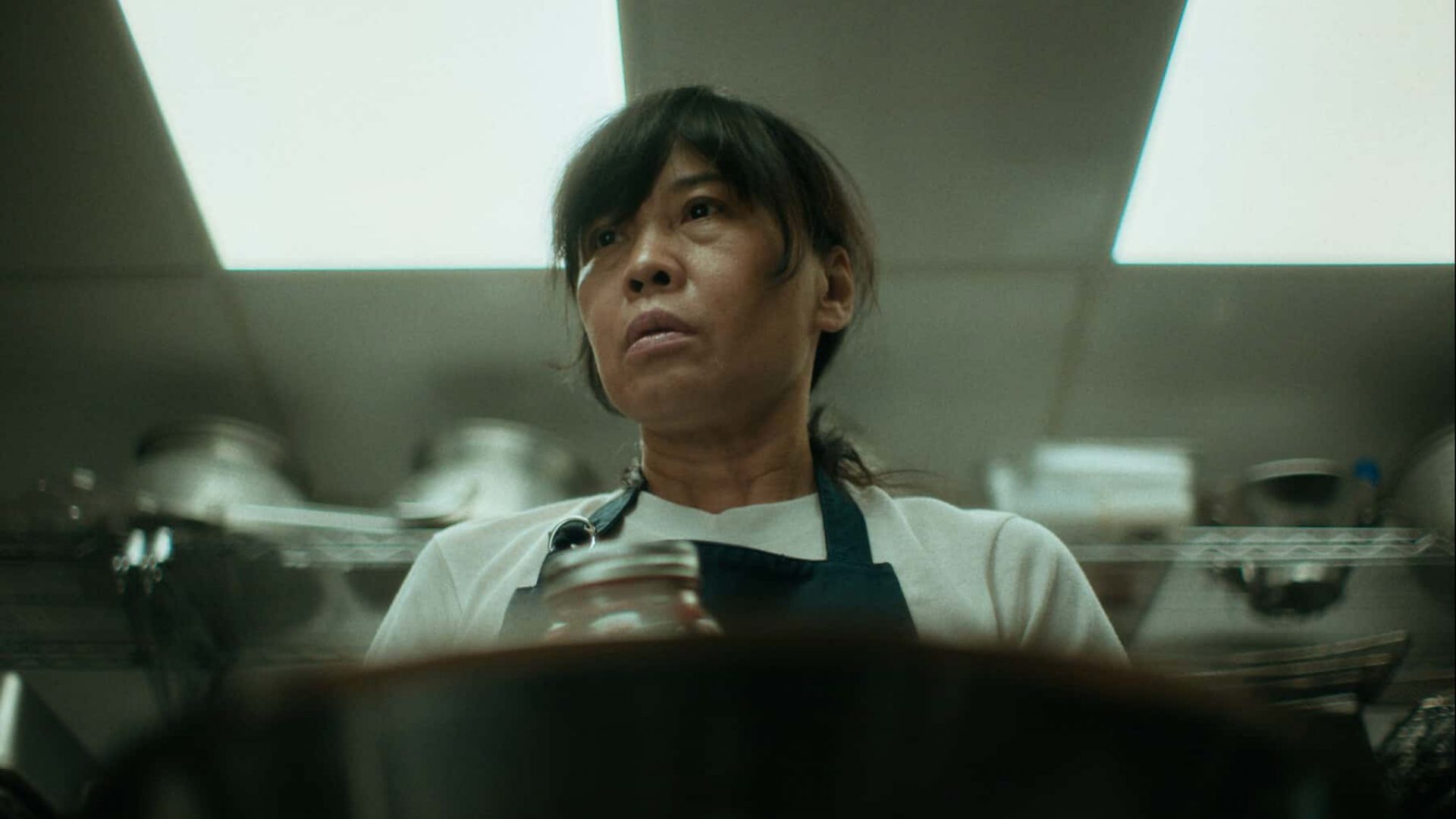 We’ve seen—since Paul Bartel’s Eating Raoul (1982) to Jean-Pierre Jeunet & Marc Caro’s Delicatessen (1991) to Anders Thomas Jensen’s The Green Butchers (2003) to Ana Lily Amirpour’s The Bad Batch (2016)—a tendency in horror to depict the act of consumption as one that requires an act of cannibalism; a selfish, often capitalist act that reduces another person’s life to fodder for one’s own gain in some form. Priscilla Galvez does exactly the opposite in A Fermenting Woman. The capitalist consumption within her short is the consumption of one’s own body in the name of the almighty dollar, or even just in the name of caring too much about our work to the point we expend pieces of yourself, which Marielle does quite literally. Near the end, as the new owners and their guests dine voraciously on Marielle’s strange new menstrual dish like a bunch of pigs on their hind legs, we see Marielle bleeding from between her legs and trying not to collapse to the floor. A piece of her has literally been consumed, just so she’s able to keep her job. Sure, she’ll be able to make more ingredients in a few weeks when her cycle kicks in again. So in a way, Marielle’s leaning into a renewable resource. Yet it’s not infinite. There will come a day, like all women, when Marielle will stop menstruating. What happens to her job then? By putting herself so directly into her work, she’s only feeding into a culture that disregards people, especially women and definitely women over a certain age, and only values a certain type of dehumanising labour. Marielle’s latest culinary creation may be a hit, but it’s also an indictment of the cruelty placed upon individual bodies in a capitalist world consisting of money, numbers, and work.
 Don’t Talk to Strangers (2023)
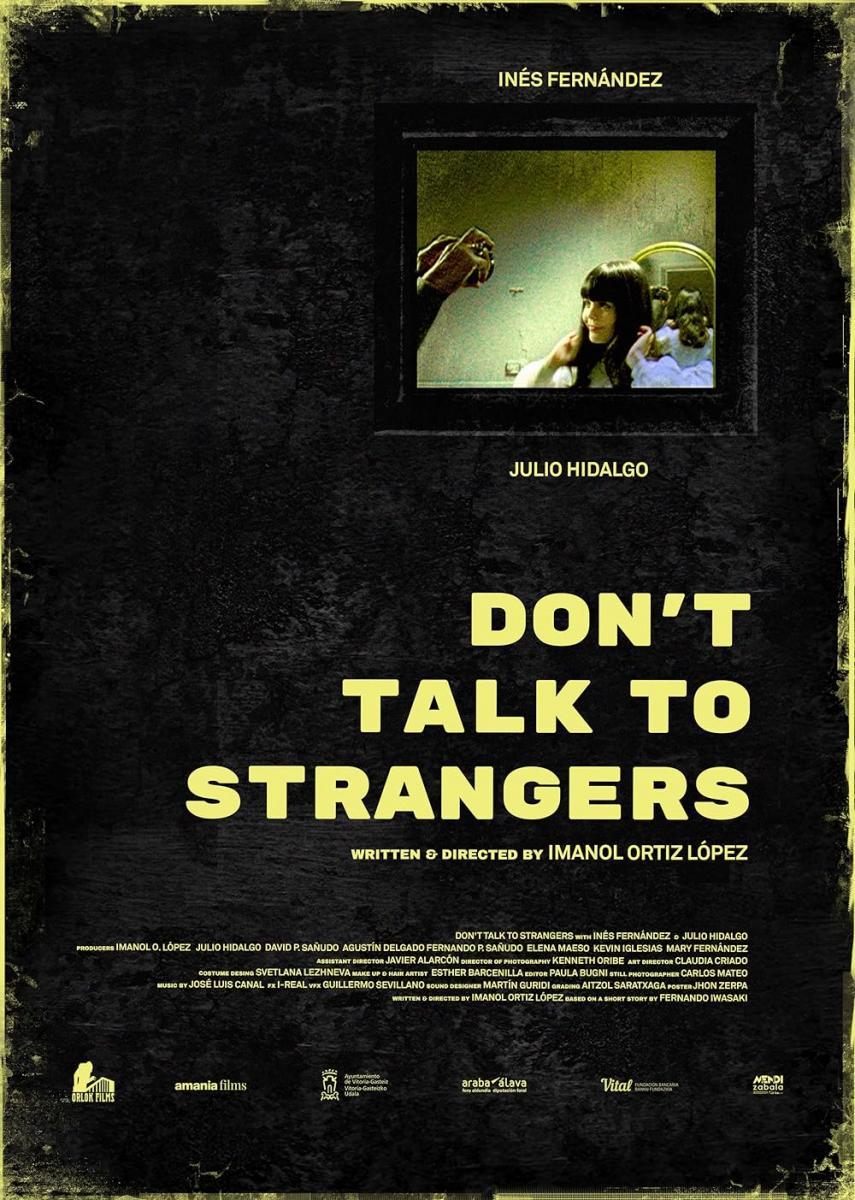
Directed & Written by Imanol Ortiz López
Starring Ines Fernandez & Julio Hidalgo
Drama / Horror
★★★★ (out of ★★★★★)
Imanol Ortiz López’s Don’t Talk to Strangers is a horrific, almost fairy tale-like look at a child abduction, but the way the short plays out is where the genius lies because its conclusion is an unexpectedly gruesome shock. As a little girl (Inés Fernández) narrates the story of her abduction, she tells the audience of a man called Augustin (Julio Hidalgo), a shop owner who gives the girl sweets. It’s almost too cliche. That’s because when López reveals the little girl’s current situation, this story straddles the lines of horror and the fantastical.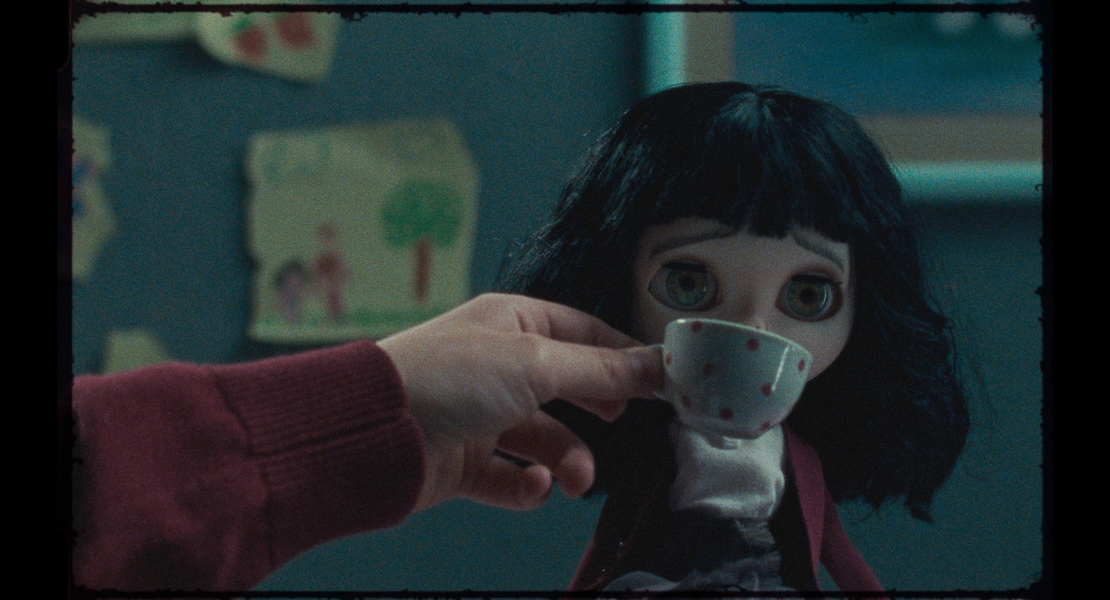 López’s short is haunting because, visually, it feels like a memory from the past, in an age before child abduction was commonplace in the media, back when the creepy shop owners who give little girls treats were much more capable of doing heinous things without being noticed. At the same time, due to the nature of the narration alongside what López eerily reveals at the end of the film, there’s an air of dark fantasy, like the little girl’s not just preserved as a doll forever but that her soul’s trapped in there, too. In a way, the horrifying climax of Don’t Talk to Strangers gets at the heart of adult crimes as children. Like the little girl in this little cinematic world, her flesh and her mind trapped forever in the shape of a doll, so are real child victims of abuse, in some ways, entangled by time, forever preserved inside their younger selves.
 Father Son Holy Gore
Pingback: From Our Members’ Desks (Oct. 7, 2024) – Online Film Critics Society