
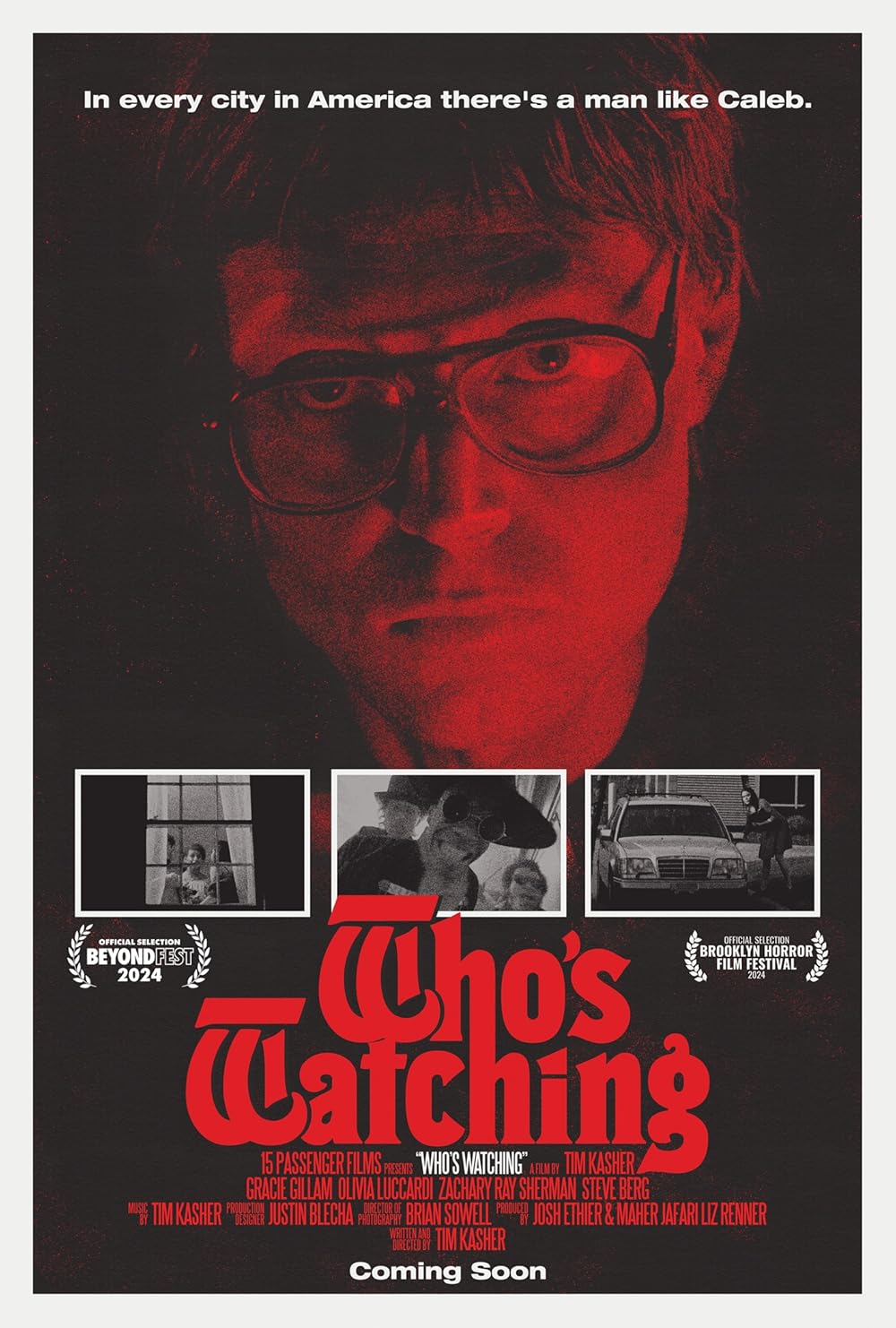
Who’s Watching (2024)
Directed & Written by Tim Kasher
Starring Zachary Ray Sherman, Gracie Gilliam, & Olivia Luccardi.
Horror / Thriller
★★★★ (out of ★★★★★)
DISCLAIMER:
The following essay contains SPOILERS!
Turn back,
or be forever spoiled.
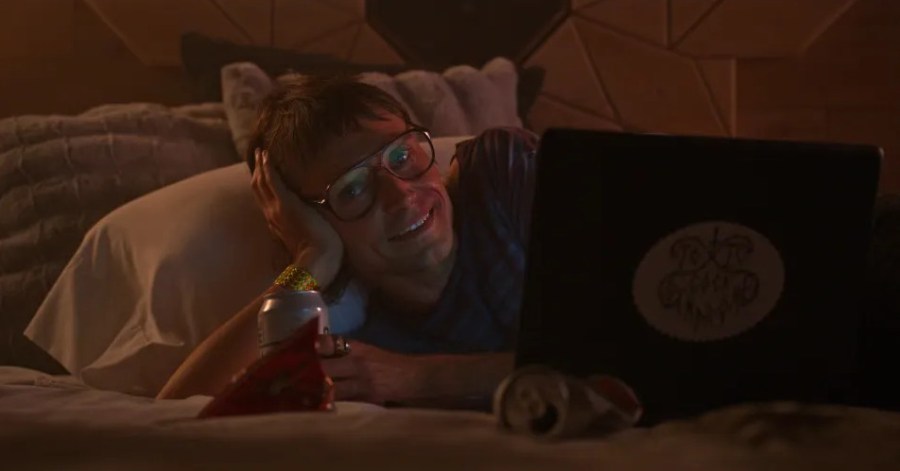
Ever since Michael Powell’s 1960 Peeping Tom, the Creep Behind a Camera has become a staple of horror and has even become a sub-genre unto itself, particularly in the age of found footage, which is where Tim Kasher’s Who’s Watching comes in. It’s the story of Caleb (Zachary Ray Sherman), a lonely, weird, misogynistic man whose penchant for filming himself and his female obsessions leads to horrible consequences. When those consequences begin to come about, Caleb and the viewer are soon blindsided by the potential that he isn’t the only one doing the watching.
Where Who’s Watching differs from most films where we watch an awful man lurking behind a camera, preparing to do horrific things—from Peeping Tom to more contemporary found footage like The Last Horror Movie (2003), Behind the Mask: The Rise of Leslie Vernon (2006), The Poughkeepsie Tapes (2007), and more recent stuff like the Creep films (2014, 2017)—is in how Kasher goes against the more violent voyeuristic impulses of the sub-genre to tell a better story than simply retreading all the old, well-worn ground of films before it. This story not only gives us a Creep Behind the Camera, it explores some of the Creep’s psyche, as Caleb is laid bare for all of us to see, in all his heinous glory, though it’s the women, in the end, who are the most fascinating, and most fierce, here.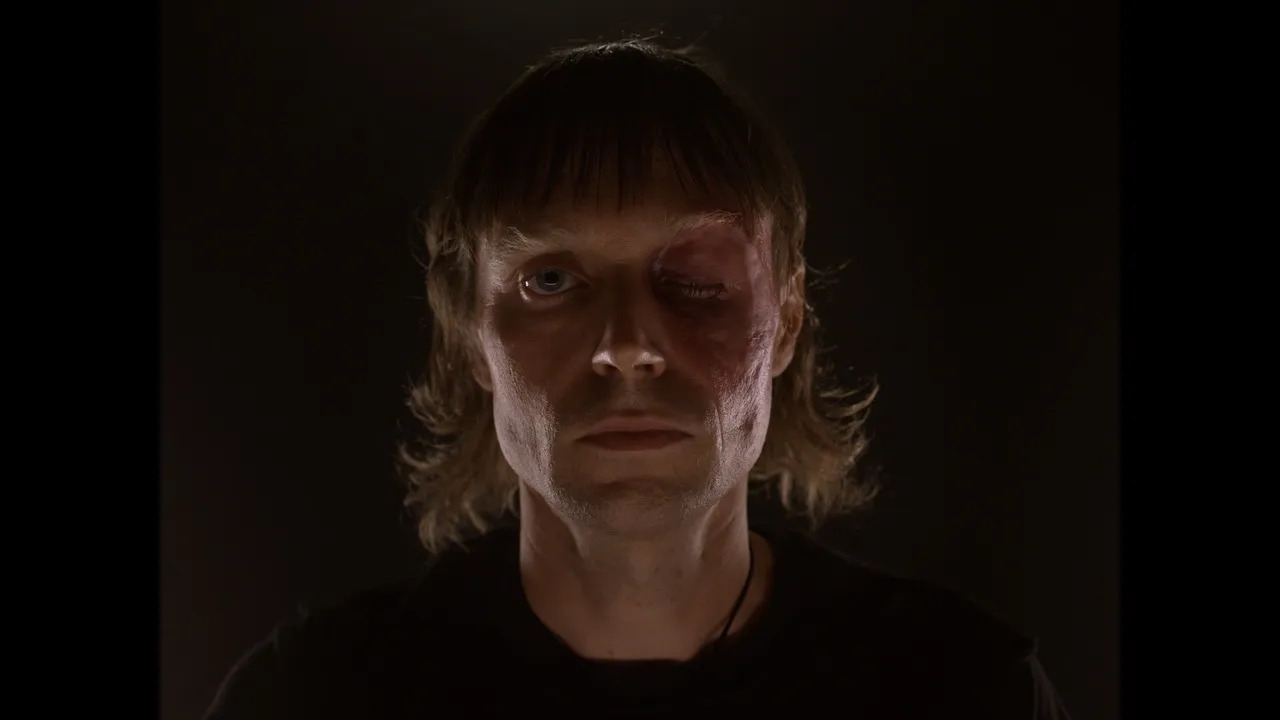 Caleb blames his mother for the way he sees and treats women, scapegoating her like so many women have been scapegoated throughout history, and still are, which is more interesting given the fact that he constantly refers to scripture when it comes to his rage against women. Early on, he makes a good point about how we’re all shaped by our own experiences in life: “We are all the walking, talking embodiment of our own unique experience.” But he places all the blame for how he turned out on his mother, whereas his father seems to get a pass at times. Caleb says that his father was a “scumbag” and that he was much older than his mother, “like twice her age.” He even seems to admire his father in photographs we see at the start of the film. Yet later, he mentions his dad was a cokehead he never met, then immediately hedges this with a smile and remarks that on every birthday he receives a $100-dollar bill from dear ole dad. How heartwarming!
Despite all that, it’s Caleb’s mother who seems to have negatively affected him most in his own mind. We’re privy to a glimpse of the past through a recording on Caleb’s camera from when he was a young boy, spying on his mother while she was moisturising her legs; she scolded him for spying on her and potentially even being aroused, calling him a “depraved, filthy, disgusting boy.” Caleb descends into a religiously-motivated misogyny, but it’s only to justify his behaviour towards women by using Christianity’s inherent misogyny. When he starts to stalk his co-worker Krista (Gracie Gilliam), he follows her home and watches her change while he recites part of Proverbs 7:6-10. The whole piece from Proverbs 7:6-10 is as follows: “For at the window of my house I looked through my lattice, And saw among the simple, I perceived among the youths, A young man devoid of understanding, Passing along the street near her corner; And he took the path to her house In the twilight, in the evening, In the black and dark night. And there a woman met him, With the attire of a harlot, and a crafty heart.” Later on, after Caleb’s attacked by Krista’s boyfriend for stalking and scaring her, he paraphrases another Bible verse from Proverbs 6:34: “For jealousy is the rage of a man: therefore he will not spare in the day of vengeance.” None of his fake righteousness can save him, though. Not when the tables are turned.
Women have the last laugh in Who’s Watching, yet it isn’t in the way you might imagine. There’s a moment near the end that begins to suggest we’re going to see a gruesome instance of (well-deserved) revenge. Kasher subverts the viewer’s expectations of what will happen in this situation. We see an important—yes, you heard me; important!—shot of Caleb’s soft, unimpressive cock before the garden shears psych him out; a great way to expose him and make him vulnerable, to turn the camera onto his sad sense of masculinity instead of going purely for violence to punish him. The lingering scars of Caleb’s humiliation and the deconstruction of his misogynistic psyche in front of a camera in this final scene will last longer and cut deeper than a simple, albeit brutal act of violence against his physical manhood. Who’s Watching begins from a familiar territory to horror film fans, then it diverts into a much more complex story about how men like Caleb need to be watched, and how, despite the immaturity at their core, they’re dangerous. It’s also, in the end, a lesson that female vengeance doesn’t have to use the same tools as male violence in order to accomplish what must be done to deal with men like Caleb.
 Father Son Holy Gore