
Tú no eres yo [English title: You Are Not Me] (2024)
Directed & Written by Marisa Crespo & Moisés Romera
Starring Roser Tapias, Yapoena Silva, Pilar Almería, Alfred Picó, Álvaro Báguena, Pilar Martínez, & Anna Kurikka.
Horror
★★★★1/2 (out of ★★★★★)
DISCLAIMER:
The following essay
contains SPOILERS!
Look away,
or have an Unmerry Christmas.
Being queer can be hell during the holidays and that’s exactly the case in Marisa Crespo & Moisés Romera’s You Are Not Me, the story of Aitana (Roser Tapias) heading back to Spain for Christmas after running off from her family a few years ago. She’s coming back home with her new wife Gabi (Yapoena Silva) and their adopted infant João. Aitana’s quickly shocked after discovering that her parents, Dori (Pilar Almería) and Justo (Alfred Picó), have taken a woman called Nadia (Anna Kurikka). Her parents initially claim Nadia’s like a housekeeper that, among other things, takes care of her disabled brother Saúl (Jorge Motos). But she starts to realise that they’ve essentially replaced her with Nadia, whom her mother even calls “my daughter” when they’re alone. Yet there’s something far more sinister happening in Aitana’s old family home.
You Are Not Me is a disturbing look at the horrors done to those who don’t fit perfectly into a bourgeois heteronormative world, even those who are meant to be considered family. Aitana’s not wholly rejected by her family for being a lesbian, yet she’s kept at a distance, so much so that her mother and father have replaced her at home, at least temporarily. It’s all so much uglier when we discover exactly why Dori and Justo have taken Nadia in and treated her like their own daughter. Both Nadia and Aitana, to different degrees, are rejected brutally by a hetero, class-based system that doesn’t care about family, nor morality—nothing except a surviving legacy, no matter the flesh-and-blood cost.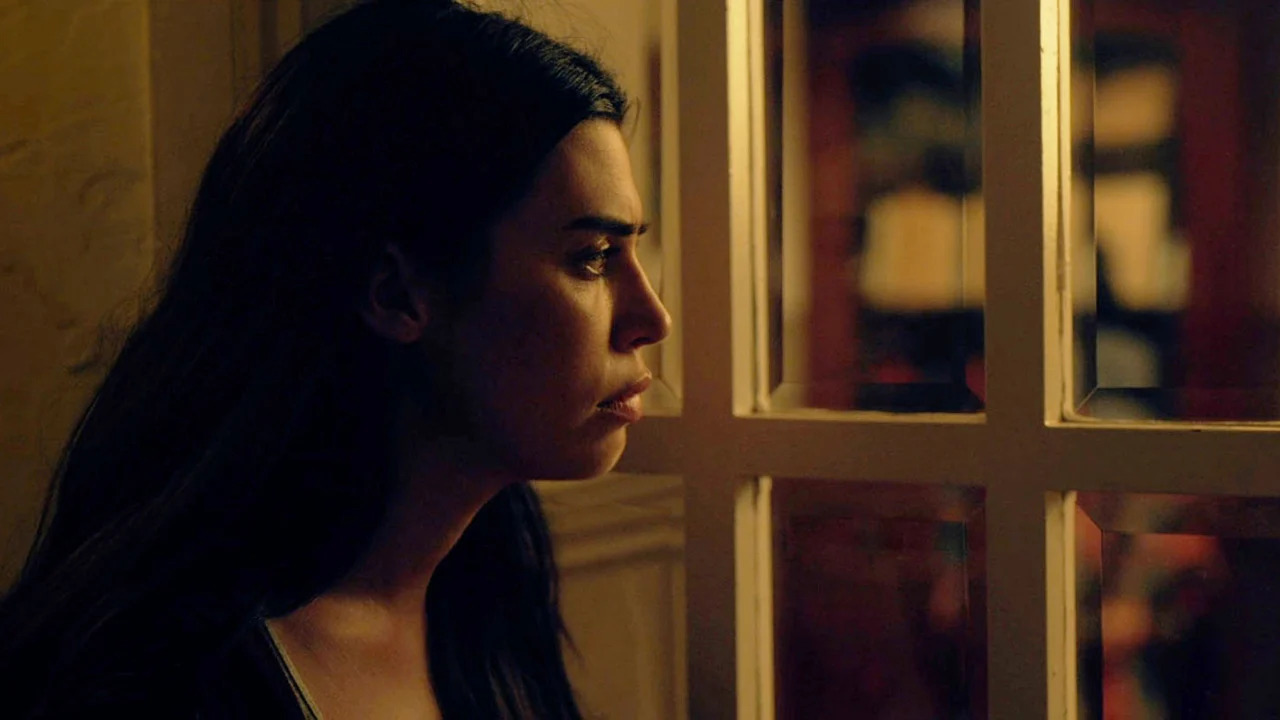 Although Dori and Justo are in financial distress due to paying for so many treatments in an attempt to cure their son, they’re part of the bourgeois class, and they clearly still have some degree of wealth since they live in a mansion that’s so much like an old Spanish castle it even has a turret, where Aitana and Gabi, along with baby João, wind up staying during their visit.
Class is seen most prominently as a deadly force when the bourgeois cult that Aitana’s parents have fallen in with reveal that they’re planning to use Nadia as a sacrifice to cure Saúl. Nadia’s seen as expendable. Even sadder than Aitana’s rejection by her family due to her running away from heteronormative expectations, Nadia is barely even considered a person, only treated like a daughter by Justo and Dori so that they could effectively carry out a bourgeois cult ritual that, in an unimaginable level of cruelty, requires the love of family to enact a blood sacrifice. The bourgeois refer to Nadia as a “filthy sow” and “a nobody.” One of the cult members mentions at the party that they used to have a ‘street person’ like Nadia at their own home. “Remember ours?” she asks her husband, before he recounts that “What happened is, one day he flew away, like a little bird.” Birds and sows; the bourgeois cult see the lower classes as animals.
Scarier still, when Aitana attempts to shield Nadia from a violent fate, she’s told that the cult will use baby João instead if she doesn’t give up Nadia. Early in the film, one of the bourgeois women refers to João, who’s a Black baby, as “a bonbon… a chocolate bonbon!” During the most disturbing scene in You Are Not Me that doesn’t involve any violence, tiny João gets swarmed by the white bourgeois cult members when he’s brought down to the table, as they all but salivate over how fat he is, perhaps sizing him up for next year’s Christmas dinner, and only moments after Gabi notes how the tiny bird they’re all eating this Christmas is “like a baby.” A delightfully skin-crawling scene for the holidays!
The need of Aitana’s parents to help cure Saúl is not only out of love for their child, it’s also rooted in a bourgeois need for legacy through its reference to Baal, whom Nicolas and the cult refer to as “god of rain, thunder, and fertility.” Aitana’s queerness, while tolerated to a degree by her family and the bourgeois, is portrayed through her father Justo as a corrupting force. He blames her unexpected visit home, after running away several years prior from a near hetero marriage, for Saúl having a seizure. Likewise, Dori and Justo suggest that her leaving made Saúl deteriorate. In a sense, they’re saying that the family legacy’s been threatened by Aitana and her lesbianism; at once not giving them any biological children since her baby’s been adopted, and also supposedly withering Saúl away, their only hope left for biological children to carry on the family.
The bourgeois cult’s apparent leader Nicolas a.k.a “Old Nick” might as well be an awful Saint Nick, carrying on a Christmas tradition that’s not about family, nor a Christian holiday, rather it’s about class supremacy and the demonic. Instead of a Christian-dominated Christmas, the bourgeois class in You Are Not Me reach back to the Semitic religions and the god Baal, a storm and fertility god. While Christianity’s idea of Christmas is based upon a birth, the bourgeois cult in Crespo & Romera’s film is based upon sacrifice and death paving the way for rebirth. Baal goes further against the Christian Christmas since in the New Testament Baal is known as Beelzebub and is actually identified as Satan, prince/king of the demons. The bourgeois cult worshipping Baal and offering him sacrifice is—as all the fear-mongering Christians believe the ‘woke mob’ is doing today—truly taking Christ out of Christmas.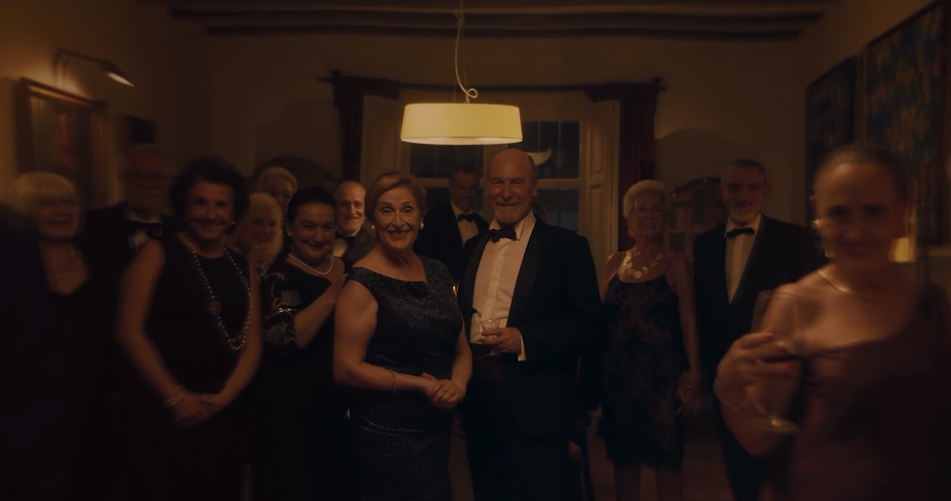 It’s fitting that You Are Not Me ends on the idea of an illusory holiday, one where the perfect family gets together on the perfect Christmas morning full of love and warmth while a much different reality lies underneath, only, in this film, the reality beneath the illusion is far uglier and more sinister than most. Aitana wakes up to a dream Christmas concealing a hetero-bourgeois nightmare that sees Aitana, Gabi, João, and Nadia are considered expandable for different reasons. In one scene during the Christmas party, a member of the bourgeois cult tries to vouch for the changing face of their little group: “They used to be closed, but they have modernised. Here are just a few of them, but for some years now they‘ve accepted coloured people, Asians, and even Jews.” The use of the term ‘coloured people’ and saying ‘even Jews’ is telling enough, though, of course, she forgets the caveat: they’ll only be accepted if they’re of the ruling class, otherwise they’re all fit for the chopping block. When Aitana and Gabi earlier discuss how to wake up from a nightmare, Aitana laments that it’s not so “easy to take down the real monsters.” Unfortunately, in the end, she’s unable to wake from the living nightmare that she now understands after having her eyes opened by the terrifying hetero-bourgeois reality of her own family, now fully understanding just how much they’re willing to sacrifice to ensure the bloodline survives.
 Father Son Holy Gore
Pingback: This Week at the Movies (Dec. 20, 2024) – Online Film Critics Society