

The Caretakers (2025)
Directed by Shugo Praico
Screenplay Praico & John Carlo Pacala
Starring Iza Calzado, Dimples Romana, Marco Masa, Ashley Sarmiento, Althea Ruedas, Erin Espiritu, Erika Clemente, Inka Magnaye, & Jake Taylor.
Horror
★★★★ (out of ★★★★★)
DISCLAIMER:
The following essay contains
SPOILERS!
You’ve been warned.
Shugo Praico’s The Caretakers is the story of a confrontation between two mothers, Audrey (Iza Calzado) and Lydia (Dimples Romana), who come from different socioeconomic backgrounds and collide over the sale of a property in a rural area outside Manila. Audrey’s intent on selling a piece of land that belongs to her husband, but comes up against Lydia, whose family have been caretakers of the property for quite some time. Audrey’s only in it for the money and wants to go back to the city ASAP. Lydia wants to stay on the property, regardless of its owner, and urges that, no matter what, they must respect the land. When things between them come to a head, the land begins to wake up.
The Caretakers is not only an eco-horror, it takes on the capitalist land-owning class system with a dash of magical realism. The situation between Audrey and Lydia involves the difference between those who own and those who work. Most importantly, the way the land responds to what happens between the women prompts both of them into a new appreciation for the forces of nature. Audrey learns that her world constructed around the principles of capitalist progress is, in the end, meaningless, though Lydia learns her own unique lesson about what it means to truly believe in something beyond the surface, deep down in the dirt of the human heart.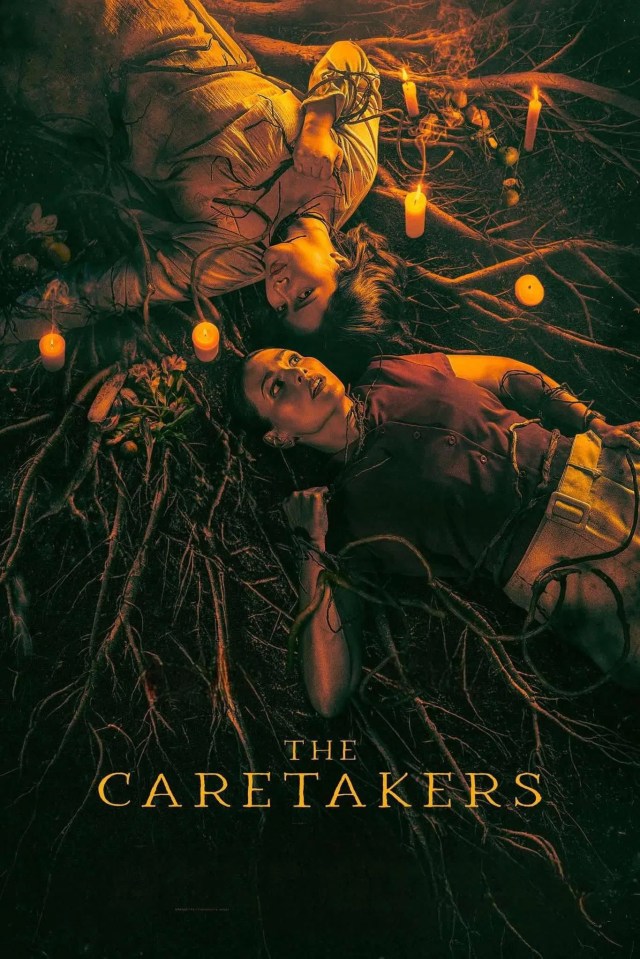 The difference in perspective between Audrey, who by proxy of her husband owns the land, and Lydia, whose working class existence binds her with the land, is a significant part of The Caretakers. The film crosses Marxist ideas with ecological themes with Audrey’s attitude being one of progress while Lydia’s attitude is more of appreciation and conservation of the land. Audrey only talks about the land through a capitalist lens, believing there will be prosperity for the locals with more ‘progress’ (i.e. trying to make rural areas more similar to the city in geography and culture; creating a concrete jungle like Manila). Lydia elaborates on her view of progress as meaning “overpopulation” and “the destruction of our nature’s beauty.” While Audrey disregards the land, its Indigenous people, and the local folklore, Lydia respects everything about the land, at least until her frustration over the capitalist land battle boils over. Lydia’s comment that prior to the house being built “there were some who already lived here … ancient beings older than this world” works as commentary of colonisation and capitalism, two processes that feed off each other in nefarious, destructive ways. During an ugly exchange of dialogue, Audrey actually expresses her willingness to go along with the new property owner’s efforts to erase the area of Indigenous presence. On top of that, we learn an American soldier was the first to build the house over a hundred years ago. This connects to the American colonial period in Taguig between 1898 and 1946. While there are elements in the film critiquing colonisation, The Caretakers is, more than anything else, a story about the results of humanity destroying nature on a personal/family level.
We hear about Manila’s city landscape eroding in the opening scene, as Audrey and her daughters drive while the radio mentions that operators of North 66 highway are “vehemently denying responsibility for a sinkhole” that’s opened up and are blaming “natural causes pointing to geological factors.” The Caretakers focuses early on the fact that nature seems to be rising up against its mistreatment, seeking to counter a couple centuries of industrialisation by disrupting the daily life of the humans who’ve historically been mistreating it. Audrey’s oldest daughter, at once telling the truth and trying to scare her little sister, says: “This is our fault. We‘re destroying the planet. Nature is on revenge mode against humanity.” Even the kids today understand the reality of what human progress has done to the Earth; they’re the ones who’ve got to live with it. Not only that, the radio reporter mentions Manila is continuing to experience “extreme heat.” Manila’s always been warm and humid, but the last few years they’ve been experiencing their hottest recorded temperatures. The Caretakers portrays Manila and its surrounding areas in the Philippines as at the boiling point, located most of all in the struggle between Audrey and Lydia, though the film’s ending embodies the idea that nature is not trying to destroy us but it will not sit quietly forever watching us destroy it.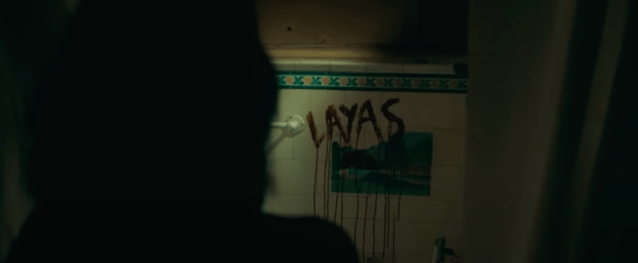
“We are the ones
who need to follow the rules of nature.”
The Caretakers feels like a contemporary fairy tale, even divided into chapters: Chapter 1. Mother, Chapter 2. Home, Chapter 3. Children, Chapter 4. Nature, Chapter 5. Creatures, Chapter 6. Family, Chapter 7. Possessions. Lydia and her family warn about disrespecting nature and hint at earthly entities that will not take disrespect lightly, but, like other figures in fairy/folk tales throughout history, Lydia does exactly what she herself warns against—albeit out of frustration over likely losing her place on the land her family has cared for so long—then suffers the consequences. At the same time, Audrey suffers a tragic fate, yet simultaneously comes to a bittersweet realisation that nature is alive, it’s filled with sentient, magical beings, and it’s genuinely here to look after the generations that come. A final shot features an incredibly powerful use of magical realism, as a creature of the Earth emerges in the wake of the two mothers suffering their respective fates that leaves their children all by themselves. A hopeful reading of the ending is that The Caretakers concludes on a note of harmony in spite of death and loss between Mother Nature and humankind, coming together in comfort to heal each others’ wounds.
 Father Son Holy Gore