

Mother’s Baby (2025)
Directed by Johanna Moder
Screenplay by Moder & Arne Kohlweyer
Starring Marie Leuenberger, Hans Löw, & Claes Bang.
Thriller
★★★★ (out of ★★★★★)
DISCLAIMER:
The following essay contains
MINOR SPOILERS.
Avert thine eyes, lest ye be spoilt.
One of the best films at Brooklyn Horror Film Festival 2025 was Johanna Moder’s Mother’s Baby, a haunting story about Julia (Marie Leuenberger), a forty-year-old woman who hopes to get pregnant and, via fertility treatments at a unique hospital named Lumen Vitae, achieves her dream. She and her husband Georg (Hans Löw) are thrilled to be parents, but that changes slightly for her after birth. Once Julia’s brought her new baby into the world, the infant is taken from her and whisked away for tests. When the baby’s brought back, Julia almost immediately feels a disconnect. She feels so disconnected from her newborn that she actually begins to wonder: could the hospital have switched her baby with another? This leads Julia down a spiralling path of psychological darkness. She questions everything while others try to tell her she’s merely experiencing postpartum depression. So, eventually, she starts to feel she’ll have to do something drastic.
Mother’s Baby, from the title alone, evokes Rosemary’s Baby, except the circumstances and the context of the two films are completely different. Both films are about the dread that can often happen during motherhood, from pregnancy to after the birth. Where Mother’s Baby differs most from Rosemary’s Baby is that Moder’s film isn’t about a Satanic cult lurking on the periphery of an expectant mother’s life, it’s more about a dash of speculative fiction mixed with psychological horror. Julia tries to uncover what she’s sure is a conspiracy with designs on her infant child, though she also has to contend with the way others perceive her mental health, and this navigates her to a desperate, isolated place that nobody else understands.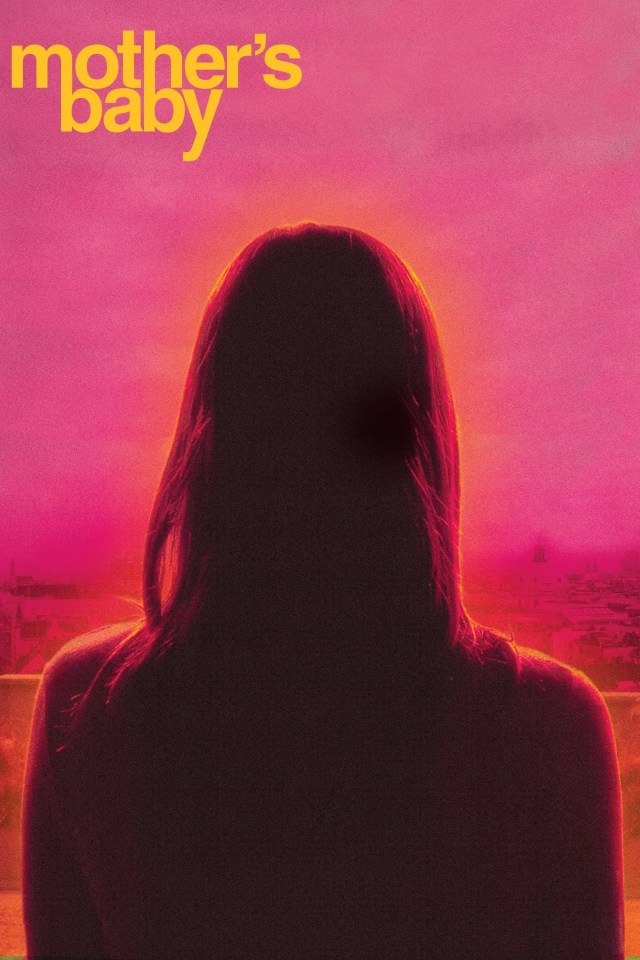 Despite everyone possibly being untrustworthy in Mother’s Baby apart from Julia, the men around Julia are especially bad in their respective ways. Julia’s husband Georg often calls her “Mommy,” as if she’s no longer Julia, only a mom. He begins to criticise her mothering, too, as he goes off to work and she has to take time away from her work to raise a child. Things get far worse later when Georg seems to trust Julia less and less, and appears to dismiss her mental health issues as mere figments of the imagination. Worse than George is Julia’s doctor, Dr. Vilfort (Claes Bang). There’s an interesting juxtaposition throughout the film of Julia in contrast with Dr. Vilfort. They’re both conductors in their own way: Julia is a literal conductor of an orchestra, and Dr. Vilfort is the figurative conductor of a medical team. They both perform in theatres, just different kinds: Julia performs in an orchestra theatre and Dr. Vilfort performs in a surgical theatre. While Julia’s in control as conductor of her orchestra, she’s robbed of control by Dr. Vilfort, not just because he’s the doctor and symbolic conductor, because he seems to be purposefully misleading Julia, wielding the power of medical authority over her.
Mother’s Baby concludes with a somewhat ambiguous ending that reflects Julia’s fragmented psychological headspace. There’s no real telling what’s real and what isn’t in the end. In the last couple scenes, we witness Julia discover something shocking, but are we, the audience, really seeing it? Is it just what Julia sees/wants to see? The final moments of the film could be described as a return to control for Julia, yet it’s difficult to tell whether it’s genuine. Has Julia lost control entirely and dreaming of regaining it? Or, has Julia revealed the terrors she experienced due to Dr. Vilfort and genuinely returned to her old self/life?
Throughout Mother’s Baby, Julia experiences the terrors of motherhood, from the trauma of birth on the body, to the fear, self-doubt, and depression that can happen in the postpartum period. At times, the film is ambiguous about what happens. Regardless of the truth, it’s always obvious Julia’s experiencing psychological struggle. Although what we see at the end of Mother’s Baby is, if real, gruesome, the more awful ending is if what we’re witnessing isn’t real since that means Julia has dissociated to such an extent she’s no longer living in reality, lost in delusion. Moder’s film is the story of many mothers who’ve battled with themselves and expectations of others. Mother’s Baby goes against the idea that motherhood is meant to be a perfect, beautiful experience; sometimes motherhood is dark and full of terrors.
 Father Son Holy Gore