

Godhead (2026)
Directed & Written by Mark H. Rapaport
Starring Al Warren, Sarah Coffey, Kimball Farley, & Luke Speakman.
Horror / Thriller
★★★★1/2 (out of ★★★★★)
Another Fantasia 2026 film all about indoctrination, like Home Bodies except in a vastly different way, Mark H. Rapaport’s Godhead centres on a priest (Al Warren) and two twins, Firstborn and Secondborn (Sarah Coffey & Kimball Farley), who collide in a small-town church. The twins believe at least one of them is destined for spiritual greatness. They just need a little hand from someone else to achieve it—here enters the priest, reluctantly once he hears more of the twins’ madness. But is it really madness? Could the twins be on a genuine divine mission? Godhead is at once deeply serious and simultaneously a pitch-dark comedy, telling a religious gothic tale about faith, the limits of control, and humanity.
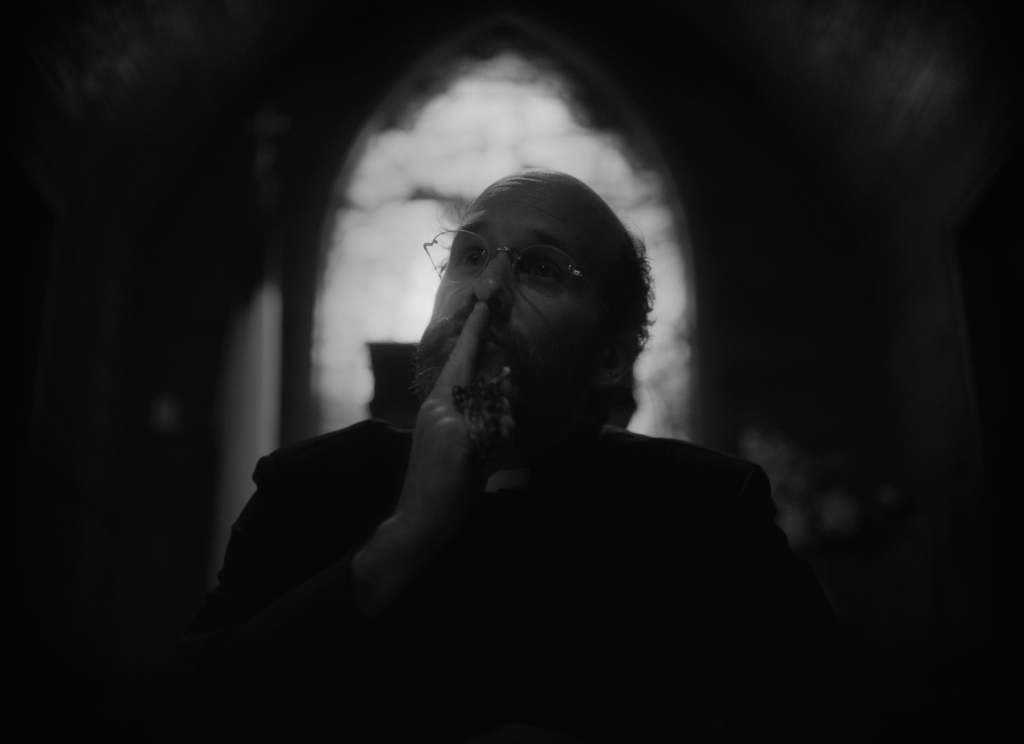
Both Firstborn and the priest are manipulating those supposedly dearest to them, though they each believe they’re actually doing what’s best through their own twisted reasonings. They become dark mirrors of one another, and their respective forms of religious control have the real potential to become even darker. Yet there are deep cracks in their grips on others. The control of faith is fragile, which is why it has to be reinforced so much. This particularly shows in most everything the priest does. At one point early on he slips up slightly via language, calling the pulpit a “stage.” Eventually it’s clearer that the priest is performing, on multiple levels, whereas it’s a whole other can of hideous, sickening worms with Firstborn.
In a few ways, Godhead deals with different ways people can ‘play God’ through forms of control. Firstborn is gradually revealed to have wielded an incredible amount of power and control against Secondborn, to a disturbing length. From the beginning, we’re witness to the priest wielding a sickening amount of power and control over the boy he keeps locked away at the back of the church, using tapes and tall tales to make the boy feel like being kept inside all his life is somehow normal. One character eventually chooses to not play God, nor to be made in the image of an absent God who watches suffering but does nothing to stop it, putting an end to the cycles of abuse at work under the dual guise of faith and love.
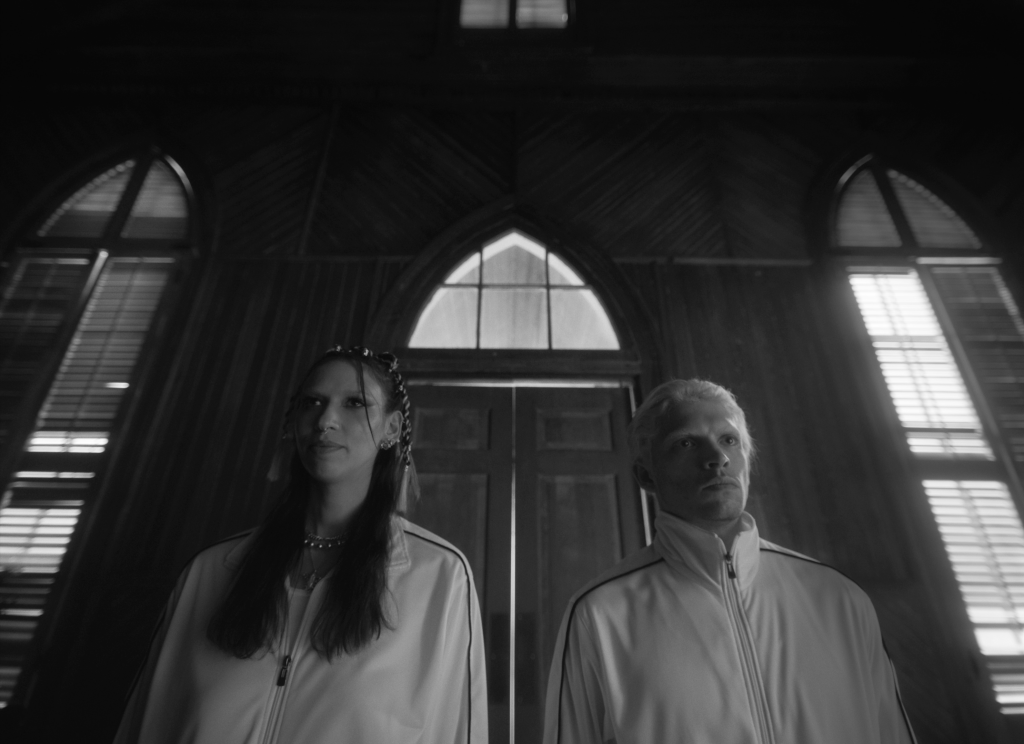
One scene epitomises the length to which control has been exerted powerfully over the boy and Secondborn: the two of them sit in front of a TV blaring static, not quite realising that this isn’t actually meant to be a form of entertainment because they’ve each been sheltered from reality/the real world so long. Godhead is occasionally as bleak as it can get, yet retains a glimmer of hope with a beating human heart that suggests not everyone is corruptible, and that the control people use to manipulate others is not a terminal disease, it’s merely a spell that can be broken.

