
The Snare (2026)
Directed & Written by Merlin Camozzi
Starring Cassady McClincy, Dempsey Bryk, Royce Johnson, Lucy Walters, & Elizabeth Stahlmann.
Crime / Thriller
★★★1/2 (out of ★★★★★)
DISCLAIMER:
The following essay contains
MINOR SPOILERS!
In Merlin Camozzi’s The Snare, a high school student called Dani (Cassady McClincy) gets tangled up with the cops after she’s caught with a small amount of drugs, then finds herself under their thumb as they pressure her to help them catch a substantial dealer. Dani struggles because the guy who gave her the drugs, Marty, is someone she’s been getting closer with romantically. While she tries to navigate her precarious situation, she’s forced to choose between freedom and a future versus the people she cares about, or at least that’s how the cops portray it to her.
The Snare is a movie about monsters though it’s not in the slightest a horror movie. The cops are the monsters here. The film is so closely mirrored off real-life incidences of young people being pushed into being criminal informants by cops who can’t manage to do their jobs without exploiting the vulnerable. The Snare is a working-class tragedy. Dani’s story is the story of too many young people who’ve made a small mistake then wound up exploited, and, sadly, her exploitation by the cops inadvertently sucks others into a panicked vortex of violence.
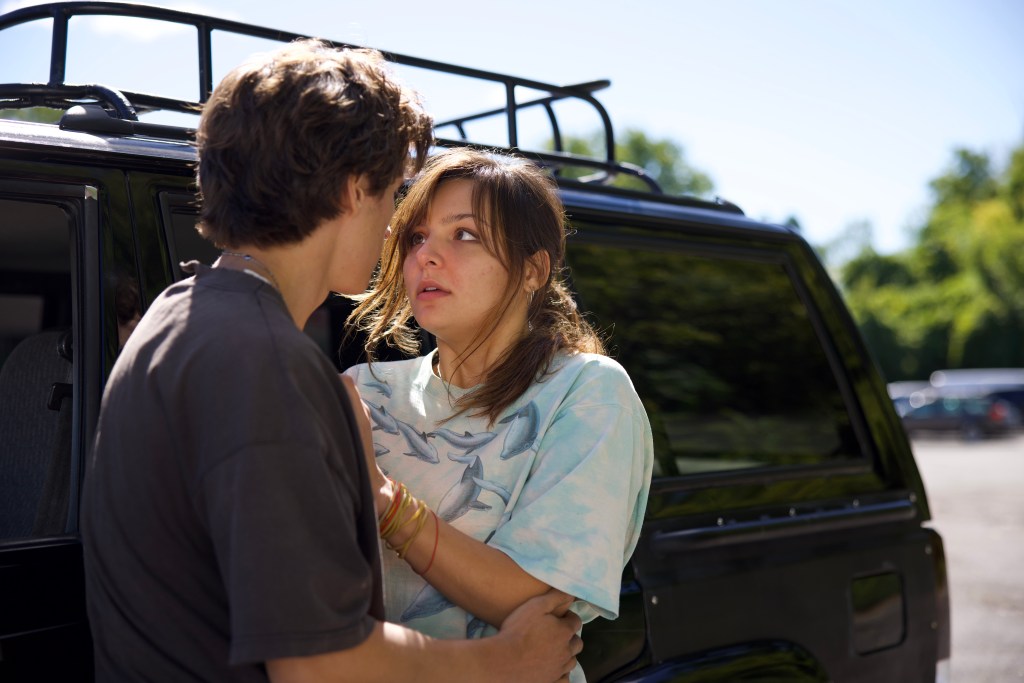
Dani and her mother’s relationship, as well as their family’s socioeconomic position, is a big backdrop for the film’s events. She’s a young girl whose single mother can barely afford to spend time with her and her little brother, let alone pay for anything beyond the basic necessities. Dani’s relying on a scholarship that will mostly pay for an upcoming college education, which is exactly where the eponymous snare by the cops comes in, as they convince her she’ll face a much more serious charge than she actually will and that this will ruin her scholarship. At the centre of the cops’ exploitation is their reliance on leveraging themselves using a working-class girl’s future like a carrot on a broken stick. Dani gets it right when she tells one of the cops: “Your job is evil.” And that’s exactly why cops are so repugnant when they inevitably use their power against the powerless: they believe they’re doing the exact opposite and they’ve convinced themselves what they’re doing is heroic, when in reality so much of so-called ‘police work’ is cowardice, just like the behaviour of the cops who figuratively twist Dani’s arm to achieve their ends.
The smartest, and sweetest, piece of The Snare is the relationship between Marty and Dani because it’s not simply a romantic part of the story, one little recurring moment between them helps further illustrate the goodness in them both. Dani once told Marty about microplastics and he clearly went on to learn more about them because of the interest she showed. This little sliver of dialogue, that comes back a couple more times from Dani and Marty at different times, pushes the audience to see that these are two good, young people who care about others and the world around them. Nobody makes all the right choices, especially when young, but Marty and Dani—beyond just the microplastics moment(s)—are, in their hearts, good people. Their goodness hammers home the exploitation Dani experiences from the cops, and in hindsight, after the film’s events unfold, it makes clear their monstrosity. The Snare is deceptively brutal, and its realism urges us to consider how many real lives have been irreparably altered, or ended, due to the recklessness and callousness of cops who wield their power over vulnerable young people who do what young people do, make mistakes. A bittersweet end further testifies to the goodness of Marty and Dani, one of them in particular, even in the face of utter tragedy, which sits in stark contrast against the monstrous cops who walk away unscathed while Marty and Dani each carry eternal scars.

