
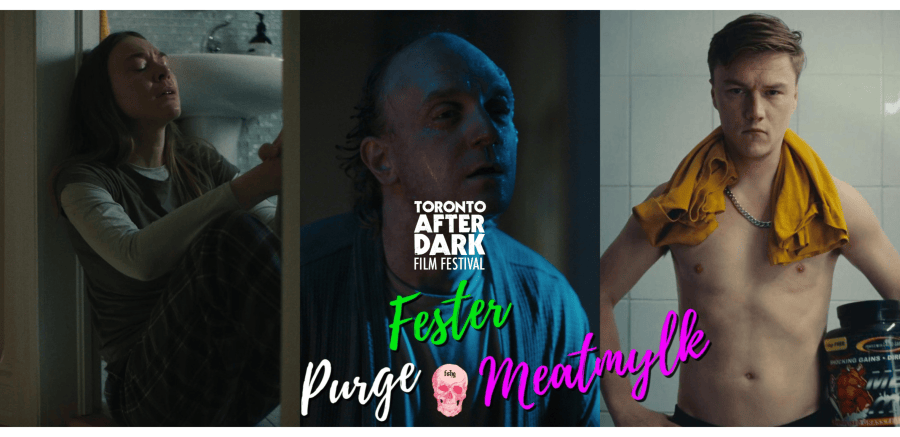
Purge (2026)
Directed & Written by Andrew Hamilton
Starring Zara Jestadt, Isabella Shibuta, & Gord Rand.
Horror
★★★★★ (out of ★★★★★)
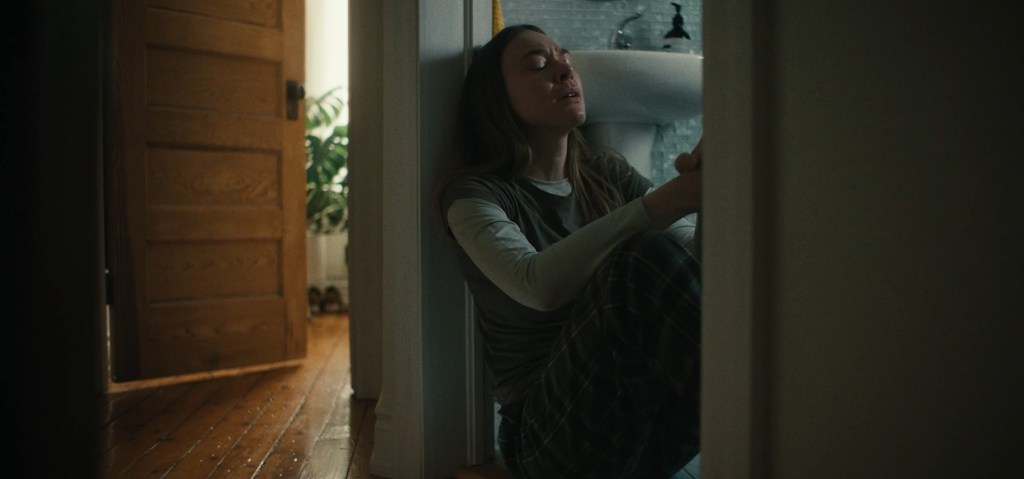
In Andrew Hamilton’s Purge, Gee (Zara Jestadt) struggles with her depression and feels she’s stuck in a rut while continuing to find no success with her writing. One day, Gee happens upon a trial for a new drug and, desperate for relief from her depression, decides to join it. When she begins taking pills given to her by a doctor, she spews up a thick, black liquid. A bad side effect? Or working exactly as intended?
Purge is a smart and succinct view on how the dark and light within us must co-exist, or, maybe more so, how we can’t simply ignore or expel the darkness from us because it’s a part of us. While we don’t need to romanticise being tortured artists, we can make use of the darkness we feel, we can turn it into art and process whatever pain we feel by making that art. When Gee physically expels her own darkness, she starts to realise that removing it removed a part of herself and that she’s not the same person without it. Purge is a beautifully dark exploration of the fact that we cannot get rid of our pain and our sadness, we have to learn to live with it like a physical organ, no matter that it’s a faulty one.
Fester (2026)
Directed & Written by Max Parr
Starring Robert Gerow, Pony Nicole Herauf, & Steve Manale.
Comedy / Horror
★★★★★ (out of ★★★★★)
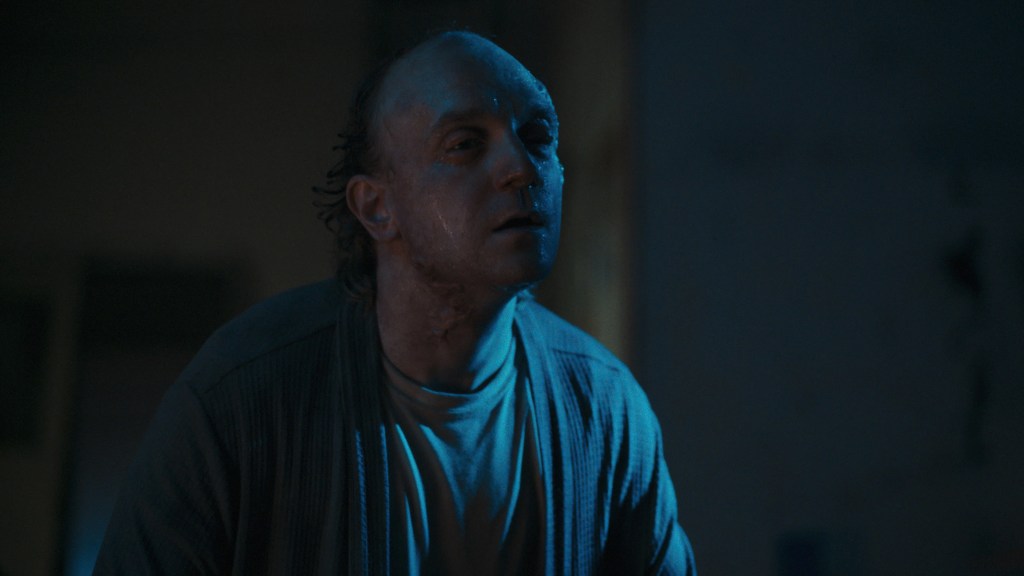
Max Parr’s clever horror-comedy Fester is easily one of the best shorts on the festival circuit currently, most recently playing at Toronto After Dark Film Festival 2026. The story centres on Robert (Robert Gerow) as he watches his relationship crumble and his girlfriend go off with a new lover. He’s incapable of moving on and his gastrointestinal health seems to be steadily worsening, not that it was great to begin with anyway. Things come to a head when Robert’s guts let loose and he, somehow, some way, finds himself transported to the apartment of his ex’s new lover. Seriously—no shit.
Robert is already festering before his girlfriend leaves him. He’s an archetypal stoner who just sits around ripping the bong all day while watching television, doing nothing much in life other than cling to his girlfriend. His bubbling guts come to be a metaphor of his anxiety and insecurity; it’s a generally good symbol to represent whatever’s gnawing at Robert deep down inside, especially concerning his girlfriend-now-ex. Fester goes somewhere you’d never expect in the final minutes. “Put me back down the toilet” is a line that made me simultaneously cackle and also feel a deep sadness for Robert, despite all that occurs because of him and his inability to let go. Fester is equal parts hilarious and depressing in its vision of a man rotting from the inside out.
Meatmylk (2026)
Directed by Lucy Luscombe
Screenplay by Luscombe & Adam Welch
Starring Sam Gittins, Adil Akram, & Mark Denham.
Horror
★★★★★ (out of ★★★★★)
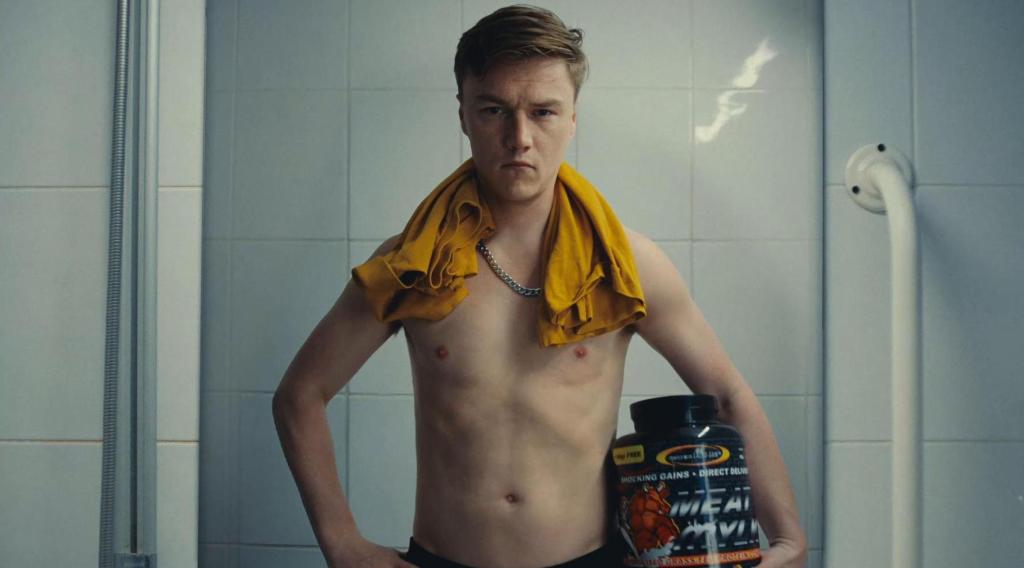
Lucy Luscombe’s fantastic Meatmylk focuses on John (Sam Gittins), a personal trainer at a gym where a big weightlifting content creator named Kai often shoots videos. John is constantly watching social media and being fed new ads for various ways to get jacked. He starts using a product called Meatmylk. He drinks a massive jug of it every day. He’s soon eating fistfuls of the powder raw. All about the gains, bro! But John’s breaking out in a bad rash and his chest generally looks nasty. One day, John discovers the horrific price he’s had to pay for the gains.
Meatmylk is an incisive piece of work about the current state of the male psyche as it relates to gym-bro culture. While women struggle not to be objectified, so many men seem desperate to be an object, or, in the language of Luscombe’s film, nothing more than a side of beef. Gym-bro culture urges men to “release the beast” but so many men today actually need a little bit of softness in their lives, not more beastliness. In the film’s best scene, John finally gets to take a photo with his idol Kai but as Kai poses with him, John turns around and hugs into Kai. He’s not met with ridicule and Kai gives him a hug, as if sensing John’s desperate for affection and genuine connection, like far too many men out there in real life. What follows this tender moment is body horror beyond normal comprehension. Meatmylk’s final shot is a brilliant cherry on top of a wonderful, meaty cake. Luscombe’s film is the kind of art desperately needed in the current age as we all suffer through the never ending consequences of contemporary masculinity’s dire, violent state.

