

The Vourdalak (2023)
Directed by Adrien Beau
Screenplay by Beau & Hadrien Bouvier; based on the novella La famille du Vourdalak by Aleksei K. Tolstoï.
Starring Kacey Mottet Klein, Ariane Labed, Grégoire Colin, Vassili Schneider, Claire Duburcq, Gabriel Pavie, Erwan Ribard, & the voice of Adrien Beau.
Drama / Fantasy / Horror
★★★★ (out of ★★★★★)
DISCLAIMER:
The following essay contains
SIGNIFICANT SPOILERS!
Proceed into the abyss with caution.
 Adrien Beau’s The Vourdalak is a unique and deeply Gothic film, in the most literary Gothic sense, based on the 1839 novella La famille du Vourdalak by Aleksey K. Tolstoy: in the 18th century, the Marquis d’Urfé (Kacey Mottet Klein) is lost somewhere in Eastern Europe when he finds his way to the family of a man called Gorcha, but his travels through the dark, desolate woods were nothing compared to his stay at Gorcha’s home, where he falls into the family’s troubles after Gorcha returns as a vourdalak, otherwise known in the Western world as a vampire.
The Vourdalak is more than a gimmick—the eponymous creature is a life-sized puppet voiced by director and co-writer Adrien Beau—it’s a dark, and at times darkly funny, exploration of how love can be a real horror, akin to an infection such as vampirism. Gothic literature has, since its earliest iterations, been connected with dark romanticism, and Beau’s adaptation of Tolstoy’s novella captures the genre’s Gothic romance perfectly with its story situated on the love between a family and the Marquis’s appearance in the family’s midst further brings up moments of romance; some hetero-expected, some queered. The Vourdalak begins in a traditional way for a Gothic tale originally written in the 1800s. By the film’s conclusion, the story winds up in a much different place, and, still, feels straight out of an early Gothic work, many of which were far more queer than a lot of contemporary critics are still willing to admit.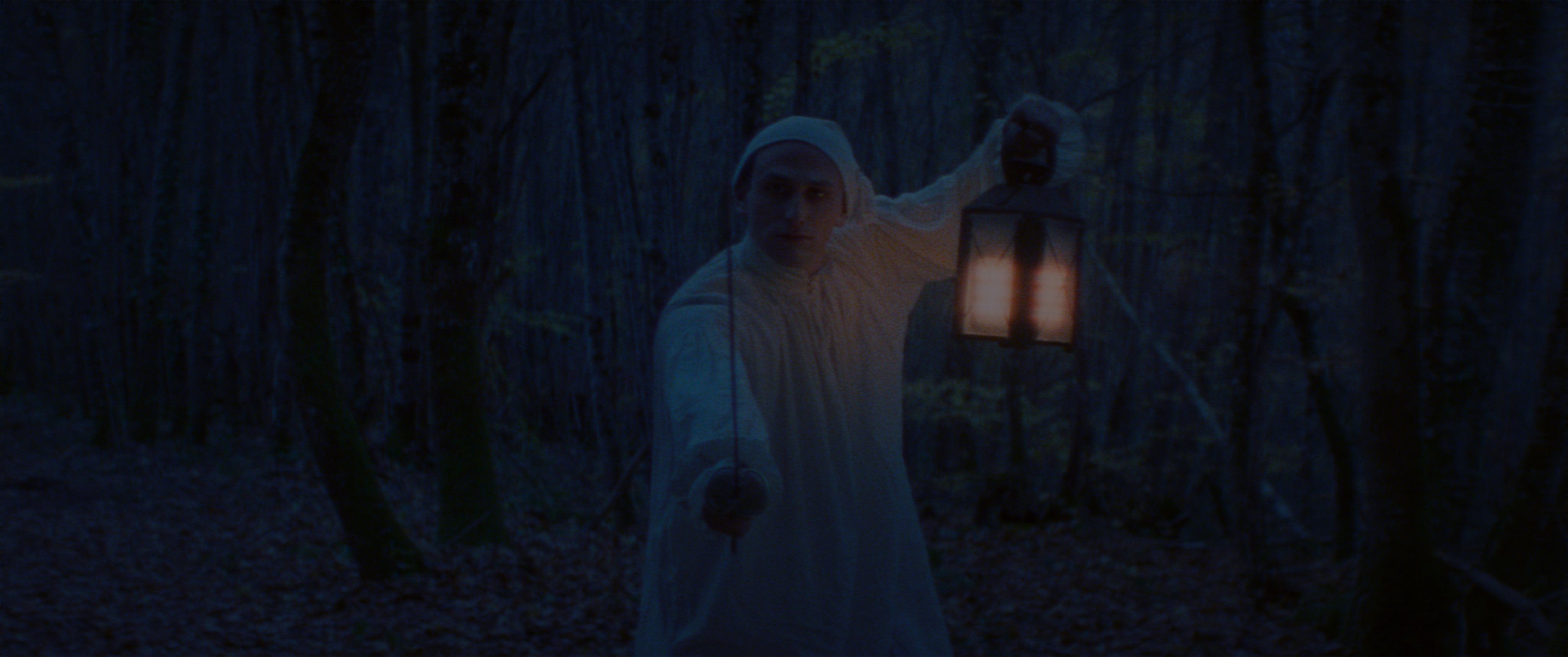 There are several important historical and folklore/mythology connections in The Vourdalak. The one that opens the film is a concern with Turks. In the novella, the story’s set specifically in Serbia, and though it’s never explicitly stated where exactly the Marquis has wound up in the film, he’s clearly somewhere in Eastern Europe, considering the family’s accent and the fact the Marquis is carrying a European map. For nearly 500 years, Serbia was colonised and ruled by the Ottoman Empire. This is why the man in the opening scene immediately assumes the Marquis has been attacked by Turks, whereas the Marquis, probably oblivious to the country’s political climate, replies: “Honestly, Turks, Moldavians, Greeks… what is it to me?” The Marquis is not totally removed from history, either. At one point he warns the vourdalak about a sword he’s wielding: “This legendary rapier saw my ancestor through the Italian Wars.” It’s only a passing mention; however, it points to the Marquis’s personal history as one of wealth. The rapier was viewed as a symbol of nobility and indicative of gentleman status throughout the 16th and 17th centuries.
Finally, the word ‘vourdalak’ has a specific history related to literature; I’ll come back to the film’s overall literary connections shortly. The word ‘wurdulac‘ (colloquially spelled as vourdalak, wurdalak, verdilak, or vurdulak) in Russian was first used and popularised by Alexander Pushkin in his 1836 poem “Wurdulac.” While the ‘wurdulac’ is considered a vampire, the name derives from a corrupted West Slavic term for someone wearing a wolf’s skin (i.e. a werewolf). Beau’s film is loaded with history from start to finish.
The Vourdalak depicts love as a curse, as infectious as vampirism itself. The love of a family is subverted into danger by the vourdalak’s nature. No longer does loving someone mean protecting them when the vourdalak comes preying upon a family. Yet even before the vourdalak wormed its way into the apple of the family’s life, love was a curse for Sdenka, whose supposed vagabond lover Jovan was gunned down when the two of them were planning to run away together. It becomes clear later that Gorcha, pre-vourdalak, was responsible for shooting Jovan. The old man claims this as love for his daughter, for his family, for the family’s reputation. So even without the vourdalak, love can be a curse; or, rather, it can be warped into a monstrous thing by those who love in the wrong ways. The proof is in the pudding when Piotr laments their father returning: “Even dead, you come to torture us. It‘s the end for you, monster.” It seems that prior to becoming a vourdalak, Gorcha was already a monster to those whom he was meant to love and protect.
“Love itself is a curse in these parts.”
 The queerness of The Vourdalak, for some viewers, might feel like a surprise, but for those paying attention from the beginning, there’s a constant air of queerness throughout the film. There’s an especially strange air of masculinity and heteronormativity at play in The Vourdalak early on, as the Marquis tries, at every turn, to insist he is a man, or manly enough, and that he, indeed, does enjoy the company of women; the
 ladyMarquis doth protest too much, me thinks. When Gorcha initially returns and is introduced to the guest at his home, he refers flippantly to the Marquis with a limp-wristed gesture while quipping about “powdered courtiers.” This comment either offends or hurts the Marquis visibly. Later, the Marquis is attempting to keep up walking next to Piotr and Sdenka, both accustomed to manual labour far more than the nobleman, and he’s continually behind, so he busts out the line: “Whatever you may think of me, I also have woman friends, to whom I am close and greatly respect.” But the real, open queerness in The Vourdalak comes from Gorcha, the vourdalak himself. Gorcha watches Sdenka and the Marquis dance, then admires the “lord‘s calves” and how “they must enrapture the young ladies at the French Court.” He immediately lets out a longing sigh and follows up with: “How I understand them.” This moment from the vourdalak is an early indication that Gorcha is coming to love the Marquis, culminating later with a weird, erotic scene during which the Marquis believes he’s having sex with Sdenka only to realise he’s actually in bed with Gorcha and the vamp’s been chewing on his neck. It’s an erotic, violent, queer splash of blood. Yet it gives way to something much more tender, albeit slightly sinister, too. Gorcha reveals he came to love the Marquis for helping him understand how to be free. While this is kind of sweet, it’s bittersweet since the Marquis’s liberatory presence around Sdenka and the love he inspires in Gorcha has finally resulted in the vourdalak moving on beyond the village’s, and even the country’s borders, via Sdenka.
Something that might go unnoticed by many viewers is that The Vourdalak is not just an adaptation of literature, it all but bleeds literature and the act of reading itself. As mentioned earlier, the word ‘vourdalak’ comes right out of a poem written by Alexander Pushkin. A tiny homage to literature is also found in the Marquis’s title, the Marquis d’Urfé: Honoré d’Urfé was a French novelist and writer, whose pastoral novel L’Astrée (1607-1627) is considered the first French novel, perhaps the most influential work of 17th-century French literature. The most obvious reading-associated moment is when Sdenka sees the map of Europe that the Marquis carries with him, which she later sneaks into his room to read again. She’s astonished by the roads and everything else mapped out. Above all else, she’s reading; in the 1700s, though reading was a common thing, it wasn’t exactly a rural pastime in a lot of places due to class. The Marquis, though unintentionally, liberates Sdenka—not to mention the vourdalak/Gorcha, though by quite different means—when he introduces her to map reading. This has major repercussions in the end of the film, after Sdenka, now a vourdalak herself, leaves her isolated village. The film’s brief epilogue shares an excerpt from the Duchess of Gramont’s journal, in which the Duchess mentions a woman, obviously Sdenka, coming into her employ; she writes that herself and Sdenka have come to care deeply for each other. The interesting literature moment here is that the Duchess of Gramont, Béatrix de Choiseul, was a French bibliophile who hosted a noted literary salon in the latter half of the 18th century. It’s fun to imagine Sdenka turning the Duchess into a vourdalak, the two of them attending the literary salon, reading books, and living the vampire life in the lap of bourgeois luxury across France.
The reason all these literary associations are so interesting is because reading is a major part of The Vourdalak in a number of ways; most importantly, in the way that Beau has queered the Gothic (even further than it already has been historically) through a reading of Aleksey Tolstoy’s story that incorporates far more than just the traditional idea of heteronormative desire/love. While we can, indeed, potentially read Gorcha’s queerness as predatory and an example of queerness being equated with villainy as is the case in so much Gothic literature/fiction throughout history, I choose to read Gorcha’s love for the Marquis as a perfect example of Gothic romance: a love that transcends gender or sexual orientation, a love that burns, a love that hurts, a love that kills, but a love that liberates, and a love that can never be forgotten, like the succulent kiss of a vampire.
 Father Son Holy Gore
Pingback: This Week at the Movies (Jul. 5, 2024) – Online Film Critics Society
Hi C. H. Newell, I love your very informative and thoughtful review of the creepy Gothic romance horror film The Vourdalak! The best part of the article is how you think of the Gothic love that Vourdalak Gorcha has for the handsome, endearing Marquis. In my romantic heart, I was rooting for Sdenka and the Marquis. Thank you for discussing all kinds of Gothic love that is explored in this shadowy, fun, sad, horrific, and strangely (at times) romantic film! (I love the film poster…the Vourdalak and the Marquis is oooh so Gothic!)
LikeLike