

Die My Love (2025)
Directed by Lynne Ramsay
Screenplay by Ramsay, Alice Birch, & Enda Walsh.
Starring Jennifer Lawrence, Robert Pattinson, Sissy Spacek, LaKeith Stanfield, & Nick Nolte.
Drama / Thriller
★★★★★ (out of ★★★★★)
DISCLAIMER:
The following essay contains
SOME SPOILERS!
Turn back, lest ye be spoilt.
Lynne Ramsay is perhaps Scotland’s greatest filmmaker, and one of the greatest filmmakers alive, which continues to be the case after watching Die My Love, the tragic story of a marriage between Grace (Jennifer Lawrence) and Jackson (Robert Pattinson). Everything seems to be picture perfect for the couple after they move into a relative’s old country home then have their first child. But not all is as it seems. Jackson has to go on the road for work constantly, leaving Grace to look after the house and raise their child. Everyone is increasingly troubled by Grace’s behaviour, as she starts to go a little wild. Secretly, she also meets a mysterious motorcyclist (LaKeith Stanfield) at night occasionally not far from the house, particularly since she suspects Jackson isn’t always faithful while working away from home. Things eventually come to a head when Grace makes a desperate decision about how to escape her and Jackson’s crumbling romance.
Die My Love is a mix of beauty, love, madness, pain, and tragedy. Grace and Jackson’s marriage is a microcosm of many women’s experiences from many different cultures—women who don’t want to sacrifice the romantic love for their spouse just to be sanctioned by society as a ‘proper’ wife and mother. Grace rebels against everyone around her trying to cram her into an ill-fitting box that she simply can’t or won’t fit inside. Jackson’s part in their marriage is also a microcosm of all the men who see their wives as only wives and mothers, not as whole women with desires, goals, and complex needs of their own. Die My Love stings in the way rubbing alcohol does, as it tries to disinfect cultural wounds that many societies have created in the body politic in the way romantic love is so often seen as merely a symptom of marriage, rather than the foundation. In spite of everything, Grace and Jackson are two people who love each other; however, one of the points Ramsay’s film seems to make is that love cannot be in name only, it’s something that requires a bit of elbow grease to maintain, and if it’s allowed to curdle like sour milk, it’ll make everybody sick.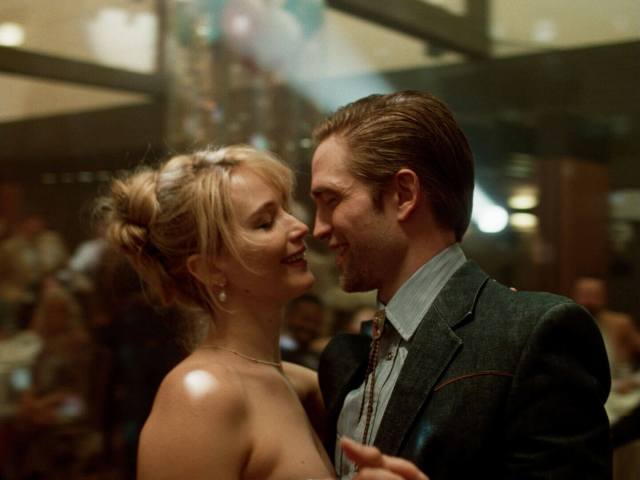 Though it’s easy to read Die My Love as a tale of postpartum depression, that’s also a reductive way of perceiving Grace’s struggle; it reduces her to nothing but a mother and a wife instead of being considered as a whole person, which is exactly what her husband and mother-in-law (Sissy Spacey) do to her. Even the title itself is trying to tell the audience what the film is about: the decay and death of romantic love between two married people. Small moments illustrate this throughout the film, such as seeing Jackson go from a man who’ll sit naked with his wife and paint her to toenails, to a man who barely pays any intimate attention to his wife because he’s preoccupied with other women and with the idea that his wife should be the perfect mother/wife he envisions. Yes, the decay and death of romance in Grace and Jackson’s life together really starts going downhill after their child is born, but this is still not a film about postpartum depression. Die My Love is a portrait of what happens to love and marriage after the excitement wears off and life becomes monotonous; after people settle down and their eyes/hearts start to wander; after people really begin to get to know the person they’ve married, warts and all.
One of the most interesting pieces of Die My Love is how Grace is drawn to Harry (Nick Nolte), Jackson’s dad, because Harry, despite clearly sliding further into dementia, is free from the shackles that families and societies try to put on people simply by bittersweet virtue of his mental state. Grace spends her days all but locked up in a prison of her marriage to Jackson. She’s stuck at home with the baby, and if she doesn’t do everything exactly how Jackson approves with the baby, as well as around the house, he comes down on her like a guard berating his prisoner. She internalises this to the point she chastises herself for not baking a cake herself and buying one instead: “A real mom would have baked a cake.” Even the women surrounding Grace are all stuck on expecting her to be a traditional, perfect woman. In contrast, when Grace and Harry are together, they joke, they laugh, and they enjoy the beauty of life and the world around them. The nighttime sequence when Grace finds Harry in the woods then they slow dance in the moonlit trees before Harry, nearly lost entirely in dementia at this point, re-discovers Grace’s pregnancy is the most touching scene in any film throughout the whole of 2025. This scene also epitomises the bond Grace has with Harry and why it’s so special.
Ramsay’s film contains fleeting bits of romance, yet it’s really an anti-romantic film; not anti-romance, just anti-romantic in its portrayal of romance and marriage’s complications. Die My Love is one of cinema’s most honest portrayals of romantic love and how marriage, as well as traditional family life, can affect it. Lawrence stuns as Grace, going from tortured to feral to sexy to angry and everything in between, representing the gamut of emotions a woman in her situation might feel when stifled by her husband, his family, and much of society’s expectations for women/wives/mothers. Die My Love is an urgent film because even in 2025 so many societies, particularly America right now, are still hellbent on forcing women to be pillars of tradition, no matter if that means driving them completely mad. Grace symbolises so many women out there who’d rather watch everything burn down around them than to fundamentally change who they are just to make a patriarchal world accept them.
 Father Son Holy Gore
Pingback: Reviews: Die My Love (2025) – Online Film Critics Society