
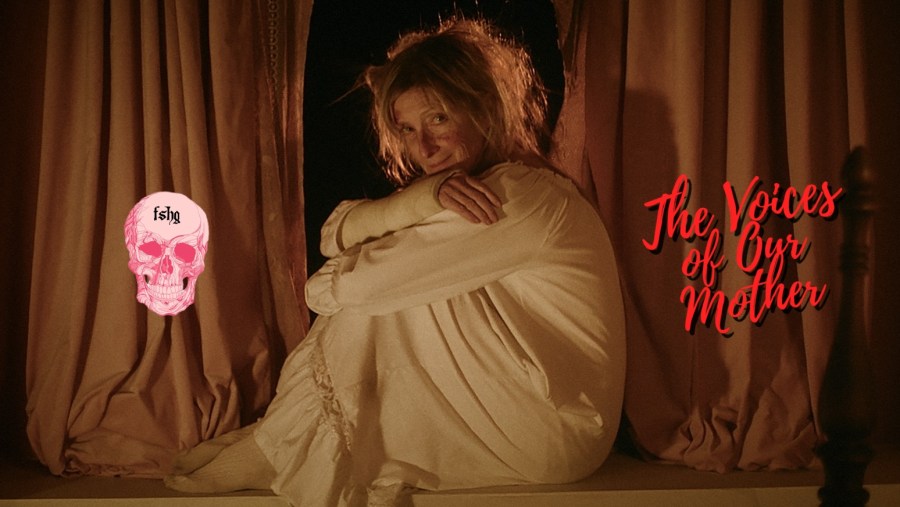
The Voices of Our Mother (2026)
Directed & Written by Mark O’Brien
Starring Sheila McCarthy, Georgina Reilly, Mark O’Brien, Carolina Bartczak, Alex Ozerov-Meyer, & Anna Ferguson.
★★★★ (out of ★★★★★)
DISCLAIMER:
The following essay contains
MINOR SPOILERS!
Avert thine eyes lest ye be spoilt.
After Mark O’Brien’s feature debut as director, The Righteous, and now The Voices of Our Mother, it’s clear he’s found a niche in Gothic horror, and his horror leans towards the spiritual. The Voices of Our Mother kicks off when an old woman called Johanna (Anna Ferguson) dies, leaving behind her daughter Harriet (Sheila McCarthy), whom she doted over up to the moment of her death. This leaves Harriet in a weakened physical and psychological state. Her kids—William (O’Brien), Annika (Georgina Reilly), Therese (Carolina Bartczak), and Martin (Alex Ozerov-Meyer)—hear the news and come to her side, but they’re not what you’d call a close family. That’s because Harriet was far from a good mother. After the grown kids are back at home with mom for only a little while, they realise that what’s happening with Harriet ins’t a matter of medicine at all.
The tie that binds O’Brien’s The Righteous and The Voices of Our Mother is a focus on parents, albeit their respective focuses are far different, and in this latest film, O’Brien confronts one of the most universal fears human beings come to understand: we begin as children taken care of by parents, then, inevitably, the roles become reversed as our parents age, their bodies deteriorate, and their minds decay. There are a number of ways to read O’Brien’s film: on its face, it’s a story about a family whose traumas tore them apart and continue to tear them all to bits; we can also read it as a story about how some people resign themselves to wallowing in evil’s wreckage rather than confronting it, or as a metaphorical story about dementia using a supernatural figure to stand in for the illness. Regardless of how you want to interpret The Voices of Our Mother, it’s a disturbing supernatural horror story about death, grief, guilt, and a famous line from Leo Tolstoy’s Anna Karenina that reminds us how “each unhappy family is unhappy in its own way.”
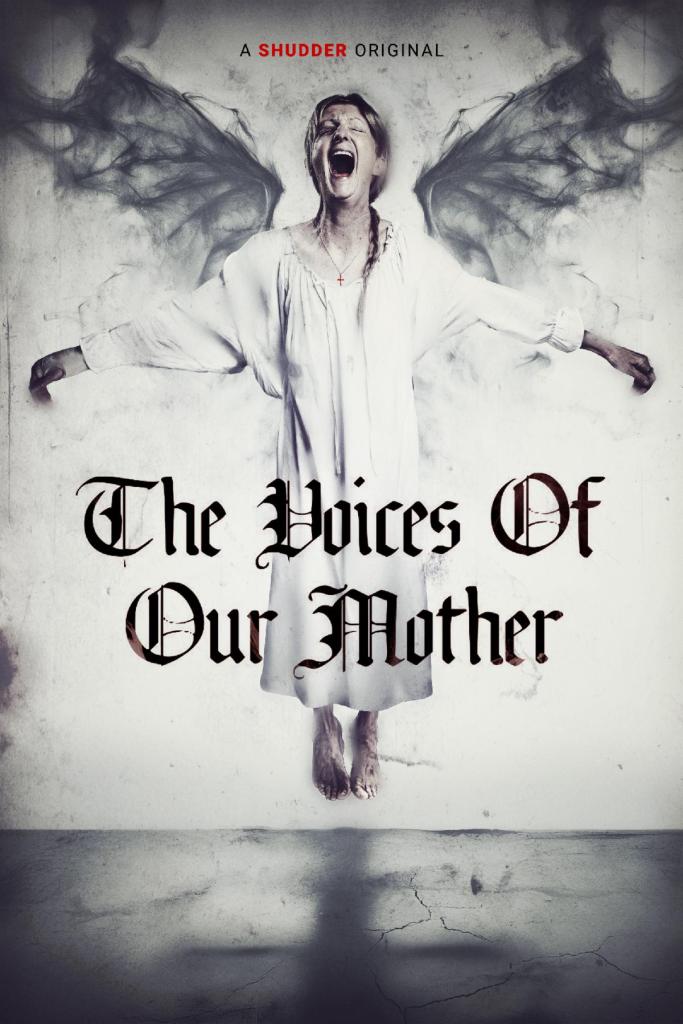
If we set aside the family’s complex issues and look solely at how the siblings are left to take care of a mother whose mind is gripped by something beyond anyone’s control, The Voices of Our Mother is a chilling, gothic, psychological horror-movie confrontation of dementia and how it drastically alters the parent-child relationship. The title itself appears to be a reference to how Harriet takes on different voices during the film, a direct reflection of how real-life people with dementia become different people, their voices often changing in tone or language due to what’s going on inside their heads. In a number of scenes, Harriet appears psychologically childlike, from early moments with her and Johanna, to later when she mocks her own children like a rebellious teen mocking parents. The most emotional moment of the film related to the dementia theme happens during a scene very near the end: we watch cuts between Annika with Harriet v. a very young Harriet with a young Johanna, as Annika’s forced, in a quite literal way, to be the parent to her now infant-like mother. It’s at once tender and haunting because of the plot’s ramifications, though likewise if we consider the idea that Harriet’s condition is only getting worse and worse.
Like O’Brien’s The Righteous, The Voices of Our Mother reaches towards theology, and in this film there’s a deep consideration of evil, particularly how we ought to respond to and deal with it. A repeated line first uttered by the priest, Father Roslovic (Shawn Doyle), states: “Evil begets evil.” O’Brien puts that idea to the test by juxtaposing a bunch of abused, traumatised siblings against a now sick, frail mother needing care in spite of all her inaction in the face of their abuse as children. At one point, Annika, who lives in a convent, speaks with another nun and spells out the complicated place in which she and her siblings find themselves: “Father was evil, hating him wasn‘t complicated; he was a monster. But mother, she never protected us, so how do I find the will to be there for her?” It’s far more complicated than that, too. As the film wears on, we discover a dark secret William, Martin, and Therese share that truly pushes us to consider how “evil begets evil.” The siblings are left with only their corroded relationships due to how they were parented and guilt over what they’ve done. Their own evils have done nothing but destroy them. The Voices of Our Mother asks us to consider the cost of our evils, even if they’re done to escape a pre-existing evil; a hard, horrible consideration when family’s caught up in it.
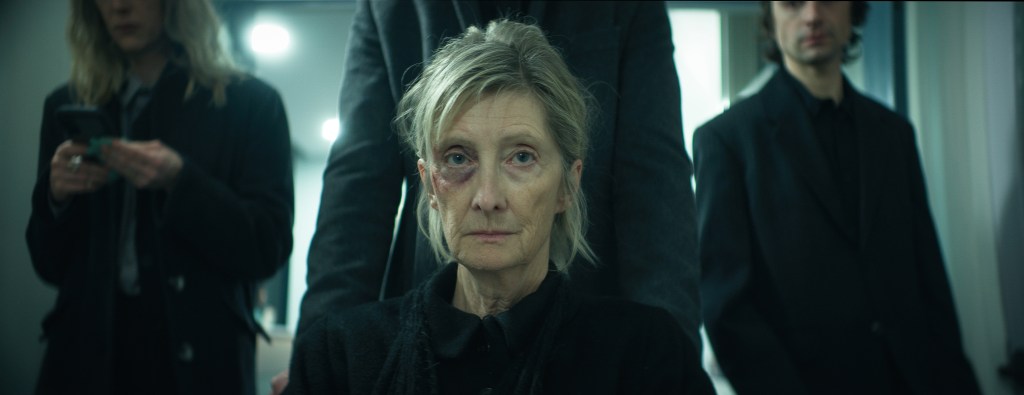
“She should‘ve done better“
“Maybe we can“
We do not have to perpetuate the horrors of the generations before us, neither on the family nor societal level. For instance, people love to talk about how Boomers did this or didn’t do that and how that’s affected younger generations since, which is often justified, but far too few try to be a force of change in the world, instead resigning themselves to a ruined world with faulty systems. It’s easy to wallow in the destruction of previous generations. It takes hard work to pick up the pieces and build something better. The siblings in The Voices of Our Mother, apart from Annika, seem resigned to their nastiness because of the nastiness done to them. At one point, discussing a tragedy that affected both Therese and William, the latter says: “She‘s dead because of what we are.” Yet Annika sees it differently, understanding that “there‘s no running from evil,” and that’s why she’s the only one of her siblings fit to fully shoulder the burden of what happens with their mother, even if it binds her terribly to Harriet.
O’Brien’s two films as director are so compelling because, like the best fiction, they invite and provoke all sorts of readings. The Voices of Our Mother works well enough as a supernatural horror about a family with more than one demon lurking in the closet. It’s all the more exciting because the plot and story can be read in a number of ways. O’Brien’s film is haunting, no matter how you personally interpret what it’s ultimately saying. The Voices of Our Mother is so alluring because it does two things really well by addressing the strength it takes to confront the evil done to us rather than playing into its hands and effects, as well as confronting dark truths about what can happen to the mind as we get older and the pain of witnessing it happen in real time to our loved ones.

