
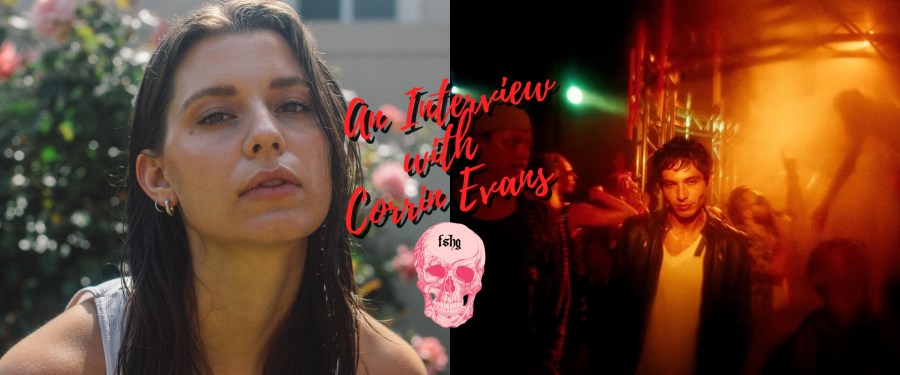
Corrin Evans sat down with Father Son Holy Gore’s C.H. Newell on Monday while she was in Montreal for 2026’s Fantasia International Film Festival.
(The following interview has been edited only for clarity & length)
CORRIN EVANS
Did I meet you last night? No. You just look so familiar.
I’m like, “Did we meet?”
C.H. NEWELL
Actually, a friend of mine saw Corpus last night—Erin Mick, she has a short film at the festival [called Sleep Through Summer]. When she watches a film, she says she’s going to church. And she mentioned how much she loved it at the screening when you talked about it as going to church, and leading a ‘prayer.’
C.E.
I’m going to have to talk to her. I very much have that sensation. I think a lot of people do. It really is a spiritual, personal experience.
C.H.N
I was really interested to see how much intimacy coordination you’ve done. And I was impressed that so many productions have clearly prioritised intimacy coordination recently. So I’m curious, did your time working in intimacy coordination frame Corpus in any kind of significant way?
C.E.
I think my instincts as an artist are what got me into coordination in the first place. I already was making films that had a lot of eroticism in them. And then I also am a performer and I work with a lot of erotic content.
I’m in a performance art group called Sweven and we do erotic, whimsical, fun—it’s really a strange and unique show that we put on. And so I’ve been kind of already involved in those mediums for a long time. And then in film, I’ve done so many different jobs over the years. I just like kind of did it all: I was directing music videos, editing them, lighting them, shooting them. And so, when you’re doing all those types of jobs, you’re not really making that much money. I was just really struggling. And then I came upon intimacy coordinating and I was really intrigued because I thought, “Oh, this is something that I could do that would just really use like a lot of my talents.” I needed a career pivot and to try to continue working in the industry but try to find something that was more suited to my schedule.
With intimacy [coordination], you can go only for a few days a week and I just get so exhausted. Hats off to all the crews. I would love to reform the way we shoot movies because the days are just unsustainable for people. We need to figure out something better. I’ve worked in Europe a lot; the days are shorter. You’re still getting a movie. It somehow still works.
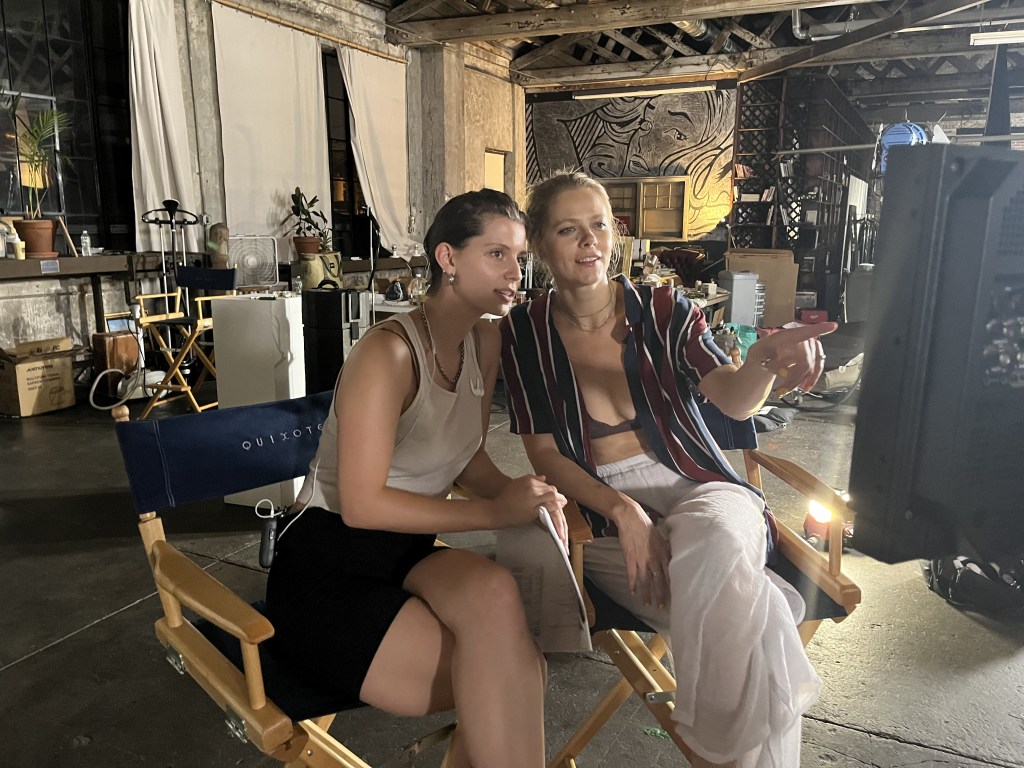
But anyway, I think working as [an intimacy] coordinator really helped me understand how to work with the coordinator. Had I never been an intimacy coordinator, I wouldn’t understand as a director how helpful they can be and how helpful it is including them early on in the process, making sure they have enough time to get to know the cast, do the paperwork, talk to everybody. When I was a coordinator, that was my biggest hurdle. So I was really striving to just create an environment for Chelsea [Pace] where she could actually work. That was my goal. And so she says that happened. I don’t want to speak for her, but she’s said, “This is exactly what I wanted.” I wanted to give her the experience that I didn’t necessarily always have as a coordinator.
C.H.N
For you, what’s the most important aspect when it comes to intimacy coordination, in terms of making performers feel comfortable and safe in what I’m sure is a very vulnerable environment?
C.E.
It’s something I like to talk about a lot: feelings aren’t always indicative of consent. Because as a performer, and I’ve experienced this as a performer, you can be consenting to something and want to do it, and you might feel uncomfortable, but that doesn’t mean you don’t want to do it.
Also to piggyback off of what you said, feeling nervous or feeling uncomfortable and tense is kind of often part of the process even if you are enthusiastic about doing that. Like sometimes it’s just the act of having to do these things, your nervous system, it can be a lot. Same with a violent scene: your nervous system is going to be activated.
I believe the most important aspect is creating space for people to have whatever emotions they need to have without feeling like they’re being helicoptered. Talking ahead of time and laying out an understanding of where they are at with what they want to be doing. Checking in with them on that on the day to make sure that’s still the case and telling them that you trust and believe them, that you trust their ‘yes’ and you trust their ‘no.’ And you’re not going to try to intuit anything in between. I personally think that’s, for me, the most important thing as a coordinator. I’m not going to be hypervigilant. This is how I’m going to check in with you. You’re welcome to have any emotions you have. If you need me, here’s the way that we can communicate. And I will continue checking in with you. Because actors, they go through so many feelings. And if it’s a serious scene, they might seem uncomfortable and not okay, but they’re actually just in character. I think sometimes, that can be unnerving for the director or the producers.
For me as [an intimacy] coordinator, just through learning that and being on set and seeing the waves of emotions up close that people go through, it also helped me while directing Corpus, to leave them their space, not to helicopter them and just be like, “Do you need anything?” They say, no, I believe that.
C.H.N
I would imagine it involves a lot of trust too on both sides, right?
C.E.
I think so. And to cultivate that, it’s just, “Here’s what we’re going to see. Here’s what we’re not going to see. If you change your mind, just let me know. Here’s plan B can be and plan C, or like how we can roll it back if you’re not feeling like you still want to do those actions or that level of nudity.” I think it’s about having a plan, conveying that plan, people understanding how they’re going to be photographed. If they think they’re gonna look good, a lot of times they’re more happy to do more exposing things because they’re like, “Oh, it’s gonna be a vibe, it’s gonna be cool.”
C.H.N
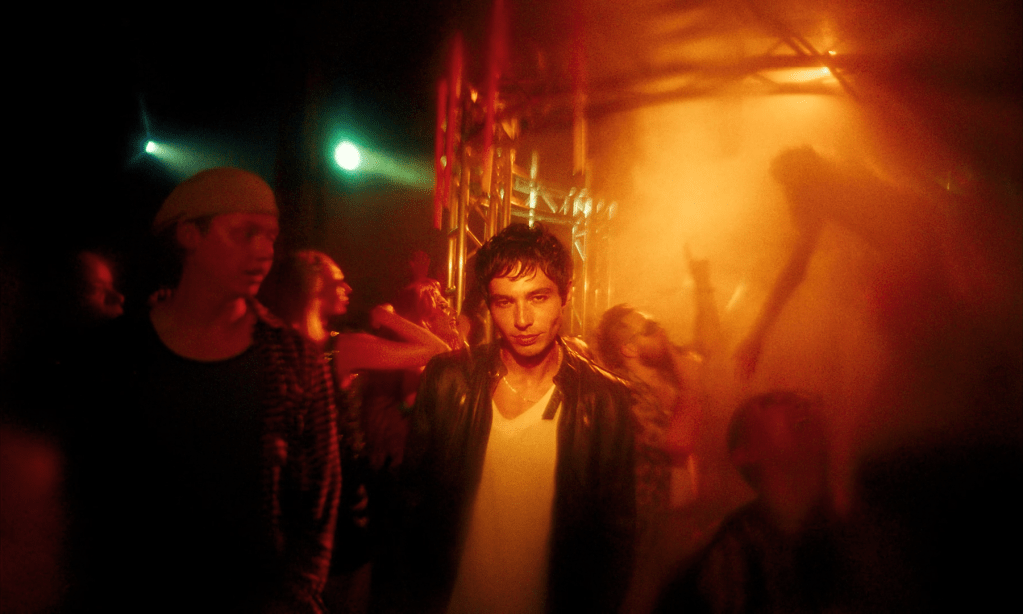
In Corpus, there’s this increasingly sinister vibe that I love, and it intermingles with the eroticism that’s happening at various points. I’ve thought a lot about this myself and I’m always curious to hear other people’s thoughts: do you think that there’s a relationship between eroticism and fear in the context of horror?
C.E.
I don’t know if you’re asking because you saw my article or…?
C.H.N
I absolutely read it.
C.E.
Okay. Yeah. I wrote a piece on this for Petit Mort because I feel very strongly that a lot of human emotion—honestly, anger, fear, desire, eroticism, any of these emotions that come upon us suddenly and sort of animalistically—are, to me, very similar. They build, they crest, they pop, they descend. Some of them happen to you when you don’t expect them sometimes, with sex or fear, or anything really. Maybe you’re trying to initiate it in your life.
I’m super into shadow integration. I can’t shut the fuck up about it. It’s like every movie I see, every book, I’m like, “It’s about shadow!” I’m sorry. It’s just the lens that I see the world [through], you know? So, just finding places to bring things that are like put into the shadow of humanity and then bringing them out.
I think anger, fear, desire, all these things are great together because they are things that we shame ourselves for, but they’re things that we can’t help. Creating spaces to feel those feelings is really important.
C.H.N
That’s a fantastic answer.
As a queer person, I always appreciate horror that approaches queerness, even in the smallest way. Was it important for you to tell a queer story specifically [in Corpus]? Or, I think I might know the answer to this next part, do you think you could have told the same story with hetero men particularly at the centre?
C.E.
Maybe, but it would have been completely different. Like it’s just a different story. I think it being a queer relationship, especially anytime it’s same sex relationships where you have similarities with that person—since [Sayo and Vince in the film have similar features], they’re also both artists at different points in their careers—there’s something underlying in those types of relationships, or at least this has been my experience. At times in my own life I’ve thought, “Am I attracted to this person, or do I want to be them?” That wouldn’t be quite as present in a hetero story; it wouldn’t be present at all. Not in a story about two straight men, but, maybe if they were starting to find themselves bicurious.
There are so many people in my life that are queer, and my experience, and people around me, it just kind of mirrors how my world is, I guess. There’s a blend of people of all genders and sexualities. And so it just naturally finds its way on-screen. And I know Lily[ Cowles]‘s life is the same way. So why wouldn’t those be the people that we see? Because those are the people that I interact with, day to day.
C.H.N
Was there any specific reason you decided to set the film in the late 90s?
C.E.
Yes, the late ’90s were really important to me, being right before the boom of the internet. I have a fantasy of what it would have been like to live in New York at that time. The movie is my fantasy and a combination mine and Lily’s writing, then my directorial fantasy of that. This feeling of getting lost in the city, or being able to go upstate. And granted, a lot of people had cell phones around 1998. We just went ahead and were like, “Shh” on that.
Lily said it really well this morning in an interview: “In the body.” People were maybe more in their body before we started always being on our phones.
I love cinema of the late nineties, early aughts. I wanted to return to that feeling myself. So maybe it was also selfish: I wasn’t there, I was a child; I was born in 1992. But I love this feeling of more physical media, feeling connected. And Sayo [in the film] having the Catherine Wheel tape; I had all sorts of tapes as a kid. I was able to touch my music and touch my movies in a way that is not as prevalent now. So, that feeling, and I wanted to be in New York.
C.H.N
I love that mention before about being more embodied. That’s making me think even harder about the film. [Lily]’s very right about what she said, it’s a very different time now. And even though there were cell phones [in the late ’90s], it wasn’t as prevalent. There was also no social media in connection with cellphones then.
C.E.
I read Peter Gatien’s book [The Club King: My Rise, Reign, and Fall in New York Nightlife] and have done so much research on the clubs of that era. It was an interesting time. There were a lot of people together partying. You’d have Donald Trump in a club with the club kids, along with famous models and businessmen. You just don’t see that anymore. Now you go to a club and it’s specifically a gay club or a certain type of music. Whereas I just feel some of those clubs in the late 90s in New York, you’d see so many different walks of life. And that’s interesting to me.
C.H.N
I’m old enough to remember partying in the late 90s, young as 14-15 year old, and there are events, not that I wouldn’t want to see a picture of, but there’s something about those events just being in my memory that makes them more special. I can remember them. I don’t have to look at a picture to remember them, you know?
C.E.
And people get more abandoned because, I mean, a club photographer could be taking photos, but nobody had their phone out, going to post you on TikTok.
You might feel more free in that type of situation.
C.H.N
Another thing I like in Corpus is the focus on photography. Without any spoilers for anybody who will read this, there’s that interesting moment at the end when the camera makes an appearance. It made me think a lot about spirit photography, or the beliefs of some Indigenous tribes about capturing someone’s spirit on film. And there’s the scene when Sayo notices a snap he’s taken is not showing what he thought it would.
I’m curious, in general not even specifically with the film: do you think capturing someone on film, whether it’s a video or a photo, reveals things that otherwise wouldn’t be revealed? Is there something the camera allows that we don’t or can’t do with our eyes?
C.E
Because my medium is not photography and it’s moving images, I feel with moving images, that’s true. I feel that when you photograph someone, especially if you’re up close with them, which Corpus is a lot of closeups, you can really feel what they’re feeling. It’s so visceral.
Pictures are different because pictures capture one moment. It’s this fleeting thing.
And I’ve heard so many different stories and things about photography and spirits. I’m sure subconsciously a lot of that made it into the film because I love listening to these YouTube channels where people do user-submitted stories that are more spooky or spiritual. There are often stories about photography. Even our location was haunted. Some of the photos have orbs.
[Photos] that we took on site, especially in this one room, the dark room on site, it was really haunted. Some of the [behind the scenes] photos we have, you can see these things in them. I don’t know about a person’s spirit. I think you must be capturing something.
The photography for me was more of like a translation of how I feel about being an artist. Sayo is kind of doubling down on authenticity, he wants to be so authentic and in the moment. Vince is more of the Hollywood guy. It was more about that for me than anything. How do you make your art in a way that feels good to you? Vince is like “Let’s get you out of this shithole” and Sayo’s like
“I like this shithole, I like what I’m doing.”
Also, Max Lakner, our behind the scenes photographer, was our photography consultant. Sayo’s photography style was based on Max’s photography style. Max shoots for Dirty Magazine and a bunch of other things. He’s just a fucking amazing visual artist. The hottest photographs of me ever have been taken by Max. He just can see you and capture the moment. And so he talked a lot about using the camera, the sexuality of shooting, how you’re moving with what’s around you. He does nightlife photography, too. And he captures these insane images.
To me, it is very sexual. It’s similar to what you were saying about partying, it only exists in your memory. It’s the same as a photograph: just one moment of this experience that is so fleeting. I think that’s like sex, too. You can conjure an image, but it was this whole experience, and that image can conjure so many feelings within you. So, sorry, I don’t know about the spirit aspect as much.
C.H.N
No, yet again, fantastic answer. And it was a bit of a bit of a heavy question putting you on the spot.
There’s a lot of stuff right from the beginning scene [of Corpus] that unsettled me in the best way.
The very first scene immediately gets you thinking about the things people will do to be in a movie or be in the magazine photos, whatever. And that only progresses later in the film.
All sorts of ideas come up, like the quest to stay young, to be the star, to continue being famous.
Does that relate to any of your own experiences so far in the industry?
C.E
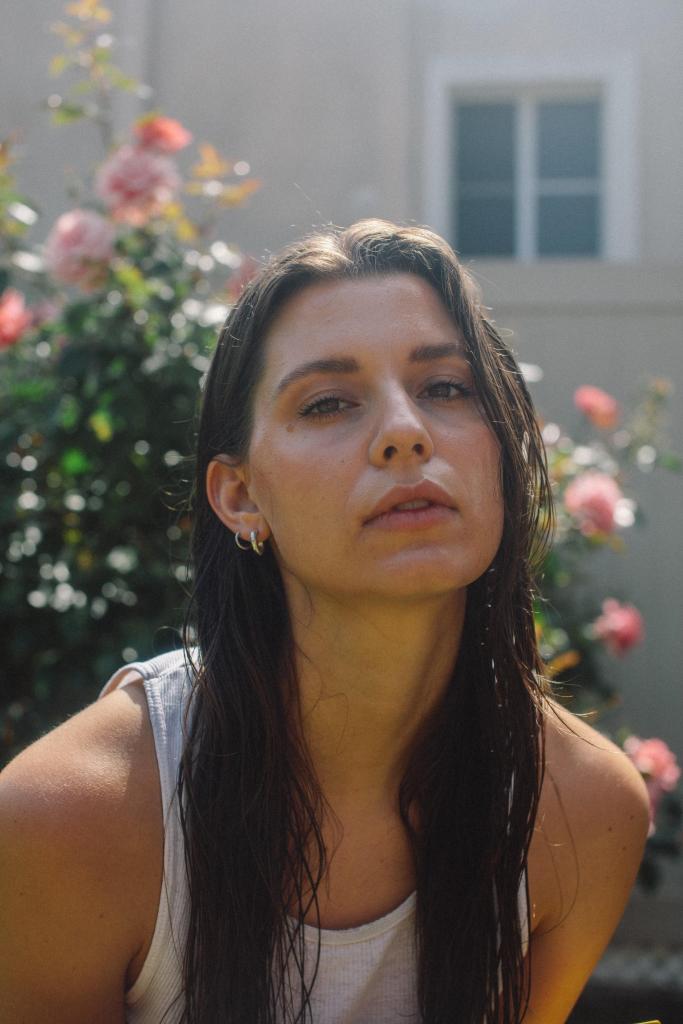
For sure. I’ve lived in LA for so many years. I’ve been there for 15 years and I’ve seen people come and go and I’ve seen the desperation in myself. I’ve seen the fear.
I have a friend who’s super psychic and spiritual (she’d probably have a lot to say about the photography). But she always tells me, “LA is a city that runs on broken dreams.” It’s why she can’t stay there too long because… I’m going to cry thinking about this… but she’s said to me, “It’s a grinder.”
People go in thinking it’s going to be one thing, and it really is a city that will take you and change you for the worse, but also it can be for the better.
I think as an artist, it’s hard because you want to convey this deep emotional thing, but then there’s also the business, and all these hurdles and you’re like, “I just want to express and be with other artists in this communal experience.” But there are so many layers to it. So it can’t be avoided in the film industry versus being a painter or a novelist or something that’s more introverted. You take those same personality types and then you give them a medium that’s so expensive, and we’re all drawn to it for a certain reason, but this medium just takes so much from you. It takes so much from you, but it also gives you so much. It’s he best medium in the world. I love working hard and making movies and being with people, but it’s gnarly. There are two sides.
I think that’s present in Corpus, probably subconsciously and consciously. Lily and I did talk a lot about that, especially [related to] Vince’s character and what he’s going through. And being human is really scary. We’re careening towards death. I think it’s beautiful. We know that, and it makes every moment heightened. when we remember that time is beautiful and limited and you never know when you’re gonna go.
C.H.N
I have friends in various cities around North America struggling to to be in movies and this and that, but I especially think about my actor friends who are women, queer, and trans, and so much of acting is focused on their bodies. Going back to [the title of] Corpus, the body is a focus. And in the film, there’s this real sense at times where, especially as the plot progresses, there’s this real alienation from the body and from the self. And that strikes me as something, no matter where you live, but especially in a place like L.A. or Toronto or Vancouver, there’s this alienation from yourself, but also your body, because you’ve got to think about the commercial viability of your body type and crazy things like that.
C.E
And tack on aging, too. I think it’s a universal, human thing. I’m only in my 30s, so I’m just starting to step in. But even, like, from 18 to now, I look at myself and think, “That is not what I look like. That’s not what I remember looking like.” Being a human is so weird, it’s enough as it is, but it’s especially weird when you’re working in some kind of medium where it’s your body, your face, it’s you and you’re being judged on a constant, in very unfair ways.
C.H.N
That’s what really resonates with me in Corpus. There is this real sense that we’ve been alienated from ourselves. And there’s a specific image, when the ‘thing that happens happens‘ in the film, of the self that I found very intriguing in the sense of… feeling deflated.
C.E
But then also getting into the ‘new thing’ and feeling the strength and thinking, “Whoa, I’m feeling something I haven’t felt maybe for a while, you know?”
C.H.N
There’s something empowering about that. The film’s not all doom and gloom.
Thanks so much for all your wonderful answers, Corrin. I loved Corpus, and I’m sure I’m not the only one waiting for whatever you do next.

