
Director-writer of Trauma, or Monsters All Larry Fessenden and actress Aitana Doyle sit down with Father Son Holy Gore‘s C.H. Newell to talk about the film during Fantasia 2026.
(This interview has been edited solely for length and clarity.)
Larry Fessenden
Hi, Chris.
C.H. Newell
How are you two doing?
Larry Fessenden & Aitana Doyle
Good. Good.
L.F
[notices Chris’s Jaws shirt] You have a nice shirt. I approve this message.
C.H.N
Larry, I talked to you back a while ago now. It doesn’t feel that long ago, but back when Depraved came out. So it’s great to have you here again and, Aitana, it’s great to have you here this time.
One thing I kept thinking about in terms of Trauma, Larry, was whether there’s a specific reason you felt right now was the right time to bring back and bring together your monsters?
L.F
When I finished Blackout, my werewolf film, I was mulling over the idea of objectifying the monsters in a movie so we would see them from someone else’s point of view. And that’s how the character of Cassandra and then her sidekick, Agnes, came to be.
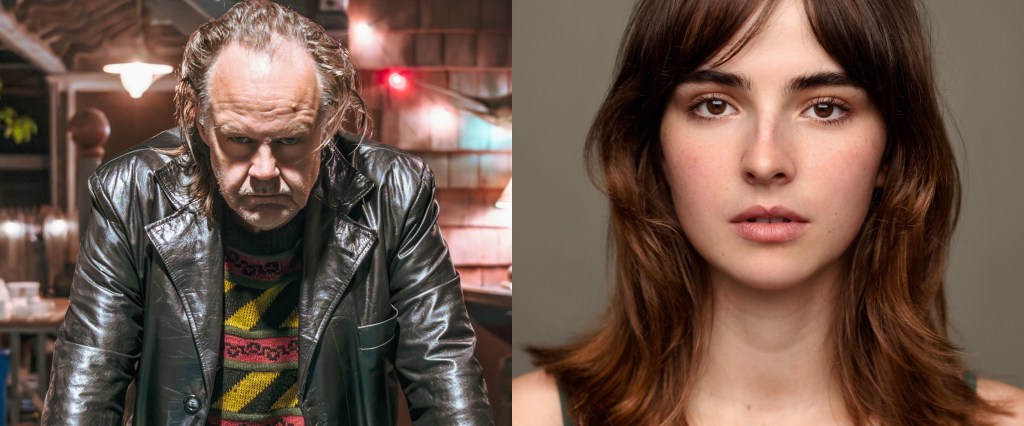
But the true urgency was that all the actors were going to get older and possibly more famous, and just in general have lives. And I felt I should capture everyone while they’re still around, and even remember who I was. I suppose I wrote the script at some point, but I started calling everyone and trying to put it together first. And then I had this really delicious problem of figuring out who the new actors would be. And I met with Aitana, it was without any question. We just had a lunch and I said, “You’re going to be Agnes if you’ll do it.”
[laughs] I was quite nervous because everybody’s so casual in showbiz. And I heard she said yes, then nothing happened for a month. And I’m like, “Is she still…?” I was quite obsessed, to be honest, because I just knew she was the character. And luckily, she stuck with it.
It took longer to find Cassandra because it was an unusual role. You need a person of colour to be in a silly little monster movie. They had to be young. They had to have some kind of spark to be our lead character. And it was just a real blessing to have my casting director, Lois Drabkin, go to a play at Juilliard and see this actress and say, “I think she could be Cassandra.” And so this was just wonderful.
And when I got her, I was like, “Oh, fuck. Where’s Agnes?” She’s still with the program. And I was so blessed to have them.
But all the while trying to get all the old guard back. Remember, it’s not just the monsters I had to get. There’s Addison Timlin, who’s wonderfully busy, and essential. I wouldn’t have made the movie if I had to replace even the smallest role because then it would lose the charm of the return.
C.H.N
Aitana, I’ve had a chance to pick Larry’s brain a bit in the previous time I interviewed him and as someone who loves horror, I’m always curious why other people are drawn to the genre. Is there anything that particularly drives you to horror? And what drew you to this film and Agnes?
A.D
We were just saying this was my first time working in horror. I think I scare very easily. So I love that I only had one scary scene. And I couldn’t even be around when Larry was doing his vampire thing. But I think that horror is one of those genres that takes the most collaboration and effort. People are doing new things all the time.
And, also, a great year for horror. We’re seeing a lot of bending the genre’s rules and it could be anything now, and it’s increasingly more popular. That’s all really exciting to see.
What drew me to this project was Larry. Y’know, just like cool indie director. It got me a lot of street cred working with Larry. But when we met, it was sort of immediately clear to me that we were going to work very well together. And then after I said yes, I went back and I watched his movies and I was like, “Yeah, this is going to be great.”
C.H.N
Larry, I can’t remember if I told you this last time we talked, but one of the things I’ve always enjoyed about your take on monsters is that you retain the focus on how human beings can become monstrous. I’m a bit of a gothic horror nerd, that’s my wheelhouse. Gothic is great for addressing what’s really monstrous and how the label of monster can be thrown around, usually due to fear.
I’m curious if either of you think of this film in that context.
L.F
Well, I really think this movie is ultimately about labels and how we label each other. And even [the character] Cassandra, a person of colour in this very white, small town in upstate New York, she would have a sense of her being considered an Other there.
I mean, she’s very brave. She goes there and integrates in her way.
Of course the library is an essential part of the Gothic. Nowadays the library seems Gothic because it’s a place of ideas and thinking.
But the whole movie’s about labels and who’s a monster. Are there racist monsters? And then also the backlash of them feeling like [Cassandra’s] judging them. This is the soup that we’re all suffering through in our culture now. And so I wanted to put it in the comfort of a horror allegory and then celebrate my monsters, but by sort of objectifying them and seeing how they look to an outsider. And of course, if you’ve seen the other movies, then you kind of have a kinship to them: the Frankenstein, even the vampire from my old movie [Habit], and the werewolf. But now it’s flipped.
And we were talking about this earlier that you could actually see Trauma first. Then you’d hopefully be curious, “So what are the backstories?” Because they’re a little unclear. They’re sort of innuendo. And I wanted to show that a lot of stories are passed down and they’re not clear, or they become legendary. Aitana has some great moments where she’s saying, “Yeah, there was this weird thing. There was a fire and I don’t know, it was like a Frankenstein thing.” She’s sort of trying to recount the headlines that she read, but then she didn’t really care because she was in high school.
So I was trying to evoke what it’s like to go about our business and you hear these horrible stories. Of course, we have shootings in the streets in America right now. But they almost become like these weird fictions. And which ones do you take personally, and which ones become just folklore stories? I’m really playing with all of that, and the role of horror in our lives; these mythologies, and the importance of storytelling and narrative in our lives to create definition.
C.H.N
I’ve studied the Gothic and I do study a lot of things related to trauma. So I was curious, about your perspectives on the film’s title. Obviously, Larry, as writer-director, you’ve spent a lot of time with the title. But what does it mean from either of your perspectives?
L.F
It’s funny, I have a divided mind about it. There’s a line in Blackout where the character of Charlie clearly had a problem with his father that was sort of unresolved and that whole movie is about parenting—all of my movies are about fatherhood because I’m dealing really with the patriarch, which our society is built upon. We have this oppressive male-centred society we’ve created and I’m just commenting on that. It’s also personal, whatever your relationship with a dad,
but also the importance of the example that’s set.
At one point [in Blackout] that character says to the priest, “Well, this is just what happened to me. It’s not a trauma.” So he’s downgrading the term. I feel like the term is overused now. Like everybody’s got a trauma. Well, that’s called growing up and being bullied and being picked on for being a sissy or whatever thing happened to you. I went through it. So I think in a way it’s overused and yet I’m trying to also acknowledge that it’s exactly what we all carry with us: it is our past. As I say, you were maybe bullied or maybe, God forbid, you were the bully. I was the bully. I’d beat people up who weren’t voting Democrat, which is insane now;
that’s everything that Trump would say is true, we’re just crazy liberals [laughs].
But the point is is we all have our experience and then I felt very outsider because I was an artist and I felt weird, I didn’t play the sports. (Although I was a good goalie.) He’s a talker [laughs]. Anyway, I’m just playing with the idea of trauma. Let’s examine it and see how it’s tossed around.
We have a wonderful cameo from Toby Poser in the film. She plays the mother of the guy that’s been established in two movies as kind of this smarmy little prejudiced kid who’s all hyped up. He’s got the funny voice, and it’s a great performance by Cody, really out there; almost a different style of acting in the movie, because he’s just decided to do this voice, but it works. Then in this movie, we meet his mother, and we realise he’s being abused, or at least talked down to. So the truth is, I’m saying, look at the trauma that’s created this character who can’t forgive, and wants to find the girl.
My other joke in the movie is like, even when there are all these monsters at the end of the film, he’s still like, “There’s the girl!” And you’re like, oh my God [laughs], the whole world is falling apart, there are unnatural creatures running around and he’s still obsessed, he can’t let it go. He’s just obsessed with getting the girl. And this is the problem. We just have these thoughts all based on identity and labels but, as you say, it’s all in the gothic novels. Heathcliff was this grotesque guy on the moors. And I love Dickens’s Great Expectations, the criminal is ultimately—oh my god, I’m gonna cry thinking about it—he gives Pip the money and you realise, no one is what they seem.
This is what horror is about: sometimes they are what they seem,
and then you want to get the fuck away.
C.H.N
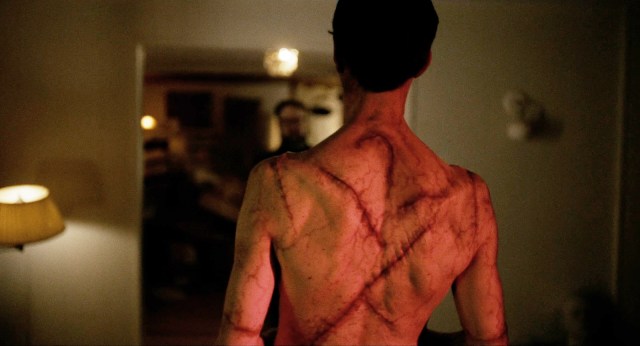
I see hope in the film. I love seeing your character, Larry, from Habit come back. And I think he’s an incredibly self-aware character in this film because he talks about things like not letting your ability to empathise atrophy. I think that’s especially important right now in an age when we have billionaires saying things like “Empathy is a fundamental weakness of Western civilisation.” Do either of you think that monsters can teach us about empathy?
L.F
I have to jump in because I appreciate you noticed that. I am a bit of a speechifier. I have a philosophical perspective. This movie is ultimately scary because it’s a lament to the death of the liberalism project, which started with the Enlightenment, and we learned that science could could give us a sort of a course forward where we could uplift all people, we would give people their individuality. This was sort of a liberal project that went right up through FDR in America and now the right wing has figured out if we dismantle that, if we make fun of empathy, we can break apart the idea of the social, of human rights. We can say, “That’s a waste of time.”
You know, this clown, what’s his name? Stephen Miller. I’m tired of labels, I don’t even want to call them Nazis. They’re assholes; that label I think works, over time. They’re leaning into the wrong philosophy and building an entire movement based on bullshit. The reality is, this is the problem: America—I mean, the world—has to understand those simple ideas of liberalism, they can be parsed and we can look at them with nuance, but it’s not like there are these whole new ideas that are going to work. It’s just a fundamental idea. It’s not every man for himself, it’s about cooperation.
So this movie is simply a rage against the idiocy of putting ourselves first. And I would argue that the extreme left also started using identity to weaponise other people, and it’s all a shit show. It’s very simple: you’ve got to get along.
Sorry, this is not what you need.
C.H.N
No, Larry, I’m loving this. Go off, as the youth say.
L.F
This is what the movie’s about, these are my concerns. It’s probably my downfall. It’s why I’m somewhat of an outsider artist. But this is what I’m concerned with so much. Then I’m overwhelmed with my love for monsters. So then we put a monster in, and there’s a lecture. A monster, and the lecture, and then a monster. And if you get the balance right, the audience will suffer through it.
C.H.N
As someone who’s deeply academic minded, especially regarding the Gothic, that’s why I appreciate your films.
Aitana, your performance is also great in the film. I just love the whole thing. I was really happy to write about Trauma already during The Overlook Festival. I hope everyone who sees it at Fantasia loves it even half as much as I did!
Thanks to you both! As always, Larry, I look forward to whatever madness you conjure up next.

