
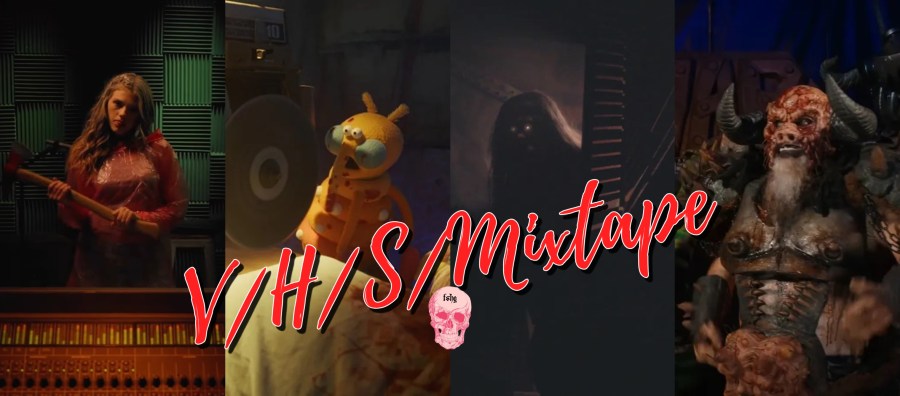
V/H/S/Mixtape (2026)
Directors: Ernest Dickerson (“The Music of Mr. Sze”), Flying Lotus (“Another Cabin”), Tobias Forge (“Premature Burial”), David Moreau (“Heartbeat”), Renee Zhan (“Dance, Dance, Dance, Dance”), & RZA (“Death Tone”).
Writers: Ernest Dickerson, RZA, David Moreau, Matt Landsman (“Death Tone”), & Zoe Cooper (“Dance, Dance, Dance, Dance”)
Starring Jihad Brent, Barbara Crampton, Gwar, Alex Hsu, Neela Jolene, Elie Kaempfen, & Josh Willis.
★★★ (out of ★★★★★)
The V/H/S franchise rolls on further coming to us again during the most wonderful time of year, the Halloween season, as another crop of directors and writers deliver unto us V/H/S/Mixtape. This entry features twisted tales that focus on the connection between sound and horror: a production crew looking to reboot an old children’s show comes across a mob of angry puppets; a little boy deals with a massive creature attacking his home; an urbex YouTube couple get trapped in a Soviet-era bunker; a creepy Gothic music video plays; a film student finds a reclusive musician living above him and it unleashes something terrifying; a woman seeking to create great music follows her dead dad’s formula to gruesome effect; and a wraparound segment features GWAR in an MTV-like show probably produced by Satan himself.
Sound is integral to the horror film. It connects with something in us on a visceral level. V/H/S/Mixtape is far from the best or the worst entry in the series, containing a couple incredible segments that grapple with interesting ideas related to sound. “Death Tone,” “Heartbeat,” and “The Music of Mr. Sze” are particularly compelling because they get closest to being profound, even in certain cases existential, explorations of how sound can be a source of terror.
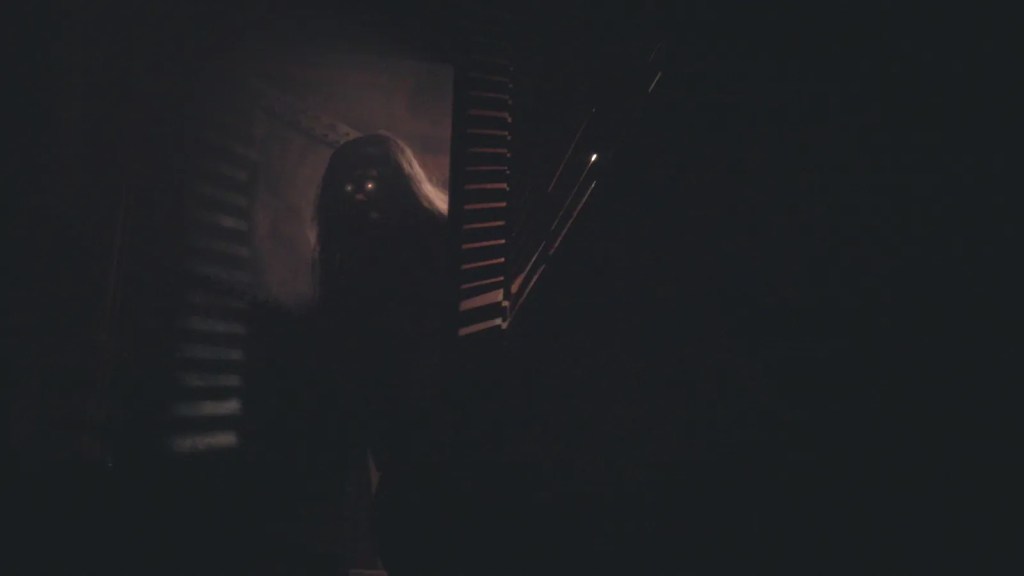
David Moreau’s “Heartbeat” is a disturbing look at what would happen if all we could hear was only our own sounds. What happens in Moreau’s segment goes from disturbed to gruesome. On a symbolic level, it’s a portrayal of how we’re afraid of being alone with ourselves, our own internal sounds, and our thoughts. At the same time, “Heartbeat” confronts the very real dangers urban explorers put themselves in by going into unstable, sometimes unexplored spaces all to get the perfect video for clicks and exclusive content. And there’s an irony at work in “Heartbeat” since the YouTube couple seeking as many viewers and listeners as possible wind up trapped, invisible beneath ground where nobody can hear nor see them, screams or no screams.
Ernest Dickerson’s “The Music of Mr. Sze” feels like a creepy 1990s flick that connects horror, the cosmic, and music. Today we see a lot of great memes about how people in medieval times could’ve conceivably written songs similar to our contemporary music, and there’s a truth underlying this idea: music is ancient. While new forms continue to emerge, there’s something ancient that still remains in the essence of music, especially classical music. Mr. Sze knows the power of the music he’s learned and it becomes clear later on why he’s kept so much to himself, not wanting to force the consequences of that power onto others, which inadvertently happens anyway. As the horror of Dickerson’s segment grows and its cosmic scope is revealed, the story questions what music could unlock if only the right, or in this case wrong, notes are played.
RZA’s “Death Tone” is equal parts grisly and smart as a nasty exploration of what a person will do in order to create unique art. Often stories about obsessive artists focus on the self destruction of the artist, whereas “Death Tone” looks at how much an artist can destroy others in pursuit of their art. RZA’s protagonist follows her father’s instructions from beyond the grave as he tells her: “Build your melody.” The way this segment uses sound in conjunction with horror is particularly unique, both in terms of plot and in terms of the actual music featured; to say any more would spoil the aural delight. On another note, the chainsaw does great work in “Death Tone” after being so consistently overused in horror ever since Tobe Hooper immortalised it in the genre.
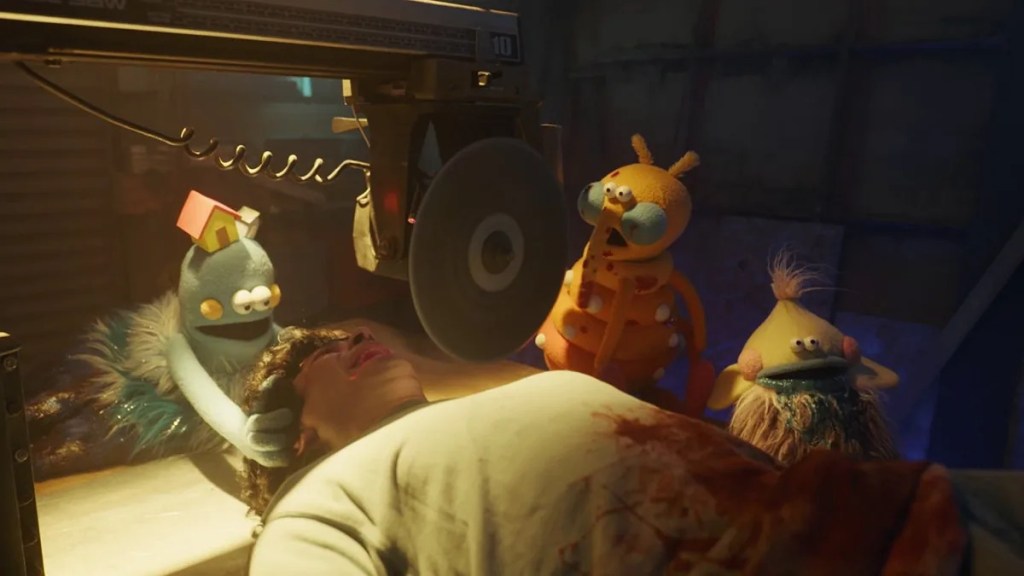
V/H/S/Mixtape may not be the best of the series, but it’s fun and unexpected the whole way through. The previously mentioned segments are genuinely unsettling, exciting, and smart. “Dance, Dance, Dance, Dance” is also an honourable mention for its sinister use of puppets and creepypasta-like vibe. The V/H/S series has been at its best when it covers a particular year in V/H/S/94, V/H/S/99, and V/H/S/85. V/H/S/Mixtape makes a great case for entries in the series closely organised around a theme. The best segments deal seriously with how sound—often associated with beauty and pleasurable experiences—can produce terrible things that offer no inspiration but instead deliver only dread, brutality, and madness.

