
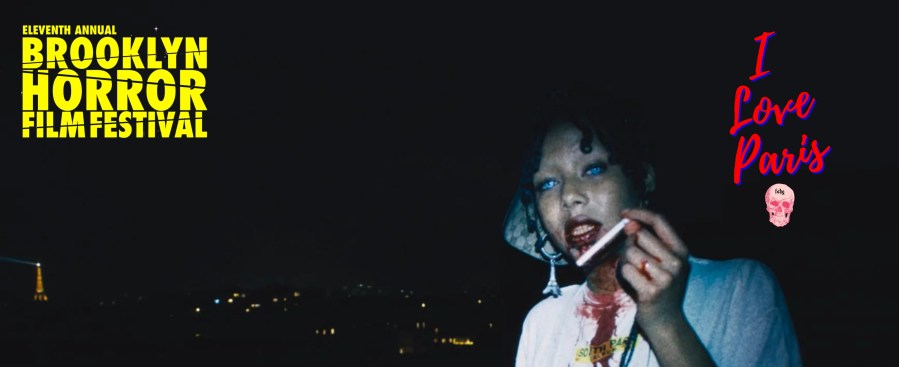
I Love Paris (2026)
Directed by Nicky Murphy
Screenplay by Murphy & Aminata Thiboult
Starring Aminata Thiboult, Leonor Oberson, Louiza Aura, Noé Hermelin, Romane de Stabenrath, Antoine Dumortier, Anton Salachas, Rémi Giordan, & Manoel Dupont.
Comedy / Horror
★★★★1/2 (out of ★★★★★)
Another Brooklyn Horror Film Festival banger this year, Nicky Murphy’s I Love Paris follows Paris (Aminata Thiboult), an up-and-coming vocalist who wants to get famous, no matter the cost. While she pursues her dreams in la Ville Lumière, she shoots a music video deep in the streets at night where she’s bitten by a vampire. Rather than let her new immortal state phase her, she refuses to let anything get in the way of her career and a potential rise to stardom, especially after the vamp who bit her, Lutèce (Leonor Oberson), shows her the ways of darkness.
I Love Paris is a delightful horror mockumentary that leans into madness and chaos to tell a story about a relentless pursuit and desperate hunger for fame. This film could’ve been made in any era. Its exploration of obsession with fame is something that’s existed since being famous was first a concept. The unique quality in I Love Paris is how Paris herself plays into the vampirism, eventually with pure glee and without an ounce of shame. It’s a film that revels in its darkness while sinking its teeth in with a smirk.
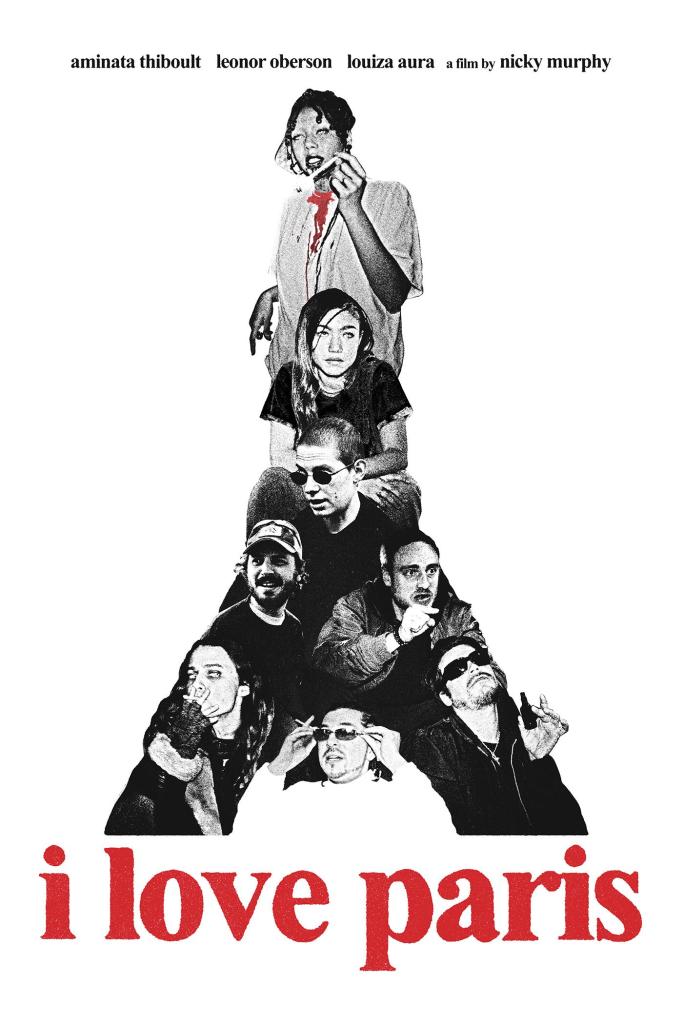
One of the best qualities in I Love Paris is how there are queer vampires being villains but not being coded as queer monsters; that’s to say, queerness isn’t presented as the monstrosity like in a lot of older Gothic works. We see lesbian vampires preying on people for food but not being sexually coded as deviant. While the classic 1872 novella Carmilla is great on the level of early queer representation and the queer vampire connection, it framed a lesbian character as a sexual predator, so it’s nice to see a lesbian vampire film presenting lesbian vampires who are both of age. There’s also something romantic and fateful about Paris being bitten by a woman called Lutèce since Lutèce is the ancient Gallo-Roman named for the city eventually called Paris. This a gorgeously Gothic addition to the story. Two vampires, destined to be ancient, and also it’s as if they’re connected across time by their names, destined to come together as one eventually. Deliciously vampirish and Gothic.
Vampirism in the film works straight forward and metaphorically. Paris is a literal vampire who’s feeding off people. Symbolically, she’s the parasitic artist, feeding off others rather than having enough talent and hardworking spirit to actually become famous. On another metaphorical level, Paris is infected with the vampirism of capitalism in the music industry. To Paris, everyone becomes food, as the industry opens up in front of her like a big food chain; if only she feeds on enough people, she’ll get the perfect spot at the music festival. In one final sad but darkly funny moment, she treats the last person easily available to her as an object, as food, proving nobody is safe within the vampiric system of capitalism. Eat, or be eaten.
I Love Paris is a dark horror satire. You could even extend a reading of the film as a satire about generative AI, in that Paris’s use of vampirism is a shortcut to doing the actual work required. Vampires are so overused in horror and woefully used at the same time. Something such as I Love Paris keeps the blood of the sub-genre pumping by injecting a little new life. The ending, without spoilers, doesn’t take a breather, it only continues to dive headlong into its own darkness with a finger-licking vampire spirit that’s too tasty not to enjoy. I Love Paris is fun, at times creepy, and perceptive about fame’s dark lure.

